




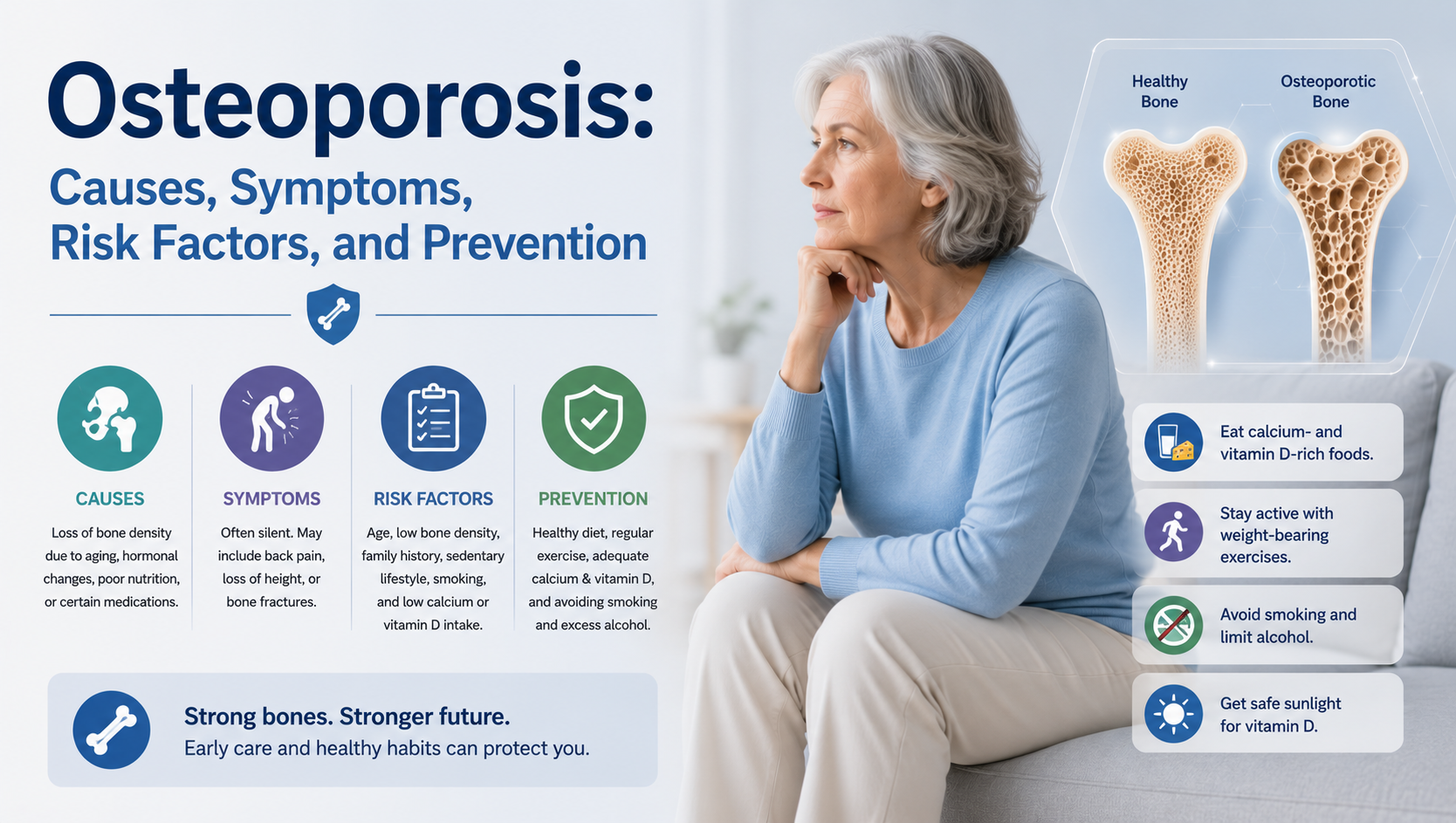
Osteoporosis is often called a silent disease because bone loss happens gradually and without obvious signs—until a fracture occurs. It weakens bones, making them thin, brittle, and more likely to break from even minor stress, such as bending over, coughing, or a small fall. The condition most often affects the hips, wrists, and spine, but any bone can be at risk.
Globally, millions live with osteoporosis, and the risk increases with age. While it can affect both men and women of all races, postmenopausal women—especially those who are white or Asian—are at highest risk. Fortunately, with early detection, lifestyle changes, and treatment, it’s possible to slow bone loss and reduce fracture risk.
What Is Osteoporosis?
Bone is living tissue, constantly broken down and rebuilt. In youth, new bone is made faster than old bone is lost, increasing bone mass. Most people reach peak bone mass by around age 30. As we age, the rate of bone loss overtakes bone building. Osteoporosis occurs when this process accelerates, leaving bones porous and fragile.
The amount of bone mass you build in early life partly determines your future risk. A higher peak bone mass provides more “reserve” against age-related loss, while a lower peak bone mass increases the likelihood of osteoporosis later.
Early Signs and Symptoms
In its early stages, osteoporosis rarely causes symptoms. Many people discover it only after a bone fracture. However, there may be subtle warning signs:
- Gradual loss of height (one inch or more)
- A stooped or hunched posture
- Lower back pain or discomfort
- Weakened grip strength or brittle nails (though these are not reliable indicators)
Since these signs can be subtle, anyone with risk factors should discuss bone density testing with a healthcare provider.
Late Signs and Symptoms
Once osteoporosis advances, more noticeable symptoms and complications may appear:
- Back pain caused by fractured or collapsed vertebrae
- Significant height loss over time
- Visible spinal curvature or stooped posture
- Sudden fractures from minor stresses—such as lifting, coughing, or a light fall
Causes of Osteoporosis
Osteoporosis develops when bone breakdown outpaces bone formation. Several factors can contribute:
- Hormonal changes: Lower estrogen levels after menopause in women, and reduced testosterone in men, accelerate bone loss.
- Thyroid disorders: Excess thyroid hormone—either naturally occurring or from medication—can weaken bones.
- Overactive glands: Issues with the parathyroid or adrenal glands can contribute to bone loss.
- Aging: Natural bone loss increases with age, especially after 50.
Risk Factors
Your chances of developing osteoporosis increase with:
Unchangeable factors:
- Female sex
- Older age
- White or Asian ethnicity
- Family history of osteoporosis or hip fractures
- Small body frame
Lifestyle and health factors:
- Smoking or heavy alcohol use
- Low calcium and vitamin D intake
- Sedentary lifestyle or long-term immobility
- Low body weight (under 58 kg / 128 lbs)
- Eating disorders or poor nutrition
- Long-term use of corticosteroids, seizure medications, or certain cancer treatments
- Medical conditions like rheumatoid arthritis, celiac disease, inflammatory bowel disease, kidney or liver disease, diabetes, and certain hormonal disorders
Complications
Fractures are the most serious outcome of osteoporosis. Hip fractures can lead to long-term disability and increased mortality risk, especially in older adults. Spinal fractures may occur without a fall, leading to chronic pain, height loss, and permanent spinal deformity.
Diagnosis
The primary test for diagnosing osteoporosis is a bone density scan (DEXA or DXA scan). It measures the amount of calcium and minerals in your bones using low-dose X-rays. Your doctor may recommend testing if you are over 65, have had fractures after minor injuries, or have significant risk factors.
Treatment
Treatment aims to slow bone loss, maintain bone strength, and prevent fractures. Options include:
- Lifestyle measures: Regular weight-bearing and muscle-strengthening exercises, balanced diet, quitting smoking, and limiting alcohol.
- Supplements: Adequate calcium (1,000–1,200 mg/day) and vitamin D (600–800 IU/day) through food or supplements.
- Medications: Bisphosphonates, hormone therapy (estrogen/testosterone), parathyroid hormone analogs, denosumab, or romosozumab, depending on severity.
- Physical therapy: To improve balance and reduce fall risk.
Prevention
While aging is inevitable, you can take steps to maintain bone health:
- Get enough calcium and vitamin D through diet or supplements.
- Engage in regular weight-bearing and resistance exercises.
- Avoid smoking and limit alcohol.
- Maintain a healthy body weight.
- Prevent falls by keeping living spaces clutter-free and using mobility aids if needed.
Living With Osteoporosis
Osteoporosis is a lifelong condition, but with proper care, you can lead an active, independent life. Regular checkups, bone density monitoring, and adherence to treatment can help prevent fractures and preserve mobility. If you suspect bone weakness or have risk factors, talk to your doctor early—prevention and early intervention are the keys to strong bones for life.
