




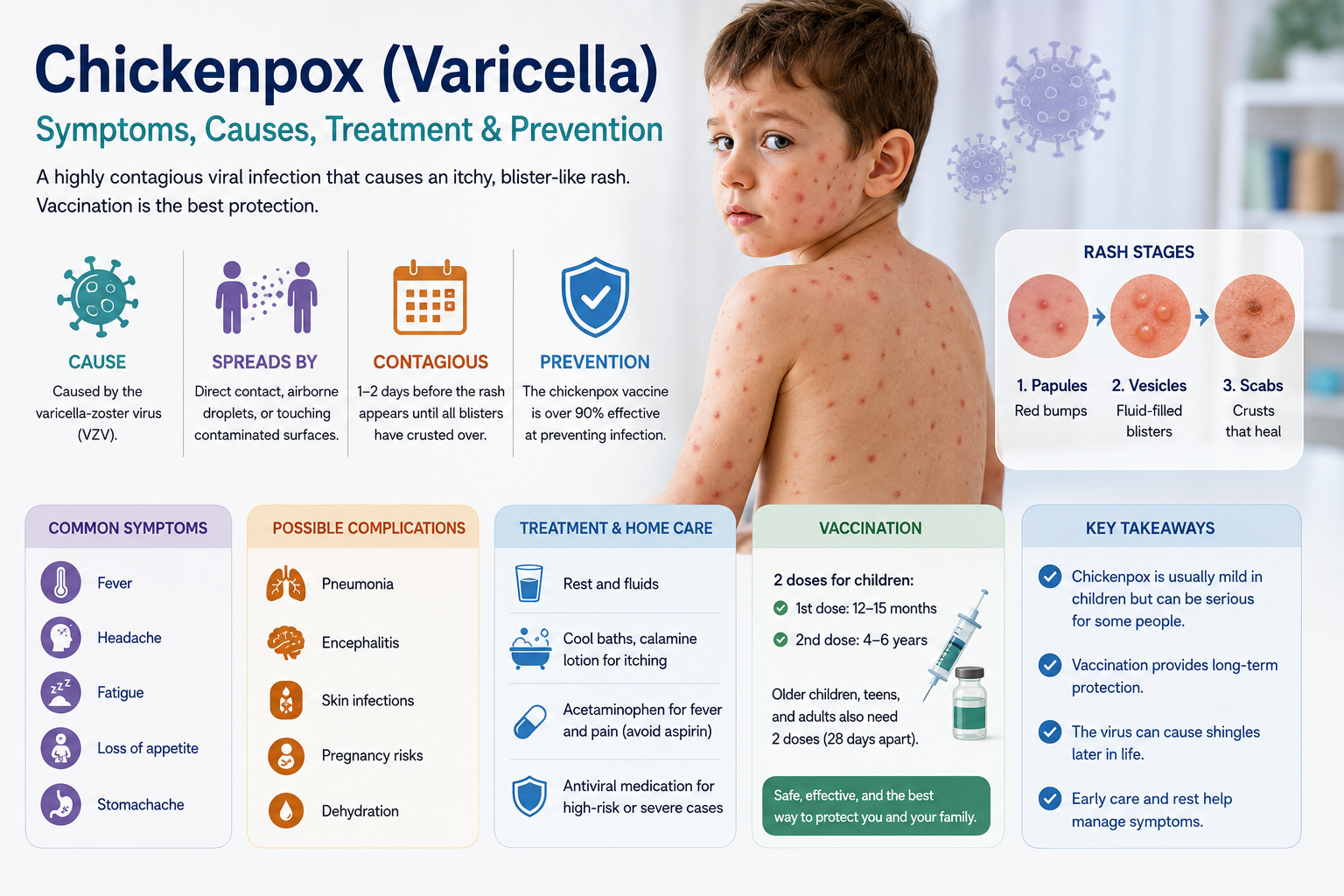
Chickenpox (also called varicella) is a highly contagious viral infection caused by the varicella-zoster virus (VZV). It is best known for causing an intensely itchy, blister-like rash that develops in stages, beginning as red bumps, changing into fluid-filled blisters, and eventually forming scabs. Before the introduction of the chickenpox vaccine in the mid-1990s, nearly every child became infected. Today, vaccination has reduced cases by more than 90%, making the disease far less common. Although chickenpox is usually mild in healthy children, it can cause serious complications in adults, pregnant women, newborns, and people with weakened immune systems. The chickenpox vaccine remains the most effective form of protection, preventing infection in more than 90% of people.
Causes and Transmission
Chickenpox is caused by the varicella-zoster virus (VZV) and spreads very easily from person to person. The virus is transmitted through direct contact with the rash or fluid from the blisters, by inhaling respiratory droplets released when an infected person coughs or sneezes, or by touching contaminated surfaces and then touching the eyes, nose, or mouth. An infected person can spread the virus from one to two days before the rash appears until every blister has crusted over, which usually takes about 7–10 days.
Symptoms of Chickenpox
Symptoms usually develop 10–21 days after exposure to the virus. Many people first experience mild flu-like symptoms such as fever, headache, fatigue, loss of appetite, stomach discomfort, or a general feeling of being unwell. These early symptoms often appear one to two days before the rash.
The classic chickenpox rash usually begins on the face, chest, or back before spreading to the rest of the body. New spots often appear in waves over several days, meaning a person may have red bumps, blisters, and scabs all at the same time. The rash progresses through three stages: raised red bumps (papules), fluid-filled blisters (vesicles), and crusted scabs. In most cases, the rash lasts 5–10 days. Children generally recover without problems, while adults often experience more severe illness.
Risk Factors
Anyone who has never had chickenpox or has not been vaccinated is at risk of infection. The likelihood of exposure is higher for people who work in schools, daycare centers, or healthcare settings, as well as those who live with children or unvaccinated individuals. The disease is also more likely to become severe in people with weakened immune systems caused by conditions such as cancer or HIV, those taking immunosuppressive medications, and pregnant women who have not been vaccinated.
Possible Complications
Although chickenpox is usually mild, it can sometimes lead to serious complications, particularly in adults, infants, pregnant women, and people with weakened immune systems. Secondary bacterial infections of the skin are among the most common complications, but more serious problems such as pneumonia, encephalitis (brain inflammation), dehydration, toxic shock syndrome, and bloodstream infections can also occur.
Children and teenagers should never take aspirin while they have chickenpox because it has been linked to Reye’s syndrome, a rare but potentially fatal condition affecting the brain and liver. Infection during pregnancy may increase the risk of miscarriage, low birth weight, or congenital birth defects, especially if it occurs early in pregnancy. Newborns whose mothers develop chickenpox shortly before or after delivery may also develop severe, life-threatening infections.
Chickenpox and Shingles
Recovering from chickenpox does not completely eliminate the virus. Instead, the varicella-zoster virus remains inactive inside nerve cells for life. Years or even decades later, it can reactivate and cause shingles (herpes zoster), a painful rash that usually affects one side of the body. The risk of shingles increases with age and in people with weakened immune systems.
A person with shingles cannot pass shingles directly to someone else, but they can spread the chickenpox virus to anyone who has never had chickenpox or has not been vaccinated. To reduce this risk, the Shingrix vaccine is recommended for adults aged 50 years and older, as well as certain immunocompromised adults aged 19 years and older.
Diagnosis
Doctors can usually diagnose chickenpox by examining the characteristic rash and reviewing the patient’s symptoms. When the diagnosis is uncertain, laboratory testing may be performed. Blood tests can detect antibodies against the varicella-zoster virus, while samples collected from the throat, nose, or blisters can be tested to confirm the infection.
Treatment and Home Care
There is no cure for chickenpox, and the infection usually resolves on its own within 7–14 days. Treatment focuses on relieving symptoms, reducing discomfort, and preventing complications.
Most people recover with supportive care at home. Drinking plenty of fluids and getting adequate rest help prevent dehydration and support recovery. Cool baths containing oatmeal or baking soda, along with calamine lotion, can reduce itching. Over-the-counter antihistamines may also help relieve itching in some people. Fingernails should be kept short, and young children may benefit from wearing mittens to reduce scratching and lower the risk of skin infections. If blisters develop inside the mouth, soft, bland foods are generally more comfortable to eat.
For fever and pain, acetaminophen (Tylenol) is usually recommended. Aspirin should never be given to children or teenagers with chickenpox, and ibuprofen is generally avoided in children because it may increase the risk of serious skin infections.
Certain high-risk individuals—including adults, pregnant women, people with weakened immune systems, and those with severe disease—may benefit from antiviral medication such as acyclovir, especially if treatment begins within 24 hours after the rash appears. Some high-risk people who are exposed to chickenpox may also receive varicella-zoster immune globulin (VZIG) to reduce the severity of infection.
Prevention
Vaccination is the safest and most effective way to prevent chickenpox. Children are routinely given two doses of the vaccine, with the first administered between 12 and 15 months of age and the second between 4 and 6 years. Older children, teenagers, and adults who have never had chickenpox or received the vaccine should also receive two doses, spaced at least 28 days apart.
The vaccine is more than 90% effective and greatly reduces the severity of illness if a vaccinated person becomes infected. It is available either as a standalone varicella vaccine (Varivax) or as part of the MMRV combination vaccine, which also protects against measles, mumps, and rubella.
However, the vaccine is not recommended for pregnant women, people with certain severe immune disorders or cancers, individuals with specific vaccine allergies, or those who have recently received blood transfusions or certain other live vaccines.
Key Takeaways
Chickenpox remains a highly contagious disease, but widespread vaccination has dramatically reduced the number of infections and serious complications. Most healthy children recover without lasting problems, while adults, pregnant women, newborns, and immunocompromised individuals face a much greater risk of severe illness. Vaccination provides long-lasting protection and is the best way to prevent infection. Although the virus remains dormant after recovery and can later cause shingles, appropriate vaccination against shingles can significantly reduce that risk.
