




What Is COVID-19?
COVID-19, short for coronavirus disease 2019, is a respiratory illness caused by the SARS-CoV-2 virus. First identified in Wuhan, China, in late 2019, it spread rapidly across the globe and was declared a pandemic in March 2020. While many people experience only mild or moderate symptoms, COVID-19 can lead to severe complications and death, particularly in older adults and people with underlying health conditions.
COVID-19 spreads mainly through respiratory droplets and aerosols released when an infected person talks, coughs, sneezes, or breathes. It can also spread by touching contaminated surfaces and then touching the mouth, nose, or eyes, though this is less common. Unlike the common cold or flu, COVID-19 has caused millions of deaths worldwide and continues to circulate in new variants.
Symptoms of COVID-19
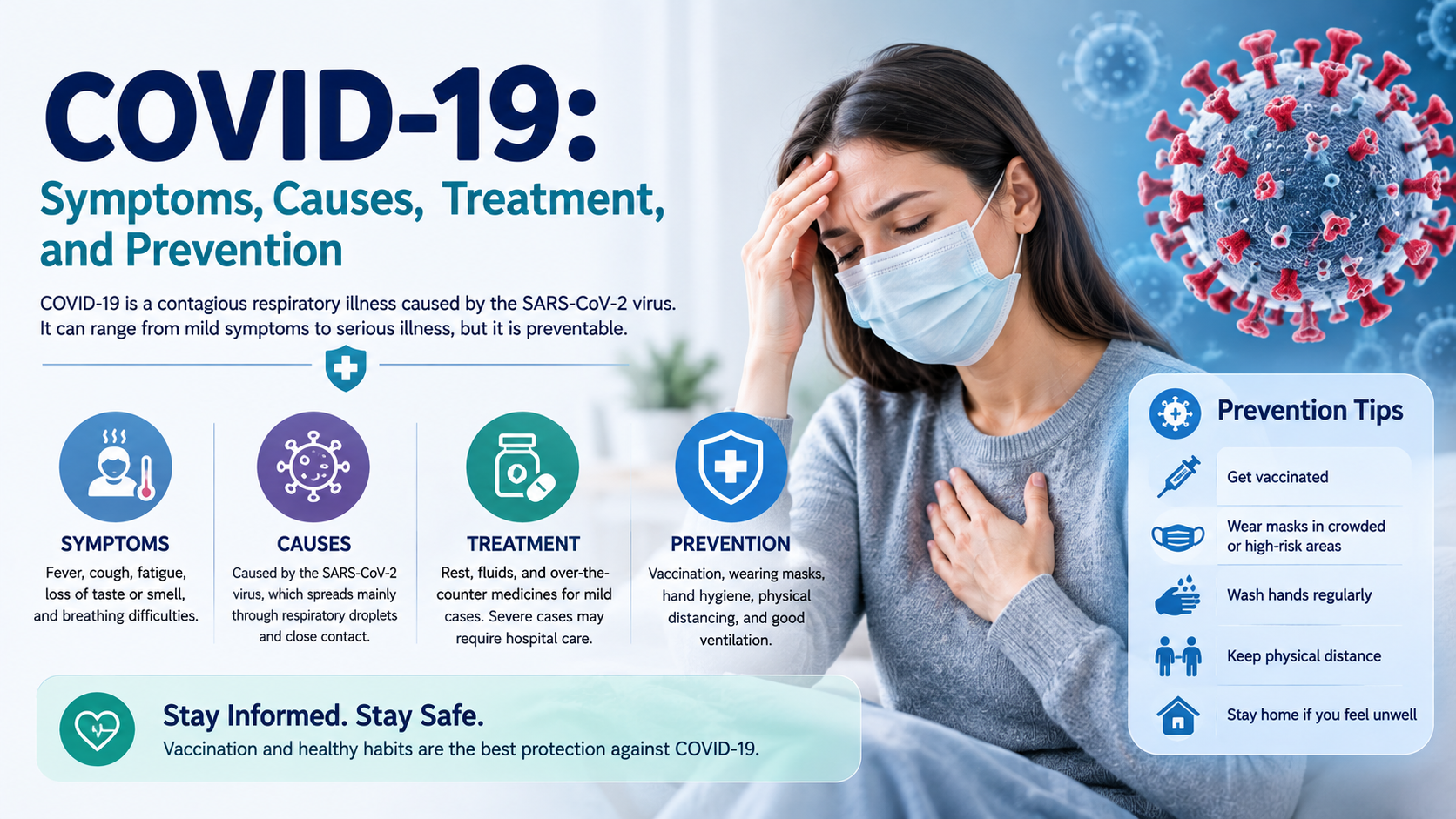
The symptoms of COVID-19 can range from mild and cold-like to severe and life-threatening. Most people develop symptoms within 2 to 14 days of exposure. Common signs include fever, cough, sore throat, fatigue, body aches, headache, congestion, and shortness of breath. Some people also experience a loss or change in their sense of taste and smell, digestive issues like diarrhea, nausea, or vomiting, and brain fog or difficulty concentrating.
In more serious cases, symptoms progress to pneumonia, severe breathing difficulties, chest pain, or confusion. COVID-19 can also cause “long COVID,” a condition where symptoms such as fatigue, shortness of breath, or neurological problems linger for weeks or months after the initial infection has resolved.
Causes and Risk Factors
COVID-19 is caused by the SARS-CoV-2 virus, a member of the coronavirus family that also includes viruses responsible for the common cold and severe respiratory illnesses such as SARS and MERS. Transmission occurs through close contact with an infected person, particularly in poorly ventilated or crowded spaces.
Anyone can contract COVID-19, but certain groups are at higher risk for severe disease. Older adults, pregnant individuals, and people with chronic conditions such as heart disease, diabetes, obesity, kidney disease, or weakened immune systems face greater danger of hospitalization and complications. Smokers, as well as those with cancer, neurological conditions like dementia, or respiratory issues such as COPD, are also more vulnerable.
Complications of COVID-19
Although many recover fully, COVID-19 can cause life-threatening complications. Severe cases may lead to pneumonia, acute respiratory distress syndrome (ARDS), blood clots, and heart inflammation. In some patients, multi-organ failure involving the kidneys, liver, or brain can occur. Children and young adults can develop a rare but serious condition called multisystem inflammatory syndrome (MIS-C or MIS-A).
Another major concern is long COVID, where individuals continue to experience lingering symptoms such as fatigue, shortness of breath, chest pain, or memory problems long after the acute infection has passed.
Diagnosis and Testing
Healthcare providers typically diagnose COVID-19 using a nasal or throat swab. The most accurate test is the PCR (polymerase chain reaction) test, which detects the virus’s genetic material. Rapid antigen tests, which can be done at home, are faster but less sensitive. Blood tests may also be used to check for antibodies that show a past infection.
Treatment Options
There is currently no cure for COVID-19, but several treatments can reduce symptoms and lower the risk of severe illness. For mild cases, rest, hydration, and over-the-counter medications for fever and pain may be enough.
For higher-risk patients, antiviral medications such as nirmatrelvir/ritonavir (Paxlovid®), remdesivir (Veklury®), and molnupiravir (Lagevrio™) are available. These medications are most effective when taken within the first five days of symptom onset.
Severe cases may require hospitalization, where treatment can include corticosteroids, monoclonal antibody therapy, supplemental oxygen, or mechanical ventilation. Recovery times vary, with most people improving in about two weeks, although fatigue and breathing issues can persist for longer.
Prevention and Vaccination
The best protection against COVID-19 remains vaccination. Vaccines developed by Pfizer-BioNTech, Moderna, and Novavax help prevent severe illness, hospitalization, and death. Updated versions are recommended annually to target circulating variants. Health experts recommend vaccination for everyone aged six months and older, with boosters for older adults, immunocompromised people, and pregnant women.
Other preventive measures include frequent handwashing, improving indoor ventilation, wearing masks in crowded or high-risk settings, and avoiding close contact with people who are ill. People who are immunocompromised may benefit from pre-exposure prophylaxis using monoclonal antibodies such as Pemivibart (Pemgarda™).
Outlook
Most people with COVID-19 recover fully, especially with early treatment and vaccination. However, the disease continues to pose a global health risk, particularly in unvaccinated populations. Staying up to date with vaccines, practicing good hygiene, and seeking prompt medical care when symptoms arise are the best strategies to manage the ongoing threat of COVID-19.
