




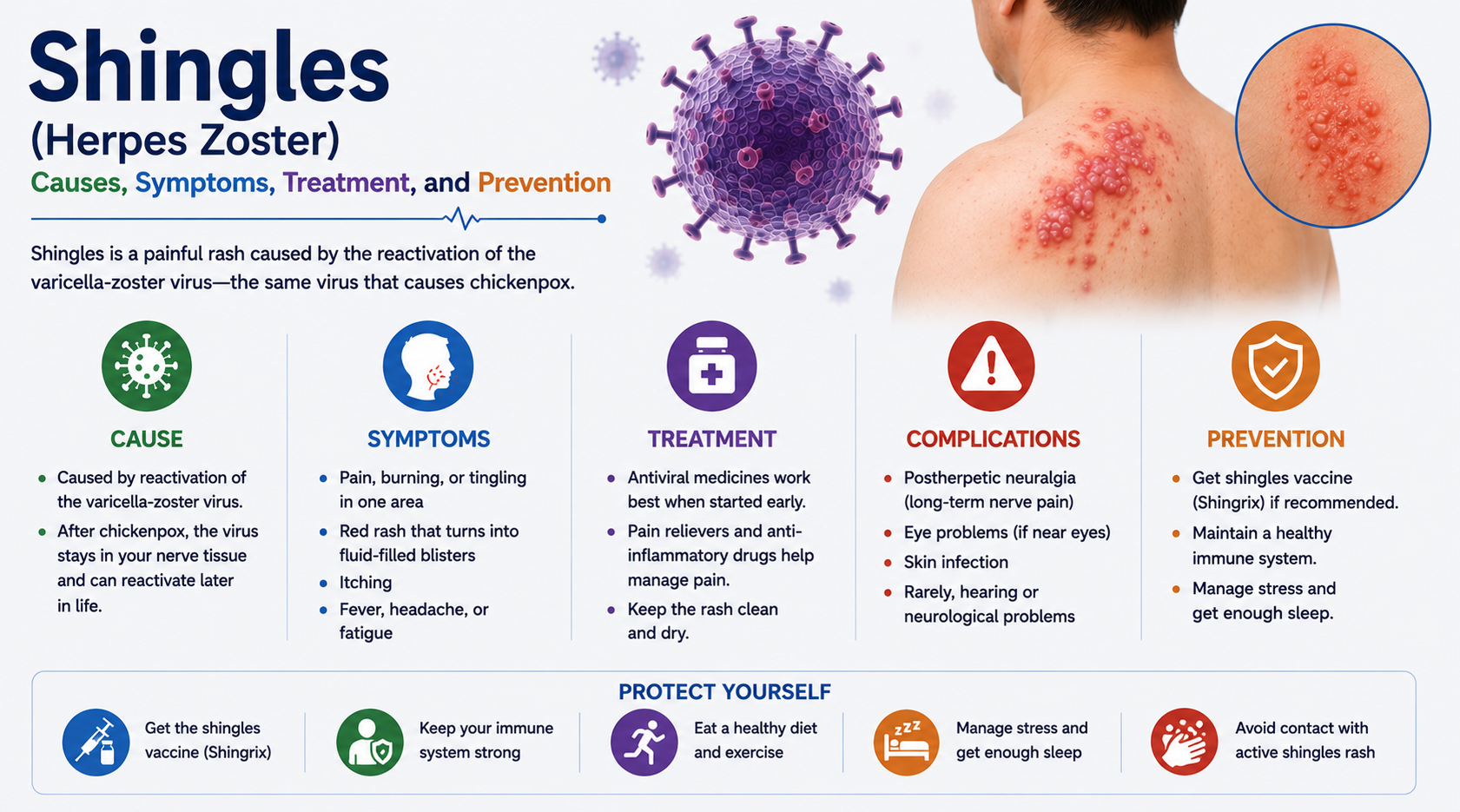
Shingles, also known as herpes zoster, is a viral infection that causes a painful rash and nerve-related discomfort. It is triggered by the varicella-zoster virus (VZV), the same virus responsible for chickenpox. Once a person recovers from chickenpox, the virus does not fully leave the body—it stays dormant in nerve tissues. Years or even decades later, the virus can reactivate, leading to shingles.
Shingles is fairly common, with about 1 million new cases each year in the United States, and the risk increases significantly after age 50. Although it is not life-threatening in most cases, it can cause severe pain, long-lasting complications, and reduced quality of life if not properly managed.
Symptoms of Shingles
The most recognizable sign of shingles is a painful, blistering rash that typically appears on one side of the body, often in a stripe-like pattern around the torso, chest, or face. Before the rash appears, some people experience early warning signs such as tingling, burning, or nerve pain in the affected area. These sensations can start days before the visible rash develops.
Once the rash appears, it goes through stages: first red patches and bumps, then fluid-filled blisters, and finally crusted scabs that heal over a few weeks. In lighter skin, the rash may look red, while in darker skin it can appear gray, purple, or brown. Alongside the rash, other symptoms may include:
- Deep, burning or stabbing nerve pain
- Itching and skin sensitivity
- Fever and chills
- Headache and fatigue
- Sensitivity to light
- Upset stomach
The outbreak typically lasts 2–6 weeks, though pain may continue much longer in some cases. Some people develop shingles without a rash, experiencing only nerve pain, which can make diagnosis more difficult.
Causes and Risk Factors
Shingles occurs when the varicella-zoster virus reactivates inside the body. The exact reason for reactivation isn’t always clear, but it is often linked to a weakened immune system.
You are more likely to develop shingles if you:
- Are over the age of 50
- Have a weakened immune system from conditions like cancer or HIV
- Are taking immune-suppressing medications (steroids, chemotherapy, or post-transplant drugs)
- Experience high levels of stress
- Did not receive the chickenpox vaccine as a child
Anyone who has had chickenpox is at risk, and even those who had the chickenpox vaccine can still rarely develop shingles later in life.
Is Shingles Contagious?
Shingles itself cannot be directly passed from one person to another. However, the varicella-zoster virus can spread from someone with shingles to someone who has never had chickenpox or the chickenpox vaccine. In such cases, the newly infected person would develop chickenpox, not shingles.
Transmission happens through direct contact with the fluid inside shingles blisters. Until the rash crusts over, people with shingles should avoid contact with newborns, pregnant women who haven’t had chickenpox, and individuals with weakened immune systems.
Stages of Shingles
Shingles typically progresses through three stages:
- Pre-rash stage (preeruptive): Tingling, itching, or nerve pain appears in one area of the body 1–2 days before the rash. General viral symptoms like headache and fatigue may also occur.
- Eruptive stage: A painful, blistering rash develops and lasts 2–4 weeks. This is the most contagious period.
- Chronic stage: In some cases, nerve pain continues for months or even years after the rash clears, a complication known as postherpetic neuralgia (PHN).
Complications of Shingles
Most people recover without long-term effects, but shingles can sometimes cause serious complications, especially in older adults. These include:
- Postherpetic neuralgia (PHN): Persistent nerve pain after the rash heals, lasting months or years.
- Vision problems: If shingles affects the eye, it may cause corneal damage, glaucoma, or permanent vision loss.
- Neurological issues: In rare cases, shingles can lead to encephalitis (brain inflammation), facial paralysis (Ramsay Hunt syndrome), or hearing loss.
- Bacterial skin infections: Open blisters can become infected if not cared for properly.
- Pneumonia or widespread infection: Rare but possible in immunocompromised patients.
Diagnosis
Doctors usually diagnose shingles by examining the rash and asking about symptoms, especially the pattern of pain and blisters. Since shingles often follows nerve pathways on one side of the body, this distinct presentation helps in diagnosis.
If needed, tests such as a blister fluid swab or blood tests can confirm the presence of the varicella-zoster virus.
Treatment
There is no cure for shingles, but early treatment can shorten the illness and reduce the risk of complications. Antiviral medications such as acyclovir, valacyclovir, or famciclovir are most effective if started within 72 hours of the rash appearing.
Other treatments may include:
- Pain relievers (acetaminophen, ibuprofen, or stronger prescription medications)
- Anticonvulsants or antidepressants for nerve pain (gabapentin, amitriptyline)
- Topical treatments like lidocaine patches or capsaicin cream
- Cold compresses, calamine lotion, or oatmeal baths for itch relief
- Corticosteroids in certain severe cases, such as shingles near the eyes
In infants, older adults, or people with weakened immune systems, hospitalization may be required for monitoring and supportive care.
Prevention
The best way to prevent shingles is through vaccination. The Shingrix® vaccine is recommended for:
- Adults 50 years and older
- Adults 19 years and older with weakened immune systems
It is given in two doses, 2–6 months apart. Shingrix is more than 90% effective at preventing shingles and greatly reduces the risk of postherpetic neuralgia.
Even if you have already had shingles, vaccination is still recommended, as it helps prevent recurrence.
Additional prevention steps include:
- Keeping the rash covered until it heals
- Washing hands frequently
- Avoiding close contact with vulnerable people while contagious
Outlook
For most people, shingles lasts about 2–6 weeks, and symptoms gradually improve with treatment. However, some people experience long-term nerve pain. While shingles can be very uncomfortable, timely medical care and vaccination can minimize its impact.
If you suspect you have shingles—especially if the rash is near your eyes or face—see a doctor immediately. Prompt treatment reduces the risk of permanent complications.
