




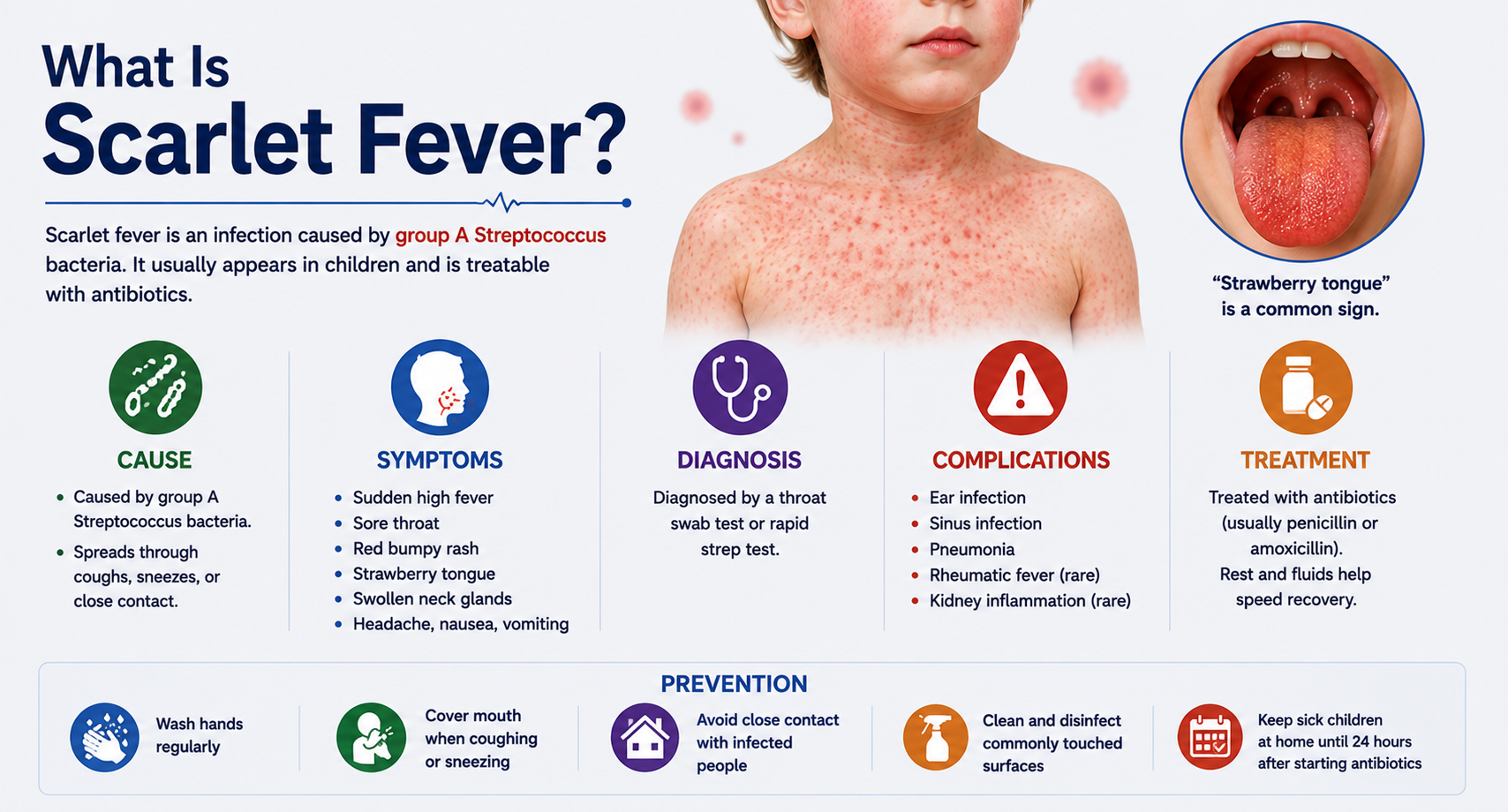
Scarlet fever, also called scarlatina, is a bacterial infection that develops in some people with strep throat or, less commonly, skin infections such as impetigo. It is caused by group A Streptococcus bacteria, which release toxins that lead to the characteristic red, sandpaper-like rash.
This illness was once considered life-threatening, but today, with the availability of antibiotics, scarlet fever is far less dangerous when treated promptly. Still, if left untreated, it can result in serious complications affecting the heart, kidneys, joints, or nervous system. Scarlet fever is most common in children ages 5 to 15, though adults can also develop it.
Scarlet Fever Symptoms
Scarlet fever usually begins with symptoms similar to strep throat, followed by the hallmark rash:
- Red rash: Feels rough like sandpaper and often begins on the neck and chest before spreading to the arms, legs, and trunk. On lighter skin it looks red or pink, while on darker skin it may be less noticeable but still feels bumpy.
- Red lines (Pastia’s lines): Skin folds around the elbows, armpits, and groin often become more deeply red than surrounding skin.
- Strawberry tongue: The tongue may appear red, bumpy, and swollen, often with a whitish coating early in the illness.
- Flushed face with pale ring around the mouth.
- Fever and sore throat: High fever (above 100.4°F / 38°C), chills, and a very sore throat are common.
- Other symptoms: Headache, body aches, swollen lymph nodes, abdominal pain, nausea, vomiting, or small red spots on the roof of the mouth (petechiae).
The rash typically lasts about a week, after which the skin may begin to peel, particularly on the fingertips, toes, and groin.
Causes and Transmission
Scarlet fever is caused by group A strep bacteria, the same germs responsible for strep throat. When these bacteria release toxins into the bloodstream, the scarlet rash appears.
The infection spreads easily through:
- Respiratory droplets when an infected person coughs or sneezes.
- Direct contact with infected saliva or nasal secretions.
- Touching contaminated surfaces and then touching the mouth or nose.
- Sharing food, drinks, or utensils with an infected person.
The incubation period is typically 2 to 5 days, meaning symptoms usually appear a few days after exposure.
Risk Factors
The highest risk group for scarlet fever is children aged 5 to 15 years, especially those in schools or childcare centers where germs spread quickly. Other risk factors include:
- Close contact with infected individuals.
- Weakened immune system due to chronic illness or medication.
- Living or working in crowded environments.
- Open wounds or skin infections that become infected with group A strep.
While rare, adults can also develop scarlet fever, especially if they live in close quarters or have underlying health conditions.
Diagnosis
Diagnosis of scarlet fever typically involves:
- Physical exam – A doctor looks for the telltale rash, strawberry tongue, swollen glands, and sore throat.
- Throat swab – A rapid strep test or throat culture can confirm group A strep as the cause.
Because other illnesses can cause rashes and sore throats, testing is important for accurate treatment.
Treatment
The primary treatment for scarlet fever is antibiotics, most often penicillin or amoxicillin. For those allergic to penicillin, alternatives such as azithromycin, clarithromycin, or clindamycin may be prescribed. Treatment usually lasts about 10 days, though a single antibiotic injection may sometimes be used.
Antibiotics help by:
- Clearing the infection.
- Preventing complications.
- Reducing the contagious period.
Supportive care can also make recovery more comfortable:
- Over-the-counter pain relievers like acetaminophen or ibuprofen for fever and sore throat.
- Gargling with warm salt water or using throat lozenges.
- Staying hydrated with water, soups, and cold drinks.
- Eating soft foods or ice pops to soothe throat pain.
- Using a cool-mist humidifier to ease discomfort.
- Applying anti-itch creams like calamine if the rash is itchy.
Most people start to feel better within a few days of treatment, though the rash may last about a week and peeling can continue for several weeks.
Complications
If untreated, scarlet fever can spread and cause more severe infections. Possible complications include:
- Ear and sinus infections
- Pneumonia
- Kidney damage (post-streptococcal glomerulonephritis)
- Abscesses around tonsils or brain
- Arthritis or osteomyelitis (bone infection)
- Septicemia (blood poisoning)
- Meningitis (inflammation of brain and spinal cord tissues)
- Rheumatic fever, a rare but serious inflammatory condition that can damage the heart.
Although complications are much rarer today, they highlight why prompt treatment is essential.
Prevention
There is no vaccine for scarlet fever. Prevention relies on good hygiene and limiting the spread of strep bacteria:
- Wash hands frequently with soap and water for at least 20 seconds.
- Use alcohol-based sanitizer when handwashing isn’t possible.
- Cover your mouth and nose when coughing or sneezing.
- Avoid sharing utensils, cups, or food with others.
- Wash utensils and glasses used by an infected person thoroughly.
- Stay home from school or work until at least 24 hours after starting antibiotics.
Outlook
With prompt treatment, scarlet fever is usually mild and recovery is quick. The rash fades within a week, though peeling may continue for several weeks. Untreated, however, it can lead to serious complications, some of which can affect long-term health.
Takeaway: Scarlet fever is caused by group A strep bacteria and is most common in children, though anyone can get it. Its key symptom is a rough, sandpaper-like rash, often alongside sore throat and fever. With antibiotics, the condition is highly treatable and rarely dangerous today. Good hygiene and early treatment are the best ways to control its spread.
