




Overview
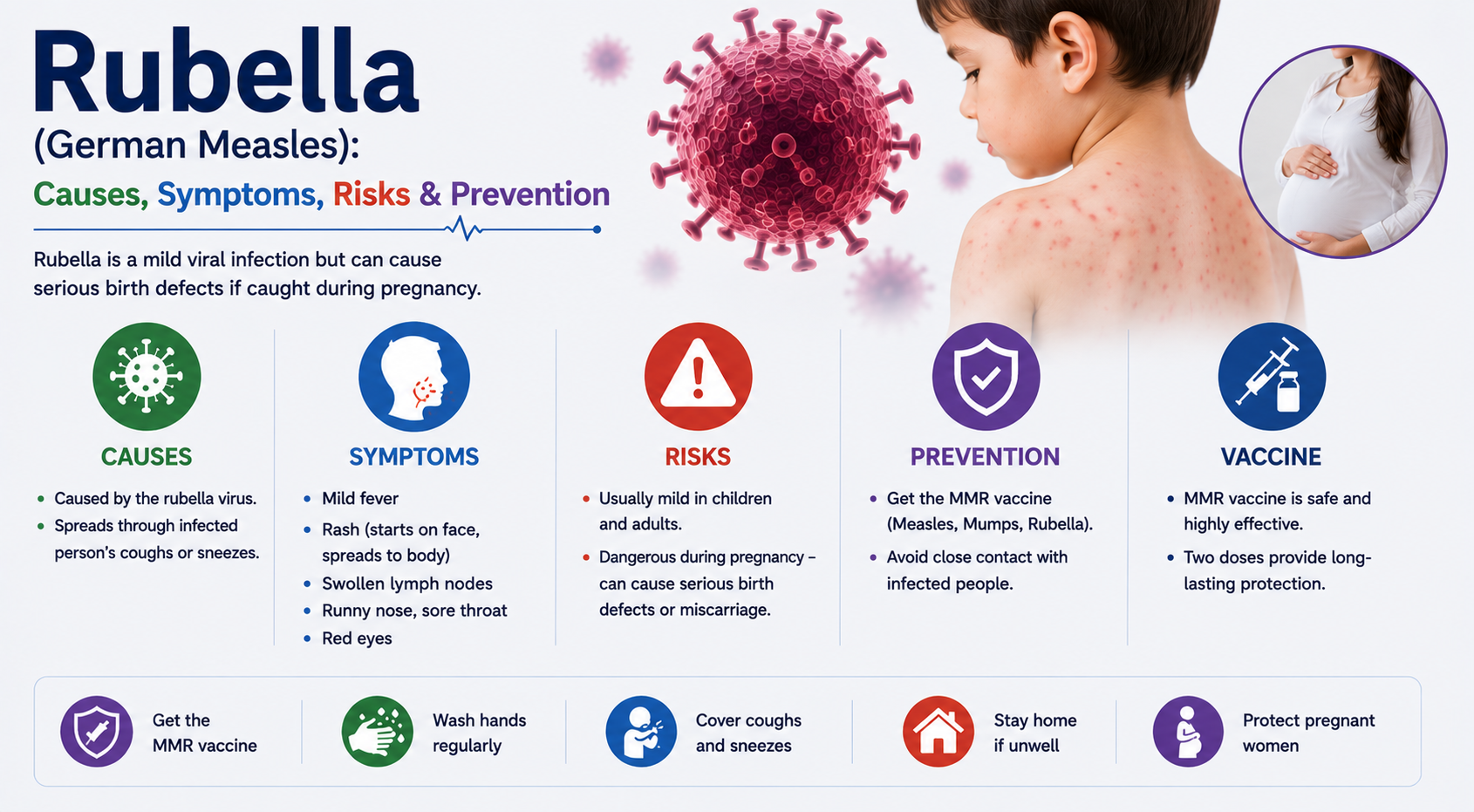
Rubella, also known as German measles or the 3-day measles, is a contagious viral infection best known for its pink or red rash. Although usually mild in children and adults, rubella can have severe consequences for unborn babies if a pregnant woman becomes infected. In early pregnancy, rubella infection can cause miscarriage, stillbirth, or congenital rubella syndrome (CRS), which leads to lifelong disabilities such as deafness, cataracts, or heart defects.
Rubella is caused by the rubella virus (RuV), a type of rubivirus in the family Matonaviridae. Unlike measles (rubeola), rubella is less contagious and less severe, but still dangerous during pregnancy. Thanks to the measles-mumps-rubella (MMR) vaccine, rubella has been eliminated in the U.S. since 2004, though it still circulates in parts of Asia, Africa, and the Middle East. Travelers and unvaccinated individuals remain at risk.
Rubella Symptoms
Rubella’s symptoms often appear 2–3 weeks after exposure and last 1–5 days. In fact, up to half of infected people may not show symptoms but can still spread the virus.
Common signs include:
- Rash – Fine pink or red spots starting on the face, spreading down the trunk, arms, and legs. Lasts about 3 days.
- Mild fever (usually under 102°F / 38.9°C)
- Swollen lymph nodes – especially behind the ears and at the back of the neck
- Cold-like symptoms – runny/stuffy nose, cough, sore throat
- Red or pink eyes (conjunctivitis)
- Headache and general discomfort
- Joint pain/stiffness – especially in young women
Rash in different skin tones:
- On lighter skin tones: pink or red spots
- On darker skin tones: rash may appear as darker or hyperpigmented areas, sometimes bumpy or rough
Contagious period
- 1 week before rash appears → 1 week after rash fades
This makes rubella easy to spread before someone realizes they are sick.
Causes & Transmission
Rubella is spread by the rubella virus (RuV) through:
- Respiratory droplets from coughing, sneezing, or talking
- Direct contact with mucus or saliva (sharing drinks, kissing, touching contaminated surfaces)
- Pregnancy transmission – from mother to fetus through the bloodstream
The virus can survive on surfaces and in the air for up to 2 hours.
Congenital Rubella Syndrome (CRS)
The most serious consequence of rubella is congenital rubella syndrome (CRS). This occurs when a pregnant woman becomes infected, especially in the first trimester. The risks to the unborn baby include:
- Miscarriage or stillbirth
- Congenital defects, such as:
- Hearing loss or deafness
- Cataracts and vision loss
- Congenital heart defects
- Brain abnormalities (microcephaly, developmental delays)
- Liver and spleen enlargement
- Bone disease
- Type 1 diabetes or thyroid problems
Up to 90% of babies born to mothers infected in the first 12 weeks of pregnancy will develop CRS. The risk decreases later in pregnancy but remains significant.
Risk Factors
You are at higher risk of rubella if you:
- Are unvaccinated or not fully vaccinated (two doses required)
- Travel internationally to areas where rubella is still common
- Live in a community with low vaccination coverage
- Are a woman of childbearing age without immunity
- Have a weakened immune system or low vitamin A levels
Diagnosis
Rubella can look similar to measles or other viral rashes. To confirm:
- Physical exam – checking rash, lymph nodes, and Koplik-like signs
- Blood test – detects rubella-specific antibodies:
- IgM antibodies: appear soon after infection or vaccination; remain for ~3 months
- IgG antibodies: develop a few days after rash, remain lifelong, indicating immunity
- Viral culture or PCR – from nasal/throat swabs or urine
Treatment
There is no specific antiviral treatment for rubella. The illness is usually mild and self-limiting, but care focuses on managing symptoms and preventing spread.
Supportive care:
- Rest and hydration
- Fever and pain relievers (acetaminophen or ibuprofen — never aspirin in children due to Reye’s syndrome risk)
- Warm salt-water gargles for sore throat
- Cold compresses for swollen glands
- Vitamin A supplementation (in children with deficiency)
In pregnancy
If a pregnant woman is exposed to rubella:
- A doctor may recommend rubella immune globulin (hyperimmune globulin) within 6 days of exposure.
- This may reduce symptoms but does not guarantee protection for the fetus.
Complications
Rubella is usually mild, but complications can include:
- Arthritis – common in young women
- Ear infections
- Encephalitis (brain inflammation) – rare but serious
- Low platelets (thrombocytopenia) → unusual bleeding/bruising
The greatest danger is during pregnancy → congenital rubella syndrome (CRS), miscarriage, or stillbirth.
Rubella & Pregnancy
Rubella is most dangerous in the first trimester:
- High risk of miscarriage, stillbirth, or CRS
- Can cause congenital deafness, cataracts, heart defects, and developmental delays
Key points for women of childbearing age:
- Check your MMR vaccination status before pregnancy
- If not immune, get vaccinated at least 1 month before conceiving
- The MMR vaccine is not given during pregnancy
- Routine prenatal screening includes rubella immunity testing
Prevention & Vaccination
The MMR vaccine is the best protection against rubella.
CDC-recommended schedule:
- Children:
- 1st dose: 12–15 months
- 2nd dose: 4–6 years
- Adults:
- If not vaccinated or unsure → 1–2 doses (depending on age and risk)
- Women of childbearing age should confirm immunity before pregnancy
Vaccine facts:
- Provides lifelong immunity in most people
- Combination vaccine: MMR (measles, mumps, rubella) or MMRV (includes chickenpox)
- Safe and effective – no proven link to autism
- Side effects: mild fever, rash, sore arm; very rare allergic reactions
Takeaways
- Rubella is a viral infection with a mild rash and fever in most people.
- It is most dangerous in pregnancy, where it can cause miscarriage, stillbirth, or CRS.
- There is no cure, but supportive care helps relieve symptoms.
- The MMR vaccine is safe, effective, and provides lifelong protection.
Rubella FAQs
Q: Are rubella and measles the same?
A: No. Both cause rashes, but rubella is caused by a different virus, is milder, and less contagious.
Q: How long is rubella contagious?
A: From 1 week before rash starts to 1 week after rash disappears.
Q: Can adults get rubella?
A: Yes. Adults who aren’t immune can get infected, and symptoms may be worse than in children.
Q: What is congenital rubella syndrome?
A: A set of birth defects (hearing loss, cataracts, heart disease, developmental delays) caused when a baby is exposed to rubella in the womb.
Q: Can rubella cause miscarriage?
A: Yes, especially in the first trimester. Pregnant women should avoid exposure and confirm immunity before conception.
