




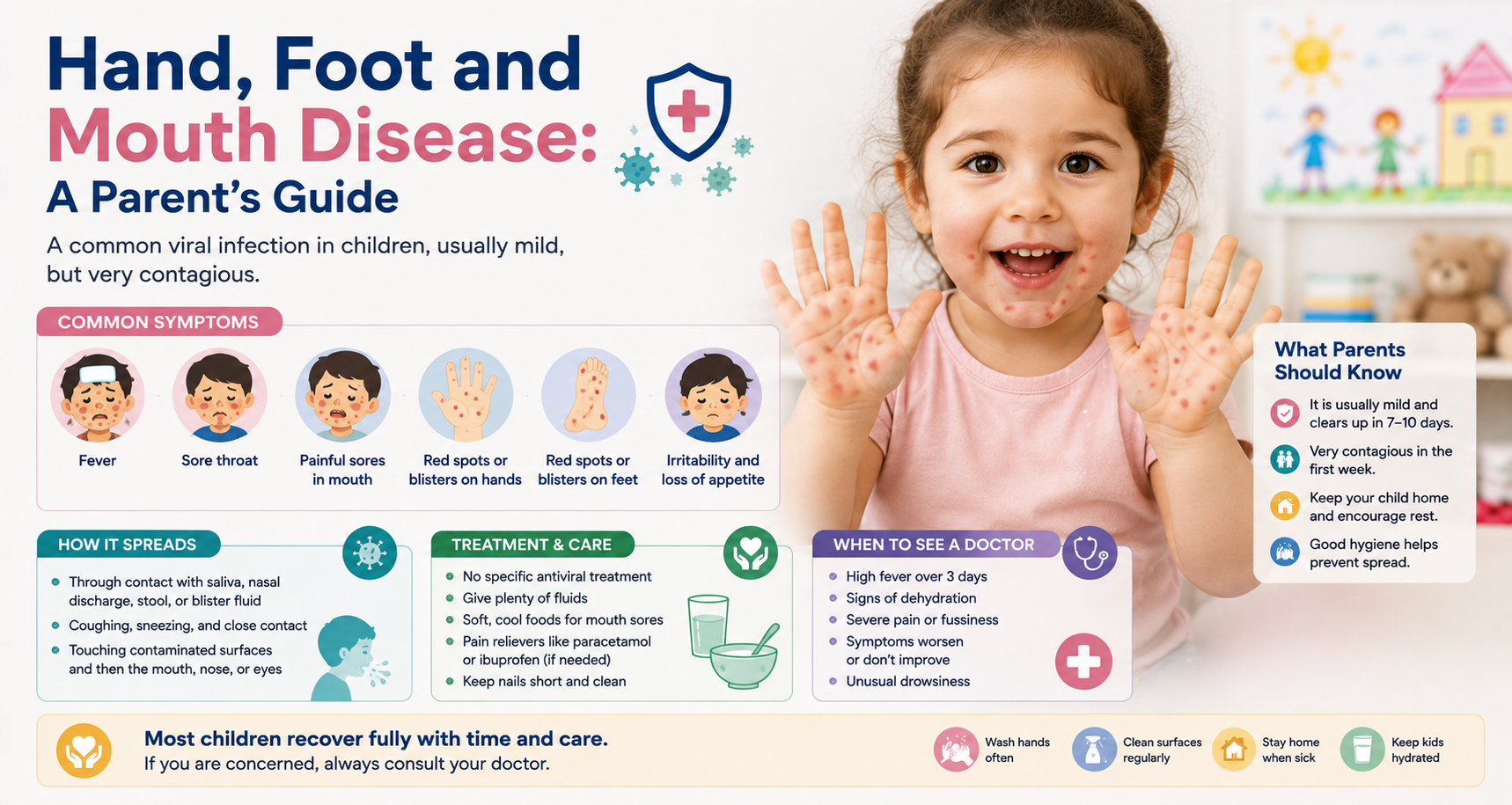
Hand, Foot and Mouth Disease (HFMD) is one of the most common viral illnesses affecting infants and young children. Although its name may sound alarming, HFMD is usually a mild illness that resolves on its own within one to two weeks. The infection is best known for causing painful mouth sores along with a distinctive rash on the hands and feet, but symptoms can vary considerably from one child to another.
HFMD spreads quickly in daycare centers, preschools, and households because the viruses responsible are highly contagious. Most children recover without complications, but the illness can make eating and drinking difficult due to painful mouth ulcers. Understanding how the disease spreads, recognizing its symptoms early, and knowing how to care for your child can make recovery easier while helping prevent transmission to others.
This guide explains everything parents should know about Hand, Foot and Mouth Disease, including its causes, symptoms, diagnosis, treatment, prevention, possible complications, and when medical attention is necessary.
What Is Hand, Foot and Mouth Disease?
Hand, Foot and Mouth Disease is a contagious viral infection that primarily affects children younger than five years of age, although older children, teenagers, and adults can also become infected.
Despite its name, the rash is not always limited to the hands, feet, and mouth. Some children develop spots on the legs, arms, buttocks, elbows, or around the genital area. Others may have only mouth ulcers or only a mild skin rash.
HFMD is unrelated to foot-and-mouth disease that affects cattle and other livestock. The two illnesses are caused by completely different viruses and cannot spread between humans and animals.
What Causes Hand, Foot and Mouth Disease?
HFMD is caused by several viruses belonging to the enterovirus family.
The two most common causes are Coxsackievirus A16 and Enterovirus 71 (EV-A71). Other enteroviruses can also produce similar symptoms.
After entering the body, these viruses multiply in the throat and digestive tract before spreading through the bloodstream to the skin and mouth, producing the characteristic sores and rash.
Because HFMD is caused by viruses rather than bacteria, antibiotics are not effective.
How Does HFMD Spread?
Hand, Foot and Mouth Disease spreads very easily, especially among young children who frequently share toys and have close physical contact.
The viruses spread through respiratory droplets released when an infected person coughs or sneezes. They also spread through saliva, nasal secretions, fluid from skin blisters, and stool.
A child may become infected by touching contaminated toys, tables, door handles, or other surfaces and then touching their mouth, nose, or eyes.
Children are usually most contagious during the first week of illness. However, the virus may continue to be present in the stool for several weeks after symptoms disappear, which is why careful handwashing remains important even after recovery.
Who Is Most at Risk?
HFMD occurs most commonly in children under five years old because they have not yet developed immunity to the viruses responsible.
Children attending daycare centers, nurseries, or preschool programs are at higher risk because they spend time in close contact with many other children.
Although adults usually experience milder illness, they can still become infected and occasionally spread the virus without realizing it.
Most people develop some immunity after infection, but because different enteroviruses can cause HFMD, it is possible to develop the illness more than once during childhood.
Signs and Symptoms
Symptoms usually appear three to six days after exposure.
Many children first develop mild cold-like symptoms before the rash appears. These early symptoms may include fever, sore throat, tiredness, reduced appetite, irritability, and feeling generally unwell.
Within a day or two, painful sores begin developing inside the mouth. These sores usually appear on the tongue, gums, inside the cheeks, roof of the mouth, or throat. They often begin as small red spots before becoming shallow ulcers with a gray or yellow center surrounded by redness.
Because these ulcers can be quite painful, children may refuse food and drinks or become unusually fussy during meals.
Soon afterward, the characteristic skin rash develops.
Small red spots appear on the palms of the hands and soles of the feet before sometimes progressing into tiny blisters. Depending on skin tone, the rash may appear red, pink, brown, grayish, or purple.
Unlike chickenpox, HFMD blisters are generally smaller and less itchy. Some children also develop spots on the knees, elbows, buttocks, or around the diaper area.
Interestingly, some children have only mouth ulcers, while others mainly develop the skin rash with very little discomfort.
How Long Does HFMD Last?
Most children recover completely within seven to ten days.
The fever usually improves within two or three days, while mouth ulcers and skin lesions gradually heal over the following week.
Although the rash may remain visible for several days after the child begins feeling better, it generally disappears without leaving scars.
Some children experience peeling skin on their fingers or toes several weeks after recovery. Occasionally, fingernails or toenails temporarily loosen or fall off a month or two later. While this can be alarming, the nails almost always grow back normally.
How Is HFMD Diagnosed?
Healthcare providers usually diagnose Hand, Foot and Mouth Disease by examining the child’s symptoms and rash.
The combination of fever, painful mouth ulcers, and blisters on the hands and feet is often enough to make the diagnosis.
Laboratory testing is rarely necessary unless symptoms are unusually severe or another condition is suspected.
Treatment
There is no specific cure for Hand, Foot and Mouth Disease.
Treatment focuses on keeping children comfortable while their immune system clears the infection.
Pain relief is particularly important because mouth ulcers can make eating and drinking extremely uncomfortable.
Acetaminophen or ibuprofen may be recommended to reduce fever and relieve pain according to the child’s age and weight. Aspirin should never be given to children because of the risk of Reye syndrome.
Antibiotics are not useful because HFMD is caused by viruses rather than bacteria.
Antiviral medications are not routinely recommended for uncomplicated cases.
Caring for Your Child at Home
Home care is the mainstay of treatment.
The most important goal is preventing dehydration. Because swallowing may be painful, children often drink less than usual.
Offer small amounts of cool fluids frequently throughout the day rather than expecting large drinks all at once. Water, milk, oral rehydration solutions, smoothies, and ice pops are often well tolerated.
Soft foods such as yogurt, mashed potatoes, oatmeal, scrambled eggs, soups, and smoothies may be easier to eat while mouth sores heal.
Avoid acidic drinks like orange juice and foods that are spicy, salty, or crunchy, as these may increase discomfort.
Adequate rest also supports recovery, although strict bed rest is unnecessary if the child feels well enough for quiet play.
Good hand hygiene is especially important because viruses continue to spread through stool even after symptoms improve.
Possible Complications
Fortunately, serious complications are uncommon.
The most frequent complication is dehydration caused by painful mouth ulcers that discourage drinking.
Young infants are particularly vulnerable because they can become dehydrated quickly.
Rarely, certain enteroviruses—especially Enterovirus 71—can lead to more serious complications involving the nervous system, such as meningitis or encephalitis.
Very rarely, inflammation of the heart muscle or lungs may occur.
Fortunately, these severe complications are uncommon in most countries.
When Should Parents Seek Medical Care?
Parents should contact a healthcare provider if a child refuses fluids, develops signs of dehydration, has a fever lasting longer than three days, experiences severe mouth pain, or if symptoms continue worsening instead of improving.
Medical advice is also recommended for infants younger than six months or children with weakened immune systems.
Emergency medical care should be sought immediately if a child develops difficulty breathing, repeated vomiting, confusion, unusual sleepiness, seizures, inability to wake normally, severe headache, stiff neck, or persistent high fever accompanied by lethargy.
Can Adults Get HFMD?
Yes. Although HFMD is primarily considered a childhood illness, adults can become infected, particularly parents, teachers, childcare workers, and healthcare professionals.
Adults often develop milder symptoms, but some experience significant pain from mouth ulcers or develop widespread rashes.
Because adults may mistake the illness for another viral infection, they can unintentionally spread it to young children.
Preventing Hand, Foot and Mouth Disease
There is currently no widely available vaccine against the viruses responsible for HFMD in most countries.
The best prevention relies on good hygiene practices.
Frequent handwashing with soap and water—especially after diaper changes, using the toilet, or before preparing food—is the most effective way to reduce transmission.
Children should avoid sharing cups, utensils, towels, or toothbrushes while they are sick.
Frequently touched surfaces and shared toys should be cleaned regularly, particularly during outbreaks in daycare centers or schools.
Children with fever or active illness should remain home until they feel well enough to participate in normal activities and any local public health guidance has been followed.
Although complete isolation is impossible because children may spread the virus before symptoms appear, sensible hygiene significantly reduces transmission.
Frequently Asked Questions
No. HFMD affects humans and is unrelated to the livestock disease known as foot-and-mouth disease.
Yes. Because different enteroviruses can cause HFMD, previous infection does not provide lifelong protection against every strain.
No. Antibiotics do not treat viral infections and are not effective against HFMD unless a separate bacterial infection develops.
Children may usually return once they feel well enough, their fever has resolved for at least 24 hours without medication, and they are able to participate in normal activities. Local health recommendations may vary.
No. HFMD skin lesions usually heal completely without permanent scarring.
Key Takeaways
Hand, Foot and Mouth Disease is a common viral illness that mainly affects young children. Although the combination of fever, painful mouth ulcers, and a blistering rash can be uncomfortable, most children recover completely within one to two weeks without long-term problems. Supportive care—including pain relief, adequate hydration, soft foods, and rest—is usually all that is needed while the immune system clears the infection.
Good hand hygiene, careful cleaning of shared surfaces, and keeping sick children home during the most contagious stage help reduce the spread of the virus. Parents should also recognize warning signs such as dehydration, persistent high fever, or unusual drowsiness that require prompt medical evaluation.
For more trusted guidance on childhood illnesses, vaccinations, nutrition, sleep, growth, and preventive healthcare, explore our comprehensive Children’s Health: Common Childhood Illnesses, Growth & Development guide on MedPress.
