




Overview
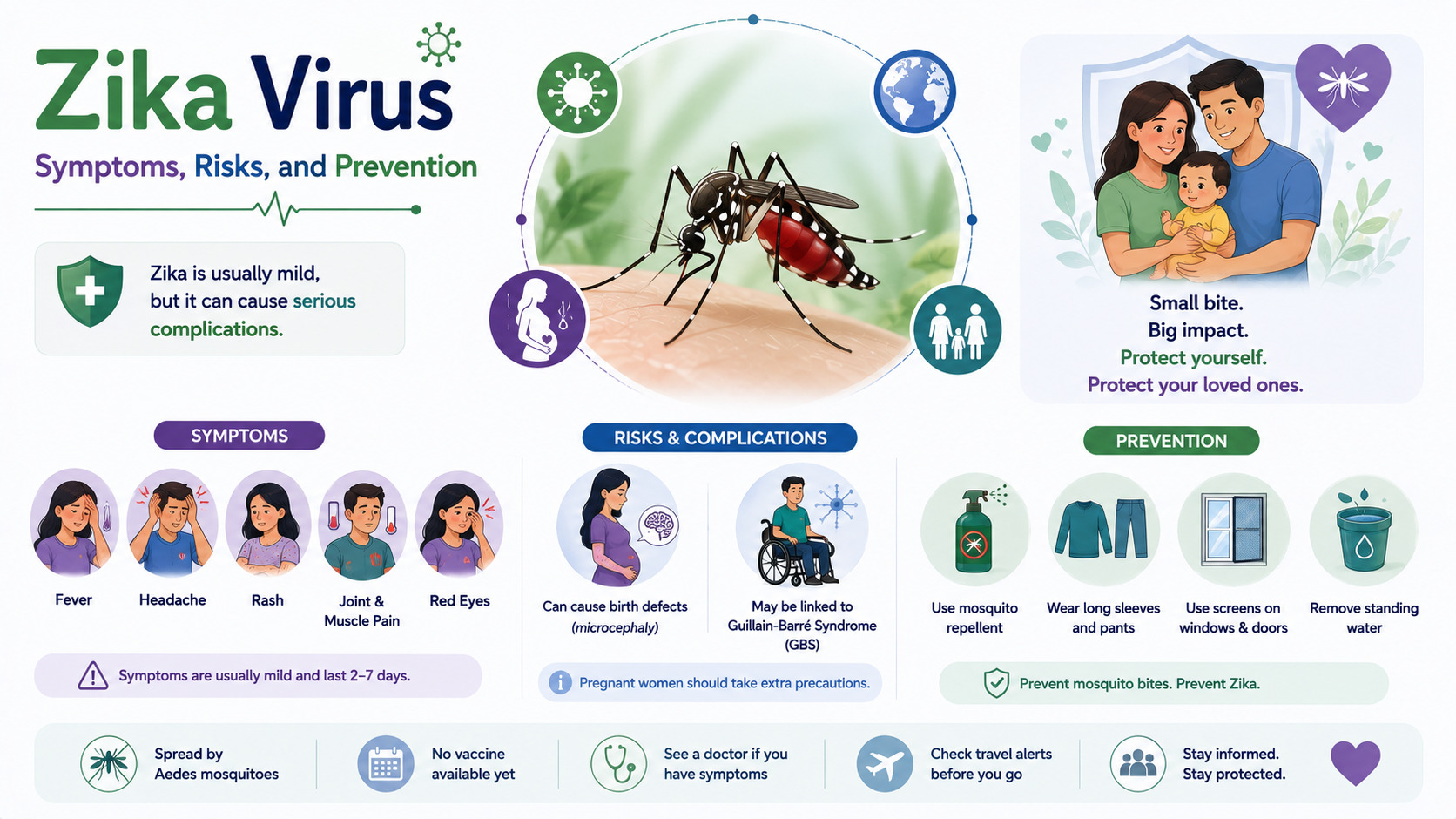
Zika virus is a mosquito-borne illness caused by the bite of Aedes aegypti or Aedes albopictus mosquitoes, the same insects responsible for spreading dengue, chikungunya, and yellow fever. First discovered in Uganda in 1947, Zika remained relatively obscure until outbreaks began occurring across Africa, Asia, and later the Pacific. In 2015, a large epidemic in Brazil drew worldwide attention after doctors linked Zika infections in pregnant women to severe birth defects in newborns.
Although global cases have declined since 2017, Zika remains a health risk in many tropical and subtropical regions of the world, including the Americas, the Caribbean, parts of Africa, and Southeast Asia. While Zika is usually mild in adults and often goes unnoticed, its ability to cause congenital conditions in infants makes it a serious public health concern.
How Zika Spreads
The most common way Zika spreads is through the bite of an infected mosquito. These mosquitoes are aggressive daytime biters but can also feed at night. They breed in standing water around homes and urban areas, which makes them difficult to control.
In addition to mosquito bites, Zika can also spread through:
- Pregnancy: An infected pregnant woman can pass the virus to her fetus, leading to congenital Zika syndrome.
- Sexual contact: Zika can persist in semen and vaginal fluids for weeks or even months, allowing the virus to be transmitted through oral, vaginal, or anal sex — even when the infected person has no symptoms.
- Blood transfusions and organ transplants: Though rare, transmission through infected blood has been documented in some countries.
Once infected, most people are thought to gain protection against reinfection, though the duration of immunity remains under study.
Symptoms of Zika Virus
Most people with Zika never develop symptoms, and when symptoms do occur, they are usually mild and last only a few days to a week. Typical symptoms include:
- Mild fever
- Rash (often itchy and patchy)
- Joint pain or muscle aches
- Conjunctivitis (red eyes)
- Headache
- General malaise or fatigue
Symptoms usually appear 3–14 days after infection. Because Zika symptoms resemble those of dengue and chikungunya, lab tests are often needed to confirm a diagnosis.
Complications of Zika
While most adults recover without issues, Zika can cause severe complications in certain groups:
During pregnancy
- Microcephaly: A condition where infants are born with smaller-than-normal heads and underdeveloped brains.
- Congenital Zika syndrome: A cluster of conditions including brain damage, eye abnormalities, joint deformities, and hearing loss.
- Pregnancy complications: Zika increases the risk of miscarriage, stillbirth, preterm birth, and low birth weight.
In adults and older children
- Guillain-Barré syndrome (GBS): A rare but serious autoimmune condition that can cause temporary paralysis.
- Neurological complications: Myelitis (spinal cord inflammation) and neuropathy have also been linked to Zika.
Diagnosis
Doctors diagnose Zika based on recent travel history, symptoms, and lab tests. Diagnostic options include:
- Blood and urine tests to detect viral genetic material.
- Antibody tests to check for the body’s immune response, though these can cross-react with dengue.
Pregnant women who may have been exposed to Zika should seek testing and ultrasounds to monitor fetal development.
Treatment
There is currently no specific antiviral treatment or cure for Zika virus. Care focuses on relieving symptoms and preventing complications:
- Rest and stay hydrated.
- Use acetaminophen (Tylenol) for fever and pain.
- Avoid aspirin and nonsteroidal anti-inflammatory drugs (NSAIDs) until dengue is ruled out, due to the risk of bleeding.
Most people recover within a week. However, pregnant women who test positive require close monitoring throughout pregnancy.
Prevention
Since there is no widely available vaccine, the best defense against Zika is prevention.
Mosquito protection:
- Wear long-sleeved shirts, pants, and shoes when outdoors.
- Apply EPA-approved repellents containing DEET, picaridin, IR3535, or oil of lemon eucalyptus.
- Use mosquito nets if sleeping during the day or in unscreened housing.
- Eliminate standing water around your home (flowerpots, buckets, old tires) to reduce breeding grounds.
Sexual transmission precautions:
- Use condoms consistently or abstain from sex for at least 2 months (women) or 3 months (men) after potential exposure.
- Pregnant women should avoid unprotected sex with partners who may have been exposed to Zika.
Pregnancy precautions:
- Pregnant women are strongly advised to avoid traveling to areas with active Zika outbreaks.
- If travel is unavoidable, strict mosquito protection and safe sex practices are essential.
Global and Public Health Response
The 2015–2016 outbreak led the World Health Organization (WHO) to declare Zika-related birth defects a Public Health Emergency of International Concern (PHEIC). Although case numbers have dropped, Zika remains a concern in regions with Aedes mosquitoes. Public health authorities continue to monitor outbreaks, conduct mosquito control programs, and work toward developing a safe vaccine.
Outlook
For most healthy adults, Zika virus causes no symptoms or only mild illness. However, the risks during pregnancy and the potential for neurological complications mean the virus should not be underestimated. Preventive steps such as mosquito control, safe sex practices, and travel precautions remain the best tools against Zika until a vaccine becomes widely available.
