




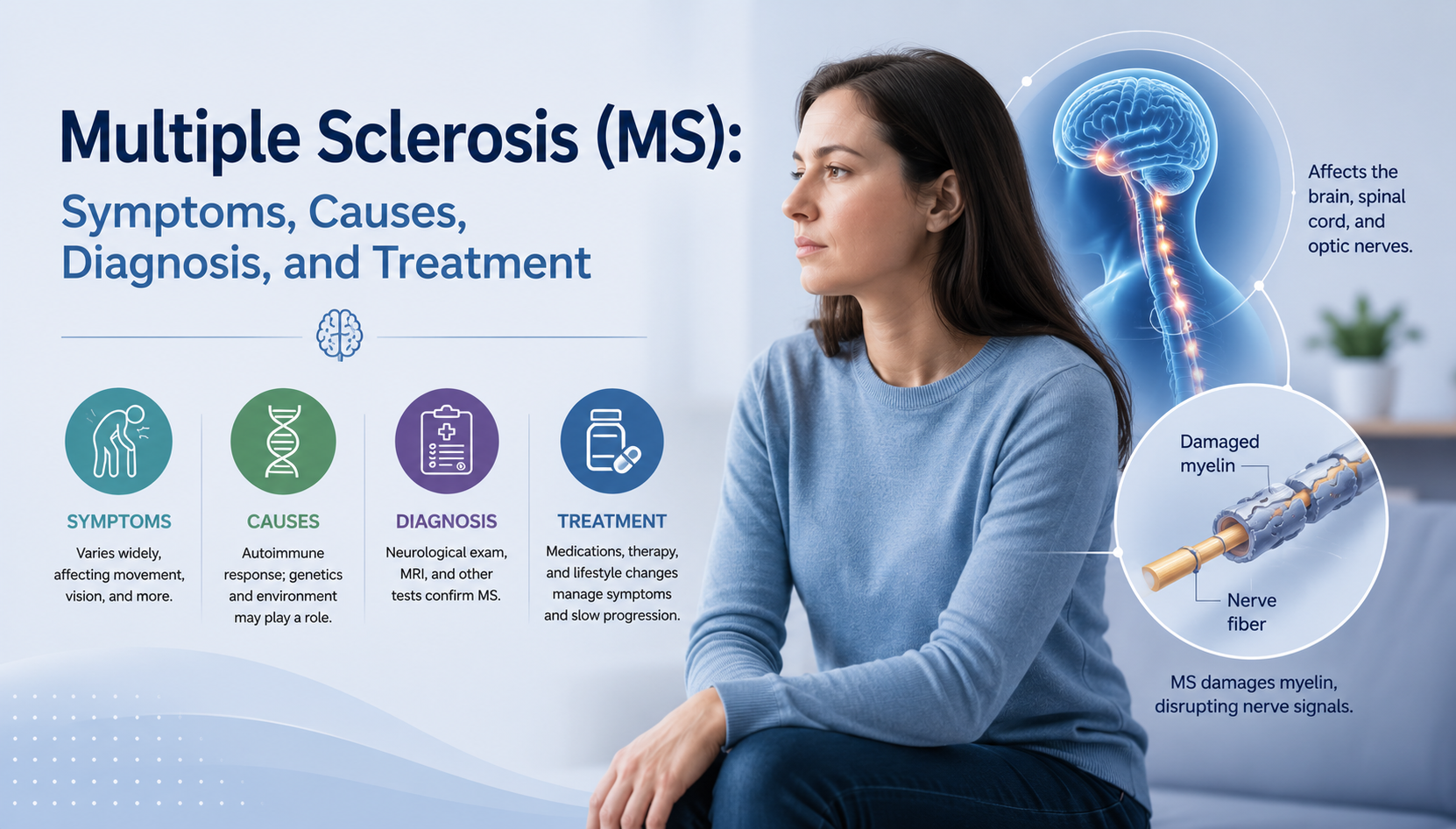
Multiple sclerosis (MS) is a long-term, often unpredictable condition that affects the central nervous system — the brain, spinal cord, and optic nerves. It occurs when the immune system mistakenly attacks myelin, the protective sheath that surrounds nerve fibers. This damage, called demyelination, disrupts the communication between the brain and the rest of the body, leading to a wide variety of symptoms.
While MS has no cure, many people live full and active lives thanks to advances in treatment, symptom management, and lifestyle strategies. Understanding its symptoms, causes, diagnosis, and treatments can help patients and families manage the condition more effectively.
What Happens in MS
In MS, the immune system triggers inflammation that damages myelin and, in some cases, the underlying nerve fibers. Without myelin, nerve signals slow down or stop completely. Over time, repeated attacks can cause scar tissue (lesions) in the brain and spinal cord.
The disease can affect almost any part of the central nervous system, meaning symptoms and progression vary widely. Some people experience long periods of remission, while others have a steady decline in function.
Types of Multiple Sclerosis
MS is classified into several types based on disease progression and patterns of relapse:
- Clinically Isolated Syndrome (CIS) – A single episode of neurological symptoms caused by inflammation and demyelination. CIS may or may not progress to MS.
- Relapsing-Remitting MS (RRMS) – The most common type at diagnosis, involving flare-ups (relapses) followed by periods of remission where symptoms improve or disappear.
- Primary-Progressive MS (PPMS) – A gradual worsening of neurological function from the start, without distinct relapses.
- Secondary-Progressive MS (SPMS) – Begins as RRMS but later transitions into a progressive form, with or without occasional relapses.
- Radiologically Isolated Syndrome (RIS) – MS-like changes seen on MRI without noticeable symptoms.
Early Signs and Common Symptoms
MS symptoms vary depending on which nerves are affected. Early signs can be subtle, but common first symptoms include:
- Numbness or tingling in the face, arms, or legs
- Vision changes, such as blurred or double vision, or pain with eye movement (optic neuritis)
- Muscle weakness or stiffness
- Difficulty walking or keeping balance
- Extreme fatigue not relieved by rest
As the disease progresses, symptoms can include:
- Bladder or bowel problems
- Dizziness or vertigo
- Slurred speech
- Cognitive difficulties (memory, concentration, problem-solving)
- Muscle spasms or tremors
- Sexual dysfunction
- Sensitivity to heat, which can temporarily worsen symptoms (known as Uhthoff’s phenomenon)
Primary, Secondary, and Tertiary Symptoms
- Primary symptoms result directly from nerve damage (e.g., weakness, numbness, vision problems).
- Secondary symptoms develop as a consequence of the primary ones (e.g., urinary tract infections from bladder issues, muscle weakness from lack of mobility).
- Tertiary symptoms involve the social and psychological effects of MS, such as depression, job loss, or relationship strain.
Causes and Risk Factors
The exact cause of MS is unknown, but it’s believed to be an autoimmune reaction influenced by genetics and environment.
Risk factors include:
- Age (most diagnoses occur between 20–40 years)
- Sex (women are 2–3 times more likely to have MS)
- Family history of MS
- Low vitamin D levels and limited sunlight exposure
- Certain viral infections (e.g., Epstein-Barr virus)
- Smoking
- Obesity, particularly during childhood
- Other autoimmune conditions
Diagnosis
No single test confirms MS. Diagnosis typically involves:
- MRI scans to detect lesions in the brain and spinal cord
- Lumbar puncture (spinal tap) to check for abnormal immune proteins (oligoclonal bands)
- Evoked potential tests to measure how quickly the brain responds to stimuli
- Blood tests to rule out other conditions
Doctors look for evidence of lesions in different parts of the CNS and at different points in time.
Treatment Options
While there’s no cure, treatments aim to:
- Modify the disease course – Disease-modifying therapies (DMTs) such as interferon beta, glatiramer acetate, fingolimod, ocrelizumab, and others can reduce relapses and slow progression.
- Manage relapses – High-dose corticosteroids can shorten recovery from flare-ups.
- Control symptoms – Medications and therapies address fatigue, pain, spasticity, bladder problems, and depression.
- Support function – Physical therapy, occupational therapy, and speech therapy help maintain independence.
Living with MS
Lifestyle plays a key role in managing MS. Helpful strategies include:
- Balanced diet rich in fruits, vegetables, lean proteins, and whole grains
- Regular exercise such as swimming, yoga, or walking
- Adequate rest and stress management techniques like meditation or tai chi
- Avoiding smoking and limiting alcohol
- Protecting against heat with cooling devices or by staying in cool environments
Support groups and counseling can help with emotional challenges.
Complications
Possible complications of MS include:
- Severe mobility problems or paralysis
- Cognitive decline
- Depression and anxiety
- Recurrent infections due to bladder issues
- Bone thinning from reduced mobility
- Muscle contractures from prolonged stiffness
Prognosis and Life Expectancy
Most people with MS have a near-normal life expectancy. Advances in treatments mean fewer people experience severe disability than in the past. The course of MS varies — some have long periods of remission, while others face steady progression.
Key Takeaways
Multiple sclerosis is a complex neurological condition that affects each person differently. While there’s no cure, early diagnosis, appropriate treatment, and a healthy lifestyle can help manage symptoms, reduce relapses, and maintain quality of life. Staying informed, proactive, and supported makes a significant difference in living well with MS.
