






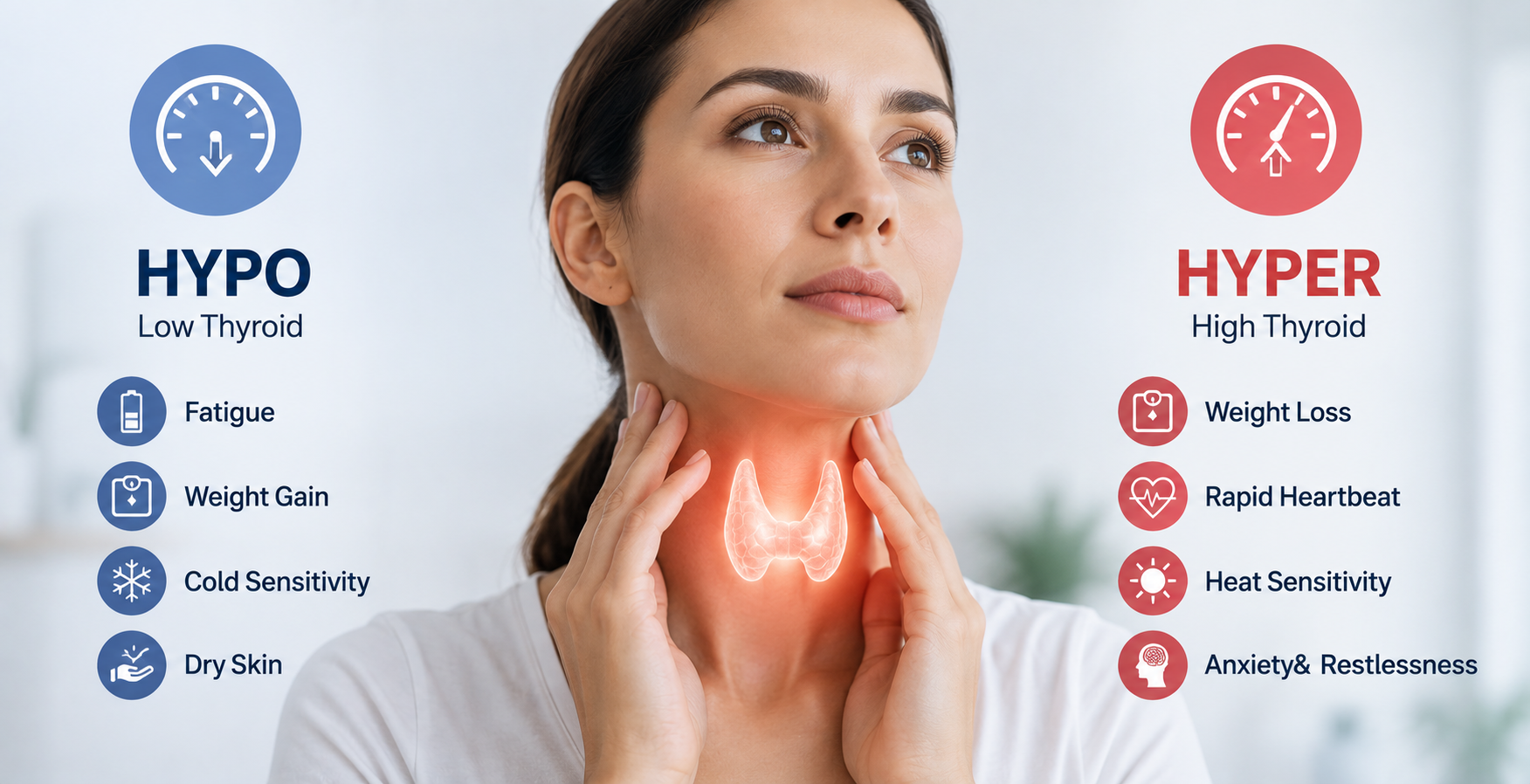
The thyroid is a small butterfly-shaped gland located at the front of the neck, but despite its size, it plays an enormous role in maintaining overall health. It produces hormones that regulate metabolism, energy production, body temperature, heart rate, digestion, brain function, and many other essential processes. When thyroid hormone levels become too high or too low, nearly every organ system can be affected.
Because thyroid disorders develop gradually, many people mistake the symptoms for normal aging, stress, poor sleep, or a busy lifestyle. Fatigue, weight changes, mood disturbances, hair loss, and difficulty concentrating are often dismissed for months or even years before the underlying thyroid problem is identified. Early recognition is important because untreated thyroid disease can lead to serious health complications, while appropriate treatment is highly effective for most patients.
This guide explains the common signs of thyroid hormone imbalance, why these disorders occur, how they are diagnosed, and the treatment options available to restore healthy hormone levels.
What Does the Thyroid Gland Do?
The thyroid gland produces two primary hormones known as thyroxine (T4) and triiodothyronine (T3). These hormones influence how quickly the body’s cells convert nutrients into energy, a process commonly referred to as metabolism.
The pituitary gland, located at the base of the brain, controls thyroid function by releasing thyroid-stimulating hormone (TSH). When thyroid hormone levels fall, TSH rises to stimulate the thyroid gland. When hormone levels become too high, TSH decreases.
This carefully balanced feedback system helps maintain stable hormone levels throughout the body. When any part of this system becomes disrupted, thyroid hormone imbalance develops.
What Is Thyroid Hormone Imbalance?
A thyroid hormone imbalance occurs when the thyroid produces either too little or too much hormone.
When hormone production decreases, the condition is known as hypothyroidism. Body processes slow down, leading to fatigue, weight gain, constipation, dry skin, and cold intolerance.
When the thyroid produces excessive hormones, the condition is called hyperthyroidism. Metabolism speeds up, causing symptoms such as weight loss, rapid heartbeat, heat intolerance, anxiety, tremors, and excessive sweating.
Although these disorders produce opposite effects, both require medical evaluation and appropriate treatment.
Signs of an Underactive Thyroid (Hypothyroidism)
Hypothyroidism usually develops slowly over months or years. The symptoms often begin subtly and become more noticeable as hormone levels continue to decline.
Persistent fatigue is one of the earliest and most common complaints. Even after a full night’s sleep, many people feel exhausted throughout the day and struggle with reduced physical stamina.
Weight gain may occur despite no significant change in eating habits. Because metabolism slows, the body burns fewer calories at rest.
Many people become unusually sensitive to cold temperatures, often feeling chilly when others are comfortable.
Dry skin, brittle nails, and coarse or thinning hair frequently develop because thyroid hormones influence skin renewal and hair growth.
Constipation is another common symptom, resulting from slower movement of the digestive tract.
Some individuals notice swelling of the face, hoarseness, muscle weakness, joint stiffness, slowed thinking, poor concentration, memory difficulties, or depression.
Women may experience heavier menstrual periods, irregular cycles, fertility problems, or difficulty becoming pregnant.
If left untreated, severe hypothyroidism can eventually affect heart function, cholesterol levels, and overall metabolism.
Signs of an Overactive Thyroid (Hyperthyroidism)
Hyperthyroidism has the opposite effect on the body.
Many people experience unexplained weight loss despite having a normal or even increased appetite. Because metabolism accelerates, calories are burned much more rapidly.
A rapid heartbeat, palpitations, or an irregular heart rhythm often develops and may be especially noticeable during periods of rest.
People frequently become intolerant of warm temperatures and sweat excessively even in mild weather.
Nervousness, anxiety, irritability, and difficulty sleeping are common because excess thyroid hormone overstimulates the nervous system.
Fine hand tremors may appear, making precise tasks more difficult.
Frequent bowel movements, muscle weakness, fatigue despite increased activity, and thinning hair may also occur.
Women often notice lighter or less frequent menstrual periods.
Some individuals with Graves’ disease, the most common cause of hyperthyroidism, develop eye symptoms including redness, dryness, swelling around the eyes, or bulging eyes.
Common Causes of Thyroid Hormone Imbalance
Several medical conditions can affect thyroid hormone production.
Hashimoto’s thyroiditis is the leading cause of hypothyroidism in many countries. It is an autoimmune disease in which the immune system gradually attacks thyroid tissue, reducing hormone production over time.
Hyperthyroidism is most commonly caused by Graves’ disease, another autoimmune condition in which antibodies stimulate the thyroid to produce excessive hormone.
Other possible causes include thyroid nodules, thyroid inflammation, iodine deficiency or excess, previous thyroid surgery, radiation therapy involving the neck, certain medications, and congenital thyroid disorders.
Temporary thyroid hormone changes sometimes occur after pregnancy or during recovery from viral infections affecting the thyroid gland.
Who Is at Higher Risk?
Although thyroid disorders can affect anyone, certain groups have a greater likelihood of developing hormone imbalance.
Women are significantly more likely than men to develop thyroid disease, particularly after pregnancy and during middle age.
A family history of thyroid disorders increases risk, suggesting a strong genetic component.
Individuals with other autoimmune diseases such as type 1 diabetes, rheumatoid arthritis, celiac disease, lupus, or vitiligo are also more likely to develop autoimmune thyroid disease.
Older adults, people who have received radiation treatment to the head or neck, and those with previous thyroid surgery require ongoing monitoring.
How Thyroid Disorders Are Diagnosed
Because symptoms often resemble many other medical conditions, blood testing is essential for diagnosis.
The first and most important test is usually thyroid-stimulating hormone (TSH). Elevated TSH generally suggests hypothyroidism, while low TSH usually indicates hyperthyroidism.
Doctors often measure free T4, and in some cases free T3, to better assess thyroid hormone levels.
When autoimmune thyroid disease is suspected, antibody tests such as thyroid peroxidase (TPO) antibodies or thyroid receptor antibodies may be recommended.
If thyroid enlargement or nodules are present, ultrasound imaging provides detailed information about the structure of the gland. Occasionally, radioactive iodine uptake scans help determine the cause of hyperthyroidism.
Treatment Options
Treatment depends entirely on the underlying disorder.
Hypothyroidism is usually treated with levothyroxine, a synthetic form of thyroid hormone that replaces the hormone the body no longer produces adequately. Most patients require lifelong treatment, although dosage adjustments are sometimes needed over time.
Hyperthyroidism may be treated using medications that reduce thyroid hormone production, radioactive iodine therapy that gradually destroys overactive thyroid tissue, or surgery to remove part or all of the thyroid gland.
The choice of treatment depends on age, overall health, pregnancy status, severity of disease, and the underlying cause.
Regular follow-up blood tests ensure hormone levels remain within the target range and help guide medication adjustments.
Living Well with Thyroid Disease
Most people with thyroid disorders lead healthy, active lives once treatment has been optimized.
Taking medication consistently, attending regular follow-up appointments, and reporting new symptoms promptly are important aspects of long-term management.
Eating a balanced diet, exercising regularly, maintaining a healthy weight, managing stress, and getting sufficient sleep all support overall health, although lifestyle changes alone cannot replace appropriate medical treatment for thyroid disease.
Patients should also discuss any supplements with their healthcare provider, as certain minerals, including calcium and iron, can interfere with the absorption of thyroid medication if taken at the same time.
When Should You See a Doctor?
Medical evaluation is recommended if you develop persistent fatigue, unexplained weight gain or weight loss, ongoing changes in heart rate, increased sensitivity to heat or cold, hair thinning, constipation, anxiety, depression, menstrual changes, or swelling in the neck.
Early diagnosis often prevents complications and allows symptoms to improve much sooner.
Frequently Asked Questions
Early symptoms often include persistent fatigue, unexplained weight changes, changes in body temperature tolerance, mood changes, dry skin, hair thinning, or heart palpitations. Because these symptoms are common to many conditions, blood testing is necessary for diagnosis.
Yes. Both hypothyroidism and hyperthyroidism can cause diffuse hair thinning. Hair growth usually improves after thyroid hormone levels return to normal, although recovery may take several months.
Yes. Low thyroid hormone levels may contribute to depression, slowed thinking, and memory problems, while excess thyroid hormone can cause anxiety, irritability, and difficulty sleeping.
Some thyroid disorders are temporary, but many require lifelong management. Fortunately, most people achieve excellent symptom control with appropriate medication and regular medical follow-up.
No. While a nutritious diet supports overall health, thyroid hormone disorders usually require medical treatment. Dietary changes should complement—not replace—prescribed therapy.
The Bottom Line
Thyroid hormone imbalance can affect nearly every system in the body, producing symptoms that range from subtle fatigue and weight changes to significant heart, metabolic, and neurological problems. Because these disorders often develop gradually, they are frequently overlooked or mistaken for other health conditions.
Fortunately, thyroid diseases are among the most manageable endocrine disorders. Early recognition, accurate diagnosis through blood testing, and individualized treatment allow most people to regain normal hormone levels and enjoy an excellent quality of life. If you notice persistent symptoms suggestive of thyroid dysfunction, discussing them with a healthcare professional is the first step toward effective treatment and long-term health.


