






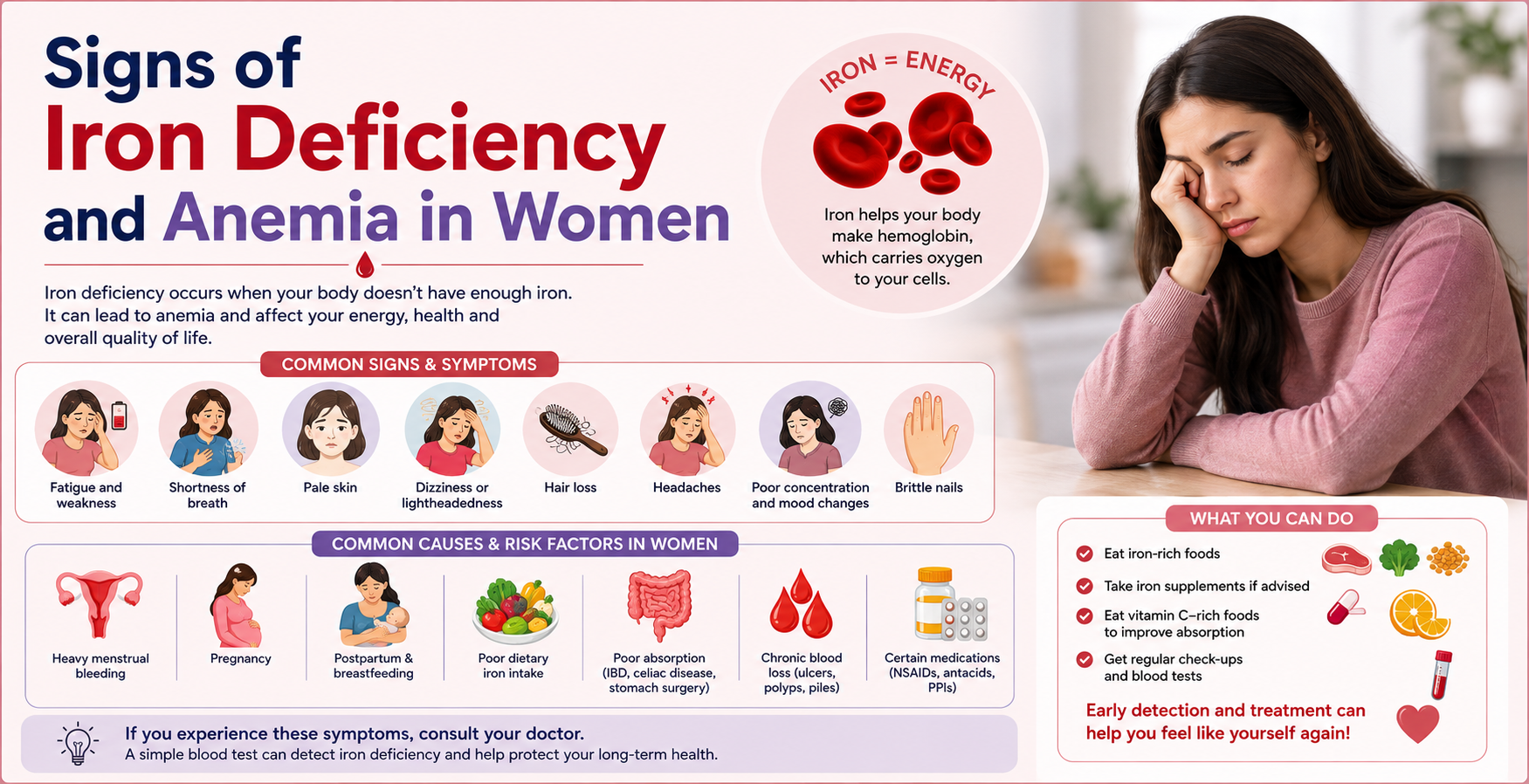
Iron deficiency is one of the most common nutritional deficiencies worldwide, affecting hundreds of millions of people every year. Women are particularly vulnerable because their bodies require more iron during certain stages of life, including adolescence, pregnancy, and the reproductive years. While mild iron deficiency may develop gradually and go unnoticed for months, untreated deficiency can eventually lead to iron deficiency anemia—a condition that reduces the blood’s ability to transport oxygen throughout the body.
Many women assume that feeling constantly tired, lacking energy, or struggling to concentrate is simply part of a busy lifestyle. Others blame stress, lack of sleep, or hormonal changes. Although these factors can certainly contribute to fatigue, they may also mask one of the earliest warning signs of iron deficiency.
Recognizing the symptoms early is important because iron deficiency is often easier to treat before anemia develops. Understanding why iron matters, who is most at risk, and how symptoms progress can help women seek medical evaluation before complications occur.
This comprehensive guide explains the difference between iron deficiency and iron deficiency anemia, explores the most common and overlooked symptoms, discusses the major causes and risk factors, and helps readers understand when medical attention is necessary.
What Is Iron?
Iron is an essential mineral that supports many critical functions throughout the body. Although it is widely known for its role in producing red blood cells, iron is involved in far more than oxygen transport.
Every cell in the body depends on iron to produce energy efficiently. Iron helps form hemoglobin, the protein inside red blood cells responsible for carrying oxygen from the lungs to organs, muscles, and tissues. Without sufficient iron, the body cannot produce healthy red blood cells, and oxygen delivery gradually declines.
Iron also supports immune function, brain development, hormone production, muscle metabolism, DNA synthesis, and numerous enzyme systems. Because these processes affect nearly every organ, iron deficiency can produce a surprisingly wide range of symptoms that often seem unrelated.
Unlike certain vitamins that the body can manufacture or recycle efficiently, iron must be obtained through diet or supplementation when necessary. Although the body carefully conserves iron, daily losses occur naturally through shedding skin cells, sweating, and digestive tract cell turnover. Women lose additional iron through menstruation, making adequate intake especially important.
Iron Deficiency vs. Iron Deficiency Anemia
Although the terms are frequently used interchangeably, iron deficiency and iron deficiency anemia are not the same condition.
Iron deficiency begins when the body’s stored iron gradually becomes depleted. At this stage, the body may still produce enough hemoglobin to keep blood counts within the normal range. However, iron reserves continue to fall, and symptoms such as fatigue or reduced exercise tolerance may already appear.
As iron stores become exhausted, the bone marrow can no longer produce enough healthy red blood cells. Hemoglobin levels begin to decline, eventually resulting in iron deficiency anemia.
In other words, iron deficiency is the underlying problem, while iron deficiency anemia represents its more advanced stage.
Many women experience iron deficiency for months—or even years—before routine blood tests reveal anemia. This is one reason physicians often measure ferritin, a marker of iron storage, rather than relying solely on hemoglobin.
Early detection provides an opportunity to correct iron deficiency before anemia develops and symptoms become more severe.
Why Are Women More Likely to Develop Iron Deficiency?
Women require more iron than men throughout much of their lives. Several biological and lifestyle factors contribute to this increased risk.
Menstrual blood loss is the most common reason. Every menstrual cycle results in iron loss, and women with heavy periods may lose significantly more than average. Over time, this can gradually deplete iron stores, especially if dietary intake is insufficient.
Pregnancy dramatically increases iron requirements because the mother’s body must produce additional blood while supporting the baby’s growth and development. Iron is also needed for the placenta and expanding maternal tissues. Without adequate intake or supplementation, many pregnant women develop iron deficiency.
Breastfeeding itself does not cause substantial iron loss, but mothers recovering from pregnancy and childbirth often begin the postpartum period with depleted iron stores.
Dietary patterns may also contribute. Women who consume little red meat, follow vegetarian or vegan diets without careful planning, or have restricted eating habits may struggle to meet their daily iron needs.
Certain medical conditions, including celiac disease, inflammatory bowel disease, gastric bypass surgery, or chronic gastrointestinal bleeding, can reduce iron absorption or increase iron loss.
Together, these factors explain why women account for the majority of iron deficiency cases worldwide.
The Body’s Iron Stores: Why Symptoms Develop Slowly
Iron deficiency usually develops gradually rather than suddenly.
The body stores iron primarily in the liver, spleen, bone marrow, and muscles. When dietary intake decreases or iron loss increases, these stored reserves are used first.
Initially, most people feel perfectly healthy because the body compensates remarkably well. As storage levels continue to decline, however, oxygen delivery becomes less efficient, energy production slows, and symptoms begin appearing one by one.
Because this process may take months or years, many women adapt to feeling progressively more tired without realizing anything is medically wrong.
By the time anemia is diagnosed, patients often report that they have “felt exhausted for a long time” but assumed it was simply normal life.
Early Signs of Iron Deficiency
One of the challenges of diagnosing iron deficiency is that its earliest symptoms are often vague and nonspecific.
Persistent fatigue is usually the first noticeable change. Unlike ordinary tiredness after a busy day, iron-related fatigue often persists despite adequate sleep and rest. Many women describe feeling drained shortly after waking or struggling to maintain energy throughout the day.
Reduced physical endurance frequently develops next. Activities that once felt easy—climbing stairs, walking briskly, or exercising—may suddenly require much greater effort.
Difficulty concentrating is another common early complaint. Some women notice decreased productivity at work, trouble focusing during conversations, or feeling mentally “foggy.”
Mood changes may also occur. Irritability, reduced motivation, and increased emotional sensitivity sometimes accompany iron deficiency, although these symptoms are easily mistaken for stress or hormonal fluctuations.
Headaches become more frequent in some individuals, particularly during physical activity or prolonged concentration.
Cold intolerance is another subtle sign. Women with declining iron stores often report feeling unusually cold even when others are comfortable.
These symptoms may appear long before anemia develops, making early diagnosis difficult without laboratory testing.
Symptoms of Iron Deficiency Anemia
As iron deficiency progresses and hemoglobin levels decline, symptoms usually become more noticeable.
Fatigue often becomes profound. Simple daily activities such as shopping, household chores, or walking short distances may leave someone exhausted.
Shortness of breath develops because the body struggles to deliver sufficient oxygen to muscles and organs. Initially, breathlessness occurs during exercise but may eventually appear during routine activities.
Heart palpitations may occur as the heart works harder to compensate for reduced oxygen-carrying capacity. Some women describe a racing heartbeat after climbing stairs or mild exertion.
Dizziness or lightheadedness becomes more common, especially when standing quickly.
Pale skin is a classic sign of anemia, although it may be difficult to recognize in individuals with darker skin tones. Doctors often examine the inner eyelids, palms, or nail beds for evidence of pallor.
Weakness accompanies many cases of moderate to severe anemia because muscles receive less oxygen during activity.
Frequent headaches may worsen as oxygen delivery to the brain decreases.
Poor exercise tolerance often becomes one of the most obvious symptoms, leading many previously active women to reduce physical activity.
Less Obvious Symptoms Many Women Overlook
Iron deficiency affects more than oxygen transport. Many lesser-known symptoms can appear before anemia becomes severe.
Hair thinning is a frequent concern. Although hair loss has many possible causes, iron deficiency is among the most common nutritional contributors, particularly in premenopausal women.
Brittle nails may develop gradually. Some individuals notice spoon-shaped nails, a condition known as koilonychia, although this usually occurs only with long-standing deficiency.
Dry skin may become more noticeable because rapidly dividing skin cells require adequate oxygen and nutrients.
Restless legs syndrome has also been linked to low iron stores. Many affected individuals experience uncomfortable sensations in the legs during the evening that improve temporarily with movement.
Some women develop unusual cravings known as pica. These cravings involve non-food substances such as ice, clay, paper, dirt, or starch. Craving ice, called pagophagia, is particularly associated with iron deficiency and often improves after treatment.
Mouth ulcers may occur more frequently, and some women notice soreness or cracks at the corners of the mouth.
The tongue may become swollen, smooth, painful, or unusually pale because iron deficiency affects rapidly growing tissues.
Frequent infections may also develop since iron supports normal immune function.
Although none of these symptoms confirms iron deficiency on its own, their presence alongside fatigue should prompt medical evaluation.
Common Causes of Iron Deficiency in Women
Iron deficiency usually results from one or more underlying causes rather than poor nutrition alone.
Heavy menstrual bleeding remains the leading cause among women of reproductive age. Conditions such as uterine fibroids, adenomyosis, endometriosis, hormonal disorders, or bleeding disorders may significantly increase menstrual blood loss.
Pregnancy substantially raises iron requirements. Women carrying twins or multiple pregnancies are at even greater risk.
Poor dietary intake also contributes, particularly among individuals consuming little meat or other iron-rich foods.
Digestive disorders that interfere with nutrient absorption—including celiac disease, Crohn’s disease, ulcerative colitis, and certain stomach surgeries—may reduce the body’s ability to absorb iron from food.
Chronic gastrointestinal bleeding should also be considered, especially in women after menopause. Stomach ulcers, colon polyps, inflammatory bowel disease, hemorrhoids, and colorectal cancer can all cause slow blood loss that gradually depletes iron stores.
Frequent blood donation may also contribute in susceptible individuals.
Certain medications, including long-term use of proton pump inhibitors or some anti-inflammatory drugs, may indirectly increase the risk of iron deficiency by reducing absorption or causing gastrointestinal bleeding.
Risk Factors Throughout a Woman’s Life
Iron requirements change considerably throughout life.
Teenage girls frequently develop deficiency because rapid growth increases iron needs just as menstruation begins. Combined with irregular eating habits or restrictive diets, this creates a particularly vulnerable period.
Women of childbearing age remain the highest-risk group because of monthly menstrual blood loss.
Pregnant women experience the greatest physiological demand for iron. Healthcare providers routinely screen for anemia during pregnancy because untreated deficiency increases the risk of maternal complications and may affect fetal development.
After childbirth, many women continue to experience depleted iron stores, particularly following significant blood loss during delivery.
Although menopause eliminates menstrual blood loss, iron deficiency should never be dismissed in older women. New-onset deficiency after menopause warrants careful medical evaluation because chronic internal bleeding becomes a more important possibility.
When Symptoms Should Never Be Ignored
While mild iron deficiency may develop gradually, some symptoms require prompt medical attention.
Progressively worsening fatigue that interferes with daily life should never be considered “normal.”
Chest pain, severe shortness of breath, fainting, or rapid heartbeat at rest require urgent medical evaluation because significant anemia can place additional strain on the heart.
Black stools, vomiting blood, unexplained weight loss, persistent abdominal pain, or visible blood in the stool should also be investigated immediately, as these symptoms may indicate gastrointestinal bleeding.
Women whose menstrual periods suddenly become much heavier than usual should discuss these changes with their healthcare provider, especially if accompanied by increasing fatigue or dizziness.
How Iron Deficiency Is Diagnosed
Iron deficiency cannot be confirmed based on symptoms alone. Fatigue, dizziness, headaches, and poor concentration can occur in many medical conditions, which is why healthcare providers rely on blood tests to determine whether iron levels are truly low and to identify the underlying cause.
The diagnostic process usually begins with a review of your medical history and a physical examination. Your doctor will ask about your menstrual cycle, pregnancy history, diet, medications, family history, digestive symptoms, recent surgeries, blood donation, and any chronic medical conditions. These details often provide important clues about why iron deficiency may have developed.
Blood tests are then used to assess iron stores, red blood cell production, and the severity of anemia. Rather than relying on a single laboratory value, physicians interpret several results together to build a complete clinical picture.
Understanding Ferritin: The Most Important Iron Test
Ferritin is the body’s primary iron storage protein and is often considered the best laboratory marker for detecting iron deficiency before anemia develops.
When iron intake becomes insufficient or blood loss increases, the body first uses its stored iron reserves. Ferritin levels decline long before hemoglobin falls below the normal range. This means someone may experience symptoms of iron deficiency despite having a normal Complete Blood Count (CBC).
Low ferritin strongly suggests depleted iron stores and usually confirms iron deficiency in otherwise healthy individuals. However, interpreting ferritin is not always straightforward.
Ferritin is also an inflammatory marker, meaning it rises during infections, chronic inflammatory diseases, liver disease, obesity, autoimmune disorders, and certain cancers. In these situations, ferritin may appear normal—or even elevated—despite underlying iron deficiency. For this reason, physicians often combine ferritin with additional iron studies when inflammation is suspected.
Understanding ferritin has changed the way iron deficiency is diagnosed. Many patients previously told that their blood count was “normal” are now identified as having low iron stores before anemia develops.
Complete Blood Count (CBC)
The Complete Blood Count remains one of the most important investigations when evaluating suspected iron deficiency.
Hemoglobin is typically the first value physicians examine because it measures the blood’s oxygen-carrying capacity. Low hemoglobin confirms anemia but does not identify its cause.
The Mean Corpuscular Volume (MCV) often becomes smaller as iron deficiency progresses. This reflects the production of smaller-than-normal red blood cells, a characteristic feature of long-standing iron deficiency anemia.
Other red blood cell indices—including Mean Corpuscular Hemoglobin (MCH), Mean Corpuscular Hemoglobin Concentration (MCHC), and Red Cell Distribution Width (RDW)—help physicians distinguish iron deficiency from other forms of anemia such as vitamin B12 deficiency, folate deficiency, chronic disease, or inherited blood disorders like thalassemia.
Together, these measurements help determine whether iron deficiency is the most likely explanation for abnormal blood counts.
Other Iron Studies
When the diagnosis remains uncertain, doctors may request additional laboratory tests.
Serum iron measures the amount of circulating iron in the bloodstream. Although useful, it fluctuates considerably throughout the day and is therefore less reliable when interpreted alone.
Transferrin is the protein responsible for transporting iron throughout the body. When iron stores decline, the liver often produces more transferrin in an attempt to capture as much available iron as possible.
Transferrin saturation estimates how much of the available transferrin is carrying iron. Low transferrin saturation commonly supports the diagnosis of iron deficiency.
Total Iron Binding Capacity (TIBC) measures the blood’s ability to bind iron. TIBC often increases in iron deficiency because more transferrin molecules remain unoccupied.
These tests are particularly valuable when chronic inflammation, infection, kidney disease, or liver disease complicates interpretation of ferritin levels.
Searching for the Underlying Cause
Correcting iron deficiency involves more than simply replacing iron. Identifying why iron deficiency developed is equally important.
For younger women with heavy menstrual bleeding, the explanation is often straightforward. However, physicians may still investigate conditions such as uterine fibroids, endometriosis, adenomyosis, hormonal imbalances, or bleeding disorders if menstrual blood loss appears excessive.
In pregnant women, increased iron requirements frequently account for declining iron stores, although dietary intake should also be assessed.
Women after menopause require more careful evaluation because menstrual blood loss is no longer present. In this age group, gastrointestinal bleeding becomes a more significant concern. Physicians may recommend stool tests, upper endoscopy, colonoscopy, or additional imaging to exclude ulcers, polyps, inflammatory bowel disease, or colorectal cancer when clinically appropriate.
Digestive disorders that impair iron absorption—including celiac disease, Crohn’s disease, and previous stomach or intestinal surgery—may also require specialized investigations.
Treating the underlying cause is essential because iron deficiency often returns if the original problem remains unresolved.
Treating Iron Deficiency
Treatment depends on the severity of deficiency, the underlying cause, the patient’s overall health, and whether anemia has developed.
For most people, the primary goal is to replenish iron stores while correcting whatever caused the deficiency in the first place.
Improvement usually occurs gradually rather than overnight. Many patients begin feeling more energetic within several weeks, but restoring normal iron reserves often requires several months of treatment.
Stopping treatment as soon as symptoms improve is a common mistake. Even after hemoglobin returns to normal, iron stores may remain depleted. Physicians frequently recommend continuing supplementation for several additional months to fully rebuild the body’s reserves.
Iron Supplements
Oral iron supplements remain the first-line treatment for most individuals with uncomplicated iron deficiency.
Several different formulations are available, including ferrous sulfate, ferrous fumarate, and ferrous gluconate. While they differ in the amount of elemental iron they provide, all can effectively restore iron stores when taken correctly.
Some patients experience stomach discomfort, nausea, constipation, diarrhea, bloating, or dark-colored stools while taking oral iron. These side effects are common but often improve by adjusting the dosage, switching formulations, or taking supplements with food when necessary, although food may reduce absorption slightly.
Recent research has also shown that taking iron every other day rather than multiple times daily may improve absorption while reducing gastrointestinal side effects in some individuals.
Patients should always follow their healthcare provider’s recommendations regarding dosage and duration rather than self-adjusting treatment.
Intravenous Iron Therapy
Not everyone responds adequately to oral iron supplements.
Intravenous (IV) iron may be recommended for individuals with severe iron deficiency, poor intestinal absorption, inflammatory bowel disease, chronic kidney disease, ongoing blood loss, intolerance to oral iron, or when rapid correction is needed before surgery or during pregnancy.
Modern IV iron formulations are generally safe and allow much larger amounts of iron to be replaced in a shorter period than oral therapy.
Although serious allergic reactions are uncommon, IV iron should always be administered under appropriate medical supervision.
Eating More Iron-Rich Foods
Diet plays an important role in both treating and preventing iron deficiency.
Iron exists in food in two forms: heme iron and non-heme iron.
Heme iron is found in animal foods and is absorbed much more efficiently by the body. Red meat, liver, poultry, seafood, and fish are among the richest dietary sources.
Non-heme iron is found in plant-based foods including lentils, beans, chickpeas, tofu, spinach, kale, pumpkin seeds, quinoa, fortified breakfast cereals, nuts, and dried fruits. Although these foods provide valuable nutrition, the body absorbs non-heme iron less efficiently.
For vegetarians and vegans, careful meal planning becomes especially important to ensure adequate iron intake over time.
Improving Iron Absorption Naturally
The amount of iron you consume is only part of the equation. Equally important is how much your body actually absorbs.
Vitamin C significantly enhances non-heme iron absorption. Combining iron-rich foods with citrus fruits, strawberries, kiwi, tomatoes, bell peppers, broccoli, or other vitamin C-rich foods can improve iron uptake.
Cooking with cast iron cookware may also slightly increase the iron content of certain foods, particularly acidic dishes such as tomato-based sauces.
Conversely, several substances reduce iron absorption.
Tea and coffee contain compounds called tannins that interfere with iron uptake, particularly when consumed with meals.
Calcium supplements and dairy products may temporarily reduce iron absorption if taken simultaneously with iron-rich foods or supplements.
High-fiber foods, whole grains containing phytates, and certain medications used to reduce stomach acid can also decrease absorption under some circumstances.
Rather than eliminating these healthy foods, healthcare providers often recommend separating them from iron supplements by several hours.
How Long Does Recovery Take?
Recovery depends on the severity of deficiency and whether the underlying cause has been corrected.
Many women notice improved energy within two to four weeks after beginning treatment, although complete recovery takes considerably longer.
Hemoglobin often normalizes within two to three months, but replenishing ferritin and restoring the body’s iron stores may require an additional three to six months or longer.
Repeat blood tests allow physicians to confirm that treatment is working and determine when supplementation can safely be discontinued.
What Happens If Iron Deficiency Is Left Untreated?
Untreated iron deficiency can affect nearly every organ system.
Persistent fatigue may reduce work performance, physical activity, academic achievement, and overall quality of life.
Severe anemia forces the heart to work harder in order to deliver adequate oxygen throughout the body. In susceptible individuals, this increased workload may contribute to heart enlargement, abnormal heart rhythms, or heart failure.
During pregnancy, untreated iron deficiency increases the risk of premature birth, low birth weight, maternal complications, and postpartum anemia.
Children born to mothers with severe iron deficiency may also face increased risks related to growth and neurodevelopment.
Long-standing deficiency may impair immune function, increasing susceptibility to infections while slowing recovery after illness.
Fortunately, these complications are often preventable through early diagnosis and appropriate treatment.
Preventing Iron Deficiency
Prevention begins with understanding individual risk factors.
Women with heavy menstrual bleeding should discuss ongoing symptoms with their healthcare provider rather than assuming fatigue is simply part of having periods.
Eating a balanced diet containing iron-rich foods, particularly when combined with vitamin C-rich fruits and vegetables, supports healthy iron levels.
Pregnant women should attend regular prenatal appointments and follow recommendations regarding prenatal vitamins and iron supplementation.
Individuals with digestive disorders or previous gastrointestinal surgery may require periodic monitoring because they remain at increased risk for recurrent deficiency.
Women with a history of iron deficiency anemia often benefit from occasional laboratory testing, even after successful treatment, to ensure iron stores remain adequate.
Frequently Asked Questions
Yes. Iron deficiency often develops before anemia appears. During the early stages, your body’s iron stores become depleted, but your hemoglobin level may still remain within the normal range. This condition is sometimes called non-anemic iron deficiency. Even without anemia, low iron stores can cause symptoms such as fatigue, poor concentration, headaches, restless legs, and reduced exercise performance. A ferritin blood test is often the best way to detect early iron deficiency.
The earliest symptoms are often subtle and easy to overlook. Many women first notice persistent fatigue, reduced energy, difficulty concentrating, headaches, dizziness, or feeling unusually cold. As iron levels continue to fall, symptoms may progress to shortness of breath, heart palpitations, pale skin, and hair thinning.
The most common cause is blood loss through menstruation, particularly in women with heavy periods. Other common causes include pregnancy, inadequate dietary iron intake, digestive disorders that reduce iron absorption, gastrointestinal bleeding, and certain medical conditions that increase the body’s iron requirements.
Yes. Iron deficiency is a well-recognized cause of diffuse hair thinning, especially in women. Hair follicles require adequate oxygen and nutrients to grow normally, and low iron stores may interrupt the normal hair growth cycle. Hair usually begins to recover once iron deficiency has been treated, although noticeable regrowth may take several months
Doctors usually diagnose iron deficiency using a combination of blood tests. These often include a Complete Blood Count (CBC), serum ferritin, serum iron, transferrin saturation, and Total Iron Binding Capacity (TIBC). Ferritin is considered one of the most useful tests because it measures the body’s stored iron.
Excellent sources of iron include lean red meat, liver, poultry, seafood, and fish. Plant-based sources include lentils, beans, chickpeas, spinach, tofu, pumpkin seeds, quinoa, and iron-fortified cereals. Eating these foods together with vitamin C-rich fruits and vegetables can significantly improve iron absorption.
Many people begin feeling better within two to four weeks after starting treatment. However, restoring normal hemoglobin levels usually takes around two to three months, while completely replenishing iron stores may require three to six months or longer. Your healthcare provider may recommend continuing iron supplements even after symptoms improve.
Yes. Some people experience constipation, nausea, stomach discomfort, diarrhea, bloating, or dark-colored stools while taking oral iron supplements. These side effects are usually mild and often improve by adjusting the dose, changing the type of supplement, or taking it as advised by a healthcare professional.
It can be. Untreated iron deficiency may progress to iron deficiency anemia, leading to severe fatigue, reduced physical performance, impaired immune function, pregnancy complications, and in severe cases, heart-related problems. Early diagnosis and treatment can usually prevent these complications.
You should seek medical advice if you experience persistent fatigue, unexplained weakness, shortness of breath, dizziness, frequent headaches, heavy menstrual bleeding, hair loss, or symptoms that interfere with your daily activities. A simple blood test can determine whether iron deficiency is the cause and help guide appropriate treatment.
Final Thoughts
Iron deficiency and iron deficiency anemia remain among the most common—and most treatable—health conditions affecting women. Because symptoms often develop slowly, many women mistakenly accept persistent fatigue, reduced concentration, dizziness, or declining physical performance as normal parts of everyday life.
Fortunately, early diagnosis allows treatment to begin before severe anemia develops. Modern laboratory testing can identify depleted iron stores even when routine blood counts remain normal, giving patients an opportunity to restore their health before complications arise.
If you experience ongoing fatigue, heavy menstrual bleeding, unexplained hair loss, shortness of breath, or other symptoms suggestive of iron deficiency, consult your healthcare provider. A simple blood test may provide the answers needed to begin effective treatment and improve your overall wellbeing.


