






Hair loss affects millions of men and women worldwide and can have a significant impact on confidence and quality of life. While genetics remain the most common cause of thinning hair, factors such as aging, hormonal changes, nutritional deficiencies, stress, medications, and certain medical conditions can also contribute to excessive shedding.
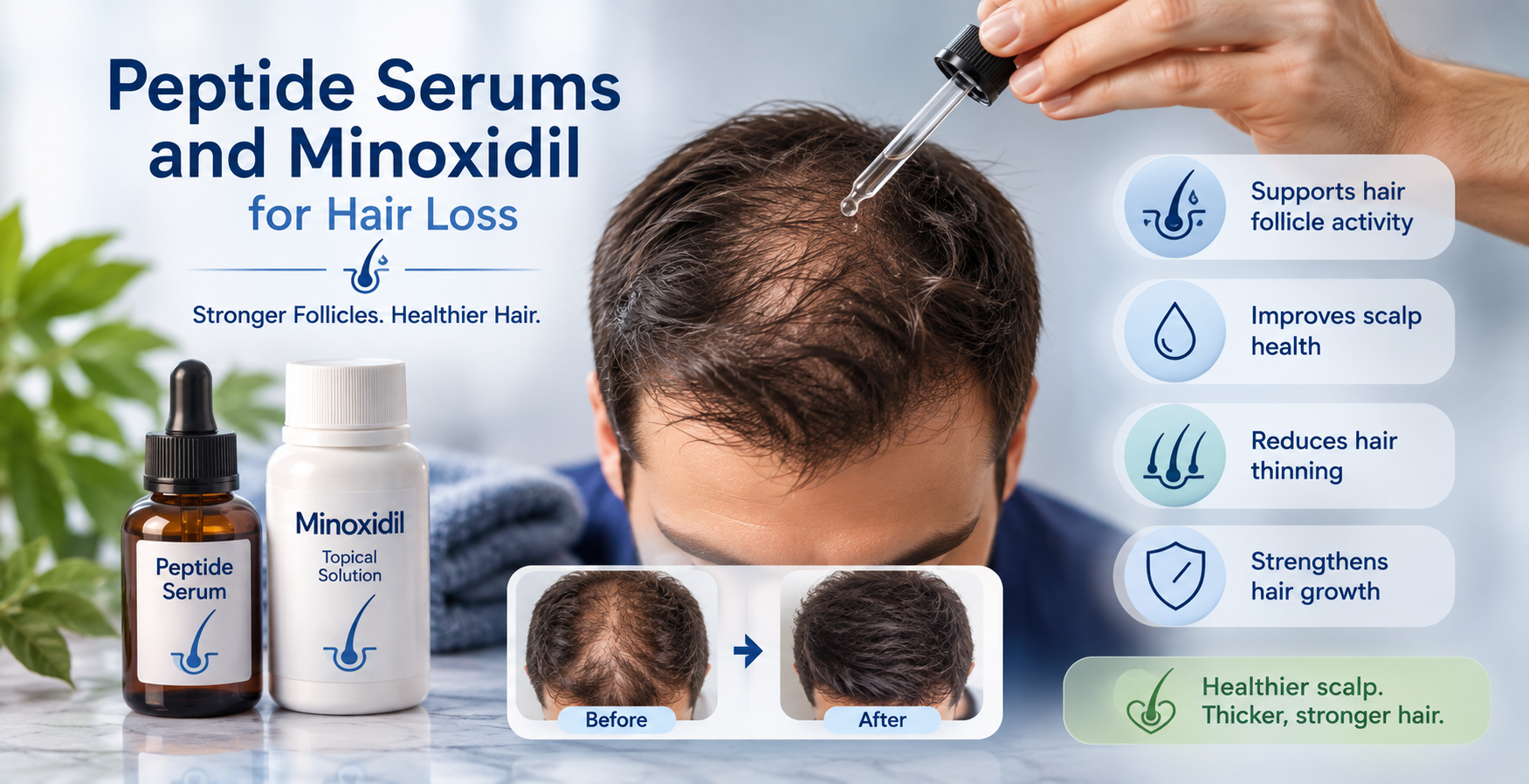
In recent years, peptide-based hair serums have become increasingly popular alongside well-established treatments such as minoxidil. Beauty brands frequently promote peptides as a way to strengthen hair follicles and stimulate growth, while minoxidil continues to be one of the most extensively studied over-the-counter treatments for androgenetic alopecia.
Although both products are designed to support hair growth, they differ considerably in scientific evidence, mechanism of action, and expected results. Understanding these differences can help consumers choose treatments that are appropriate for their individual needs.
Understanding Hair Growth
Hair grows in repeating cycles consisting of three main phases.
The anagen phase is the active growth period, during which hair follicles continuously produce new hair fibers. This phase can last several years.
The catagen phase is a short transitional stage when growth slows and the follicle begins shrinking.
Finally, during the telogen phase, the hair rests before eventually shedding to allow a new hair to develop.
Hair loss occurs when follicles spend less time in the growth phase or gradually become smaller, producing thinner, shorter hairs over time.
What Is Minoxidil?
Minoxidil is an FDA-approved topical medication used to treat androgenetic alopecia, commonly known as male and female pattern hair loss.
Originally developed as an oral medication for high blood pressure, researchers observed increased hair growth as an unexpected side effect. This discovery eventually led to the development of topical minoxidil solutions and foams specifically designed for treating hair loss.
Today, topical minoxidil remains one of the first-line treatments recommended by dermatologists for pattern hair loss.
How Minoxidil Works
Although its exact mechanism is not completely understood, minoxidil is believed to increase blood flow around hair follicles, prolong the anagen (growth) phase, and enlarge miniaturized follicles.
Over time, these effects may allow follicles to produce thicker, longer hairs.
Visible improvement usually requires patience. Most users need three to six months of consistent daily application before noticeable results appear, with maximum improvement often occurring after six to twelve months.
Continued use is necessary because discontinuing treatment typically leads to gradual loss of newly maintained hair.
Effectiveness of Minoxidil
Numerous randomized clinical trials have demonstrated that topical minoxidil can slow hair loss and increase hair density in many individuals with androgenetic alopecia.
Treatment is generally most successful when started during the early stages of hair thinning, before significant follicle loss has occurred.
Minoxidil may also be recommended for certain cases of chronic telogen effluvium or other hair disorders under medical supervision, although effectiveness varies depending on the underlying cause.
Possible Side Effects of Minoxidil
Most people tolerate topical minoxidil well.
Common side effects include mild scalp irritation, itching, dryness, flaking, and temporary increased shedding during the first several weeks of treatment. This early shedding often reflects older hairs making way for new growth and usually resolves over time.
Less commonly, users may experience unwanted facial hair growth if the medication spreads beyond the scalp.
Serious side effects are rare but should be evaluated promptly if they occur.
What Are Peptide Hair Serums?
Peptides are short chains of amino acids that function as signaling molecules throughout the body.
In skincare, peptides are commonly used to support collagen production. In hair care, peptide-based serums are designed to create an environment that may support healthier hair follicles and improve scalp health.
Many commercial formulations combine peptides with botanical extracts, caffeine, niacinamide, biotin, hyaluronic acid, or antioxidants.
Unlike minoxidil, peptide serums are generally marketed as cosmetic products rather than medications.
How Peptides May Support Hair Growth
Researchers believe certain peptides may influence cellular communication within hair follicles.
Laboratory studies suggest some peptides may encourage follicle activity, reduce inflammation, support scalp hydration, and improve the overall environment needed for healthy hair growth.
Some peptide complexes have demonstrated encouraging early clinical results, but the available evidence remains much more limited than for minoxidil.
Different products also contain different peptide combinations, making direct comparisons difficult.
Scientific Evidence for Peptide Serums
Interest in peptide-based hair treatments has increased rapidly over the past decade.
Several small clinical studies suggest that certain peptide formulations may improve hair density, hair thickness, and overall hair appearance after consistent use for several months.
However, most studies involve relatively small numbers of participants, different peptide formulations, and shorter follow-up periods than studies evaluating minoxidil.
While these findings are promising, larger independent clinical trials are still needed before peptide serums can be considered equivalent to established medical treatments.
Can Peptides and Minoxidil Be Used Together?
In many cases, yes.
Because they work through different mechanisms, dermatologists may recommend combining peptide serums with minoxidil as part of a comprehensive hair care routine.
Minoxidil provides the strongest evidence for stimulating hair growth, while peptide formulations may support scalp health and potentially complement other therapies.
Introducing products gradually allows users to identify any irritation while monitoring individual response.
People using prescription treatments for hair loss should discuss combination therapy with their dermatologist.
Who May Benefit Most?
Individuals with early pattern hair loss generally have the greatest chance of benefiting from topical minoxidil.
Peptide serums may appeal to people seeking cosmetic scalp support, individuals with mild thinning, or those looking to complement established treatments.
Neither option is likely to restore hair in areas where follicles have been permanently lost or replaced by scar tissue.
When hair loss develops suddenly, progresses rapidly, or is accompanied by scalp pain, redness, or patchy bald spots, medical evaluation is essential to identify the underlying cause before beginning treatment.
Other Factors That Influence Hair Growth
Hair health depends on far more than topical products alone.
Adequate protein intake, sufficient iron, zinc, vitamin D, and other nutrients contribute to normal hair growth.
Managing chronic stress, treating thyroid disease, correcting nutritional deficiencies, and addressing hormonal disorders may significantly improve hair growth in appropriate individuals.
Gentle hair care practices, avoiding excessive heat styling, limiting tight hairstyles, and protecting the scalp from sun damage also support healthier hair over time.
Frequently Asked Questions
Is minoxidil more effective than peptide serums?
Current scientific evidence strongly favors minoxidil. It has been studied extensively in large clinical trials and is approved for treating pattern hair loss, whereas peptide serums remain supported by more limited research.
How long does it take to see results?
Most people require at least three to six months of consistent use before noticeable improvements become visible. Hair growth treatments generally require long-term commitment.
Can I use peptide serums and minoxidil together?
In many cases, yes. Because they have different mechanisms of action, they may complement one another. Consult a dermatologist if you are unsure which products are appropriate for your situation.
Does minoxidil cause hair shedding?
Temporary increased shedding may occur during the first few weeks of treatment as older hairs are replaced by new growth. This usually improves with continued use.
When should I see a doctor for hair loss?
Medical evaluation is recommended if hair loss develops suddenly, occurs in patches, is associated with pain or inflammation, or continues despite appropriate treatment.
The Bottom Line
Minoxidil remains one of the most effective and scientifically supported treatments available for androgenetic hair loss, with decades of clinical research demonstrating its ability to slow hair thinning and promote regrowth in many individuals. Peptide serums represent an exciting and rapidly evolving area of cosmetic hair care, offering potential benefits for scalp health and follicle support, but current evidence is considerably less robust.
For many people, the most successful approach involves early intervention, realistic expectations, and consistent long-term treatment. Anyone experiencing significant or unexplained hair loss should seek medical evaluation to identify the underlying cause and develop a personalized treatment plan based on the best available scientific evidence.


