




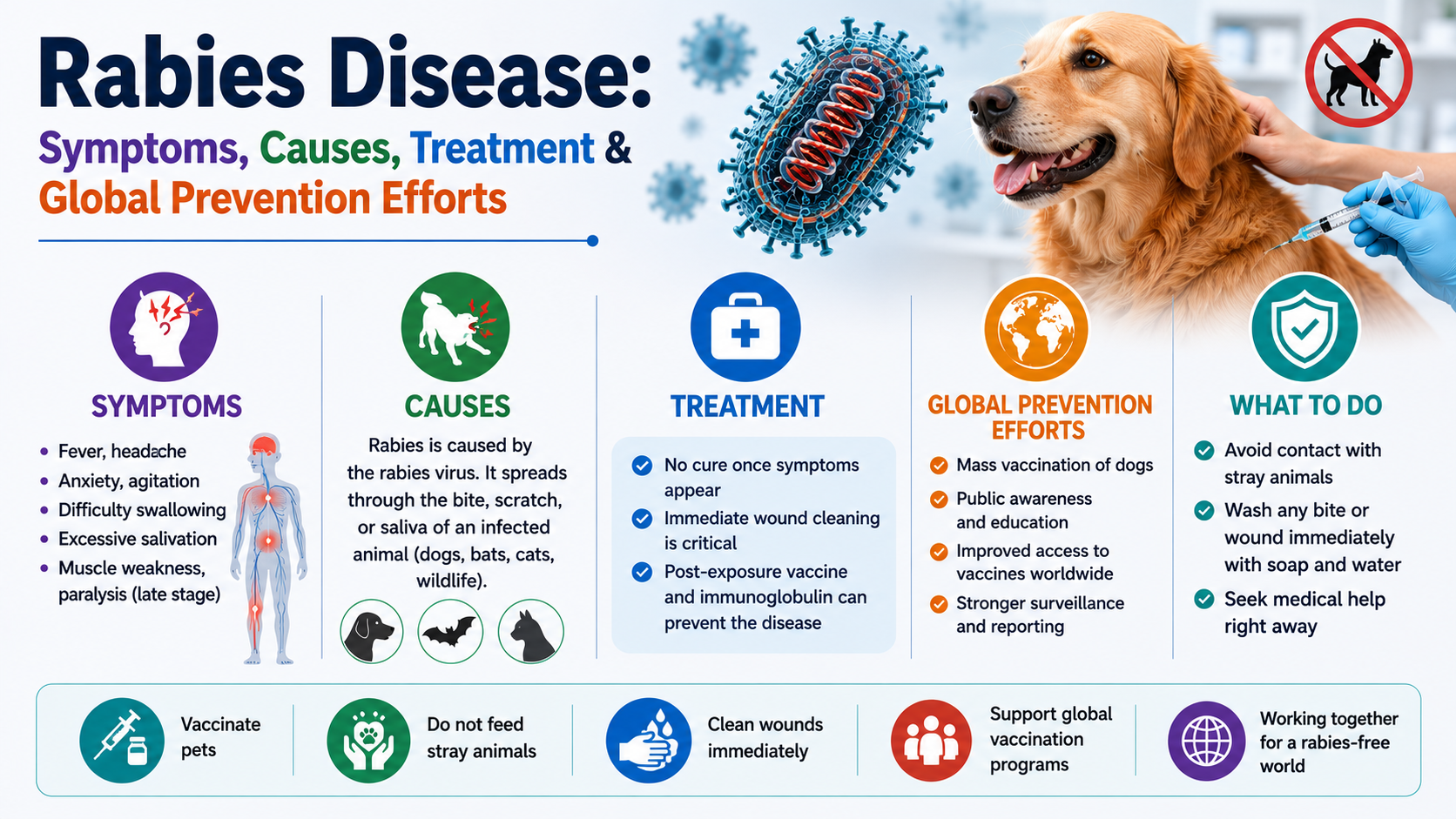
Overview
Rabies is one of the world’s most feared viral infections. Caused by the rabies virus (RABV), it affects the central nervous system and, once symptoms appear, it is almost always fatal. The disease is zoonotic, meaning it spreads from animals to humans, most often through bites or scratches.
Every year, rabies causes around 59,000 deaths worldwide, mostly in Asia and Africa. Tragically, about 40% of victims are children under the age of 15. In the United States, rabies cases in humans are rare, but the virus still circulates in bats, raccoons, foxes, and skunks. In developing countries, stray dogs remain the leading source of human rabies infections.
The good news: rabies is preventable. With immediate wound care, post-exposure prophylaxis (PEP), and vaccination, the virus can be stopped before it reaches the brain.
How Rabies Spreads
Rabies spreads through the saliva or nervous system tissue of infected mammals. The most common route is a bite from a rabid animal, but transmission can also occur if infected saliva comes into contact with broken skin, the eyes, nose, or mouth.
- Dog bites account for up to 99% of human rabies cases worldwide.
- Bats are now the leading cause of rabies in the U.S. and an emerging threat in Latin America, Europe, and Australia.
- Other animals such as foxes, raccoons, skunks, and monkeys can also carry the virus.
- Rarely, rabies has been spread through organ transplants or laboratory exposure.
Human-to-human transmission has never been confirmed, but close contact with an infected person’s saliva theoretically poses a risk.
Symptoms of Rabies
The incubation period for rabies is usually 2–3 months but can range from one week to over a year. The length depends on the location of the bite, the amount of virus introduced, and the person’s immune response.
Early symptoms
Rabies often begins with nonspecific signs such as:
- Fever and headache
- Tingling, burning, or pain at the bite site
- Fatigue, muscle aches, and nausea
Advanced neurological symptoms
As the virus reaches the brain, symptoms worsen dramatically. There are two main forms of rabies:
- Furious rabies (the most common type)
- Hyperactivity, agitation, and hallucinations
- Difficulty swallowing, fear of water (hydrophobia), or drafts of air (aerophobia)
- Periods of aggression alternating with calm
- Excessive salivation and seizures
- Paralytic rabies (about 20% of cases)
- Gradual paralysis starting near the wound
- Numbness, tingling, and weakness spreading through the body
- Slower progression, often misdiagnosed as another illness
- Eventual coma and death
Once clinical symptoms appear, rabies is 100% fatal.
Diagnosis
Because rabies is so deadly, doctors don’t wait for symptoms to confirm it. If you’ve been bitten or scratched by a potentially rabid animal, you should seek care immediately.
Diagnostic methods may include saliva tests, skin biopsies, cerebrospinal fluid tests, or blood tests, but these are most useful after symptoms begin. The most important step is risk assessment right after exposure. If the biting animal can be tested or observed, it may confirm whether PEP is necessary.
Treatment and Post-Exposure Prophylaxis (PEP)
There is no cure for rabies once symptoms develop. However, infection can be prevented with immediate action after exposure.
PEP includes three steps:
- Thorough wound cleaning: Wash the bite or scratch with soap and water for at least 15 minutes. This simple step can drastically reduce infection risk.
- Rabies vaccination: A series of four shots over two weeks helps the immune system recognize and destroy the virus.
- Rabies immunoglobulin (RIG): For people who have never been vaccinated before, RIG is injected directly into and around the wound to provide immediate antibodies until the vaccine takes effect.
If given quickly, PEP is nearly 100% effective at preventing rabies.
Prevention and Control
Personal protection
- Vaccinate pets such as dogs, cats, and ferrets.
- Avoid contact with stray or wild animals, especially bats.
- Seek medical advice immediately after any suspicious bite or scratch.
- Travelers to rabies-endemic areas may consider pre-exposure vaccination, especially if staying in remote regions.
Public health strategies
- Mass dog vaccination campaigns are the most effective way to stop rabies at its source.
- Community education on bite prevention and responsible pet ownership reduces risks.
- Global initiatives, such as the WHO-led “Zero by 30” campaign, aim to eliminate dog-mediated human rabies deaths by 2030 through a One Health approach, combining veterinary, medical, and community efforts.
Outlook and Global Impact
Without treatment, rabies is almost always fatal within days of symptom onset. Survivors are extremely rare, and those who do survive often suffer long-term neurological damage.
The economic impact is also severe, costing an estimated US $8.6 billion annually worldwide, including healthcare costs, loss of productivity, and the psychological trauma to families and communities.
Despite its severity, rabies remains a neglected tropical disease. Access to vaccines and immunoglobulins is still limited or unaffordable for many at-risk populations, particularly in rural areas of Asia and Africa. Expanding access to preventive care remains the key to eradicating rabies deaths.
Key Takeaway
Rabies is one of the deadliest infections known to medicine, but it is also one of the most preventable. Immediate wound care, prompt vaccination, and public health measures such as mass dog vaccination and education can save tens of thousands of lives each year. If you are ever bitten or scratched by an animal that may be rabid, seek medical care right away — it can make the difference between life and death.
