




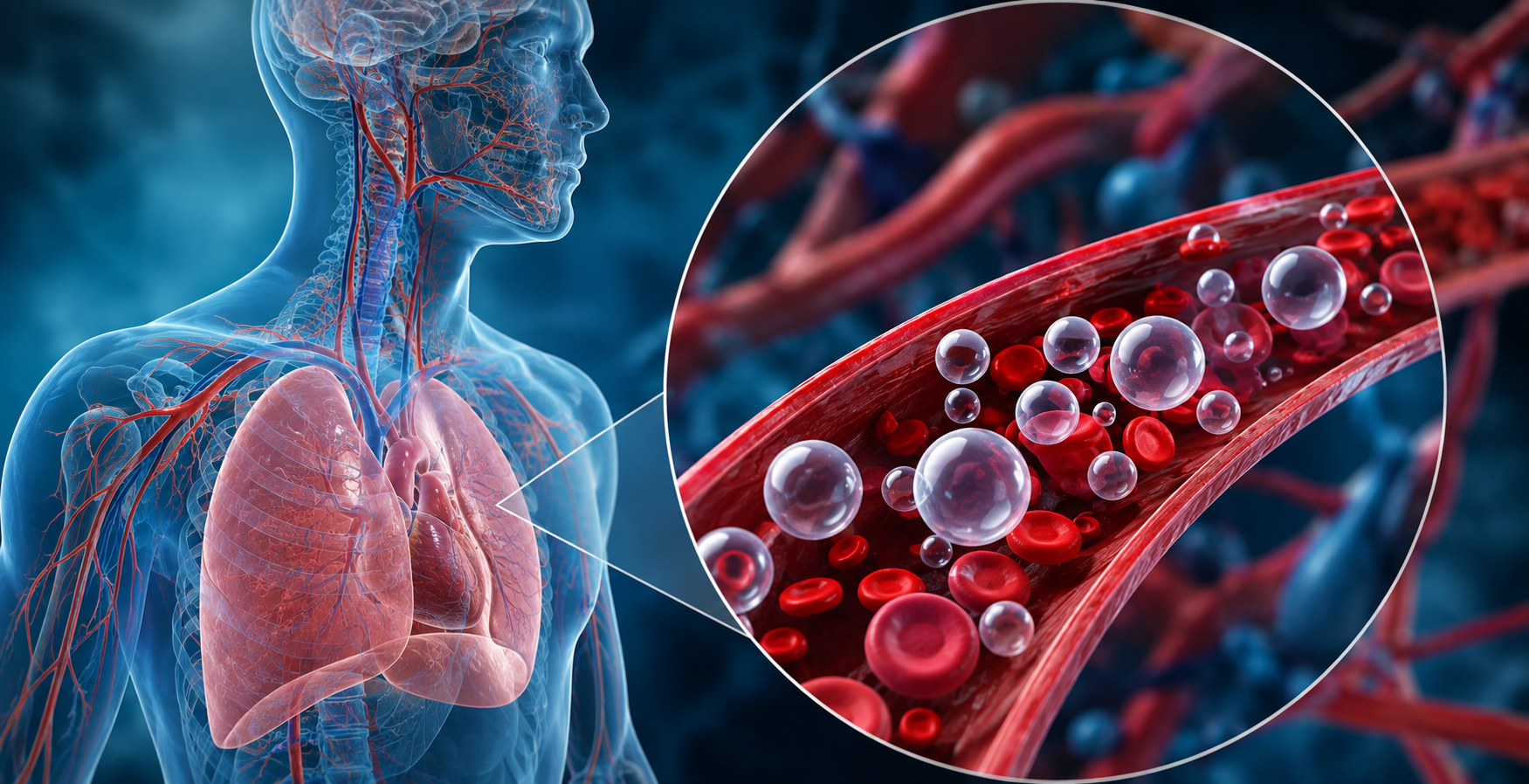
An air embolism, also known as a gas embolism, is a rare but potentially life-threatening condition that occurs when air or another gas enters the bloodstream and blocks the normal flow of blood. Although it is most commonly associated with scuba diving accidents, air embolism can also develop during certain medical procedures, traumatic injuries, childbirth, and surgery. While the condition is uncommon, it requires immediate medical attention because even a single air bubble in the wrong place can interrupt the blood supply to vital organs.
Many people worry that a tiny air bubble trapped inside an intravenous (IV) line could be fatal. In reality, the human body can usually absorb very small amounts of air without causing harm. The danger arises when larger volumes of air enter the circulation rapidly or when bubbles travel into arteries that supply the brain, heart, or other essential organs. Understanding how air embolism develops, recognizing its warning signs, and seeking prompt treatment can make a significant difference in the outcome.
What Is an Air Embolism?
The word embolism refers to anything that travels through the bloodstream and blocks a blood vessel. Most emboli are blood clots, but fat droplets, amniotic fluid, cholesterol crystals, and gas bubbles can also obstruct circulation. When the blockage is caused by air or another gas, the condition is known as an air embolism or gas embolism.
Blood vessels deliver oxygen and nutrients to every tissue in the body. If a gas bubble blocks one of these vessels, blood can no longer reach the affected area normally. Cells deprived of oxygen begin to malfunction within minutes, and prolonged interruption of blood flow may lead to permanent tissue damage.
The seriousness of an air embolism depends less on the amount of air alone and more on where the bubble becomes trapped. A relatively small bubble reaching the brain may cause significant neurological symptoms, while a larger bubble entering the venous circulation may be filtered by the lungs without causing lasting harm. This is why doctors evaluate each case individually rather than relying on a specific volume of air to determine the risk.
How Does Air Enter the Bloodstream?
Under normal circumstances, blood vessels form a closed system that prevents outside air from entering the circulation. Air embolism occurs only when this barrier is disrupted.
One of the best-known situations is scuba diving. During a dive, increased underwater pressure causes nitrogen from the breathing gas to dissolve into body tissues. If a diver ascends too quickly, this dissolved nitrogen may come out of solution before it can be safely eliminated through the lungs, forming bubbles within the bloodstream and tissues. This process contributes to decompression sickness, sometimes called “the bends,” and may also lead to arterial gas embolism if bubbles enter the arterial circulation.
Another mechanism involves injury to the lungs. Holding one’s breath during a rapid ascent can cause the expanding air inside the lungs to rupture tiny air sacs known as alveoli. Air may then escape directly into nearby blood vessels, allowing bubbles to travel throughout the body.
Outside the diving environment, air embolism may occur during certain medical procedures. Inserting or removing a central venous catheter, performing open-heart surgery, neurosurgery, orthopedic surgery, laparoscopic procedures, or lung biopsies all carry a small risk because blood vessels may be temporarily exposed to air. Fortunately, modern surgical techniques and careful monitoring have made these complications uncommon.
Traumatic chest injuries, severe lung damage, and certain childbirth complications can also allow air to enter the bloodstream, although these situations are relatively rare.
Venous and Arterial Air Embolism
Doctors generally classify air embolism according to where the air enters the circulation.
In a venous air embolism, air enters a vein and travels toward the lungs. Small amounts of air are often filtered by the pulmonary circulation and gradually absorbed. Larger volumes, however, can interfere with blood flow through the heart and lungs, leading to low blood pressure, breathing difficulties, and cardiovascular collapse.
An arterial air embolism is usually considered more dangerous because arteries deliver oxygen-rich blood directly to organs. If an air bubble blocks an artery supplying the brain, the resulting symptoms may resemble a stroke. When the coronary arteries are affected, blood flow to the heart muscle decreases, potentially causing chest pain, abnormal heart rhythms, or even cardiac arrest.
The location of the blockage largely determines both the symptoms and the urgency of treatment.
Symptoms of Air Embolism
Air embolism has no single characteristic symptom. Instead, its presentation depends on which organ loses its blood supply and how much of the circulation is affected.
Many patients experience sudden shortness of breath or chest discomfort. Others notice dizziness, confusion, blurred vision, or an overwhelming sense that something is seriously wrong. If the brain is affected, weakness affecting one side of the body, difficulty speaking, loss of coordination, or seizures may develop rapidly.
Divers may initially complain of unusual fatigue, joint pain, tingling sensations, or numbness shortly after surfacing. Although these symptoms can appear mild at first, they should never be ignored because neurological deterioration can occur quickly.
In severe cases, loss of consciousness, profound low blood pressure, respiratory failure, or cardiac arrest may occur. These situations require immediate emergency treatment.
It is important to remember that symptoms do not always appear immediately. While many patients become ill within minutes, others may develop signs over several hours depending on the underlying cause.
Diagnosing Air Embolism
Diagnosing air embolism begins with obtaining a careful medical history. Recent scuba diving, surgery, invasive medical procedures, childbirth, or significant chest trauma immediately raise suspicion.
Doctors perform a thorough physical examination while monitoring heart rhythm, blood pressure, breathing, oxygen levels, and neurological function. Imaging studies may then be used to support the diagnosis or identify complications.
Computed tomography (CT) scans can reveal air within blood vessels or evidence of stroke. Echocardiography allows physicians to visualize air bubbles inside the heart, while Doppler ultrasound may detect gas moving through major blood vessels during high-risk surgical procedures. Chest X-rays and blood gas analysis may also help assess lung function and oxygen delivery.
Because gas bubbles may disappear quickly after entering the bloodstream, diagnosis often depends on combining clinical findings with the patient’s recent history rather than relying on a single imaging test.
Treatment
Air embolism is treated as a medical emergency because early intervention significantly improves the chances of recovery.
The first priority is stabilizing the patient’s airway, breathing, and circulation while preventing additional air from entering the bloodstream. High-flow oxygen is administered as soon as possible because it increases the amount of oxygen available to damaged tissues while helping gas bubbles shrink more rapidly.
Patients may receive intravenous fluids and medications to maintain blood pressure and support normal circulation. Continuous monitoring allows healthcare professionals to detect changes in heart rhythm or neurological status that may require urgent intervention.
For diving-related gas embolism and many severe cases involving neurological symptoms, hyperbaric oxygen therapy remains the treatment of choice. During this therapy, patients breathe pure oxygen inside a specially designed chamber where atmospheric pressure is increased above normal levels.
The increased pressure reduces the size of gas bubbles according to basic gas laws while simultaneously delivering high concentrations of oxygen to injured tissues. As the bubbles shrink, blood flow gradually returns to affected organs, limiting permanent damage. Hyperbaric treatment is most effective when started as early as possible, although some patients continue to benefit even after several hours.
The overall prognosis depends on how quickly treatment begins, the amount of gas involved, and which organs have been affected.
Can Air Embolism Be Prevented?
Although not every case can be prevented, the risk can often be reduced.
Divers should always follow established diving guidelines, ascend slowly, avoid holding their breath during ascent, and complete recommended decompression stops when required. Proper training and equipment maintenance are equally important for reducing the likelihood of diving-related injuries.
Within hospitals, strict safety procedures are used whenever blood vessels are accessed. Healthcare professionals carefully remove air from intravenous tubing, monitor patients during high-risk operations, and use specialized equipment designed to minimize the possibility of gas entering the circulation.
These preventive measures have made clinically significant air embolism during routine medical care exceptionally uncommon.
Frequently Asked Questions
Can a small air bubble in an IV line kill you?
In almost all routine situations, no. Tiny air bubbles introduced through peripheral intravenous lines are usually absorbed naturally by the lungs without causing harm. Dangerous air embolism generally requires much larger amounts of air or specific circumstances involving the arterial circulation.
Is air embolism the same as decompression sickness?
Not exactly. Decompression sickness occurs when dissolved gases—primarily nitrogen—form bubbles inside the body during rapid ascent after diving. Air embolism refers more broadly to gas bubbles entering or obstructing the bloodstream. The two conditions may occur together but are not identical.
Can someone survive an air embolism?
Yes. Many people recover completely, especially when the condition is recognized quickly and treated promptly with oxygen therapy and, when appropriate, hyperbaric oxygen treatment. Delayed diagnosis increases the risk of permanent complications.
Key Takeaways
Air embolism is an uncommon but potentially life-threatening condition in which air or gas bubbles obstruct blood vessels and interfere with oxygen delivery to vital organs. Although it is most often associated with scuba diving, it can also occur during certain medical procedures, surgery, trauma, and childbirth. Symptoms vary widely depending on the affected organ but may include sudden shortness of breath, chest pain, confusion, weakness, vision changes, or loss of consciousness.
Rapid recognition, emergency medical care, and timely treatment—particularly high-flow oxygen and hyperbaric oxygen therapy when indicated—can dramatically improve outcomes. While modern healthcare has made air embolism rare, understanding how it develops and recognizing its warning signs remain essential for both healthcare professionals and the general public.
