






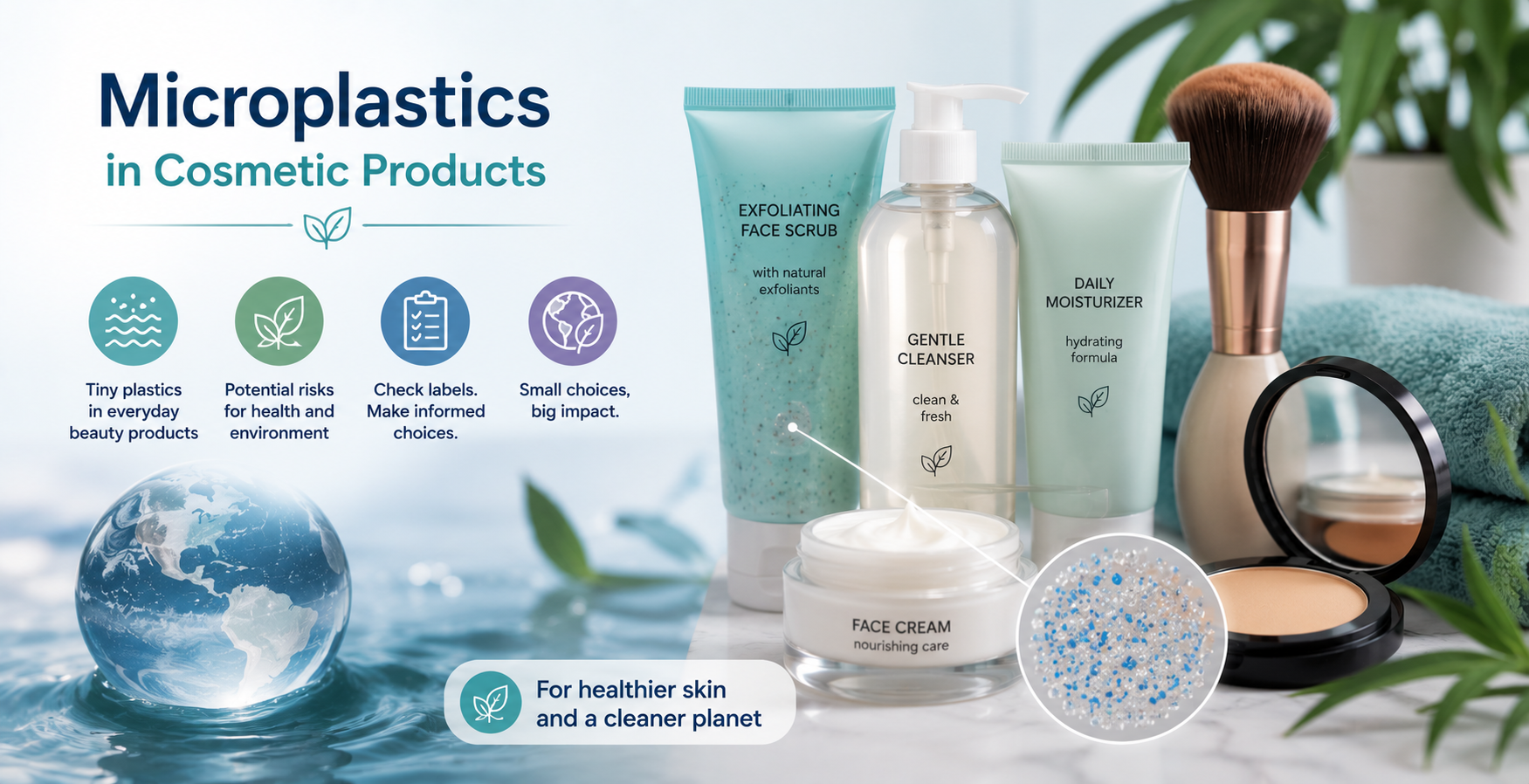
Microplastics have become one of the most discussed environmental and public health topics in recent years. Once considered primarily an issue affecting oceans and marine life, these tiny plastic particles are now known to be present in the air we breathe, the food we eat, the water we drink, and many everyday consumer products—including cosmetics.
For decades, microplastics were intentionally added to facial scrubs, exfoliants, toothpastes, shower gels, makeup, and other personal care products because of their ability to improve texture, create smooth application, and enhance product performance. Although many countries have restricted the use of certain plastic microbeads, microplastics continue to appear in numerous cosmetic formulations under different names.
Scientists are actively investigating how long-term exposure to microplastics may affect human health. While many questions remain unanswered, growing evidence has encouraged regulators, manufacturers, and consumers to seek safer alternatives. This article explains what microplastics are, why they are used in cosmetics, what current research says about potential health risks, and how consumers can make informed choices.
What Are Microplastics?
Microplastics are plastic particles measuring less than five millimeters in diameter. Some are intentionally manufactured at microscopic sizes for commercial use, while others result from the breakdown of larger plastic products exposed to sunlight, weather, and physical wear.
In cosmetic products, intentionally manufactured microplastics are often referred to as microbeads. These tiny particles may be made from plastics such as polyethylene, polypropylene, nylon, polymethyl methacrylate (PMMA), or polyethylene terephthalate (PET).
Because they are durable, lightweight, inexpensive, and chemically stable, they have been widely used throughout the cosmetics industry.
Why Are Microplastics Added to Cosmetics?
Manufacturers have traditionally used microplastics to improve both the appearance and performance of cosmetic products.
In exfoliating facial scrubs and body washes, plastic microbeads provide a gentle abrasive effect that helps remove dead skin cells.
In makeup products, they may improve texture, increase smoothness, create a soft-focus appearance, enhance spreadability, or increase product durability.
Some creams and lotions use microscopic plastic particles as stabilizers or film-forming agents that help products remain evenly distributed on the skin.
These functions explain why microplastics became common ingredients long before their environmental impact was widely recognized.
Which Cosmetic Products May Contain Microplastics?
Microplastics have been identified in a wide variety of personal care products.
They have historically been found in facial cleansers, exfoliating scrubs, shower gels, toothpaste, liquid foundations, primers, powders, mascara, lipstick, sunscreen, shaving creams, nail polish, and hair styling products.
While many manufacturers have voluntarily removed plastic microbeads from rinse-off products, certain leave-on cosmetics may still contain synthetic polymer particles that perform different cosmetic functions.
The presence of microplastics varies considerably depending on the product formulation and country of manufacture.
Potential Human Health Concerns
Scientists continue to study whether microplastics present meaningful health risks for humans.
Most cosmetic microplastics applied to intact skin are believed to remain on the skin surface and are later washed away. Current evidence suggests that healthy skin provides an effective barrier against most large plastic particles.
However, researchers are investigating whether extremely small particles, particularly nanoplastics, may behave differently.
Laboratory studies suggest that tiny plastic particles may interact with cells under certain conditions, potentially triggering oxidative stress or inflammatory responses. Whether these findings occur in real-world cosmetic use remains uncertain.
Microplastics have also been detected in human blood, lungs, placenta, breast milk, and other tissues. Scientists believe exposure occurs primarily through food, drinking water, and inhalation rather than cosmetics alone.
Further research is needed to determine whether these particles contribute to disease or simply pass through the body without causing significant harm.
Environmental Impact
Although the direct health effects remain under investigation, the environmental consequences of cosmetic microplastics are well established.
After rinse-off products enter household drains, many microscopic plastic particles pass through wastewater treatment systems and eventually reach rivers, lakes, and oceans.
Marine animals may mistake these particles for food, allowing plastics to accumulate throughout aquatic food chains.
Because plastics degrade extremely slowly, they persist in the environment for decades or even centuries.
Microplastics may also absorb environmental pollutants, potentially transporting harmful chemicals through ecosystems.
These environmental concerns have driven many governments to introduce restrictions on intentionally added plastic microbeads.
Regulations Around the World
Growing scientific concern has prompted regulatory action in several countries.
The United States, Canada, the United Kingdom, and several other nations have prohibited plastic microbeads in rinse-off cosmetic products such as facial scrubs and toothpastes.
The European Union has introduced broader regulations that gradually restrict intentionally added microplastics across numerous consumer products, including certain cosmetics, over several years.
These regulations are expected to significantly reduce future environmental contamination while encouraging manufacturers to develop biodegradable alternatives.
How to Identify Microplastics on Ingredient Labels
Reading ingredient labels can help consumers identify products that may contain synthetic plastic particles.
Common ingredients include polyethylene (PE), polypropylene (PP), polyethylene terephthalate (PET), polymethyl methacrylate (PMMA), nylon, polyurethane, acrylates copolymer, and certain synthetic polymers used for texture or film formation.
Not every synthetic polymer presents the same environmental concerns, and regulations continue to evolve as scientific understanding improves.
Consumers seeking to reduce plastic exposure may choose products specifically labeled as microplastic-free or certified by reputable environmental organizations.
Safer Alternatives
Many cosmetic manufacturers now replace plastic microbeads with naturally derived exfoliating ingredients.
Common alternatives include finely ground oatmeal, rice powder, jojoba esters, bamboo powder, salt, sugar, walnut shell powder, apricot kernel powder, cellulose, and silica.
Some brands have also developed biodegradable polymers that provide similar cosmetic performance while reducing environmental persistence.
Choosing products that use sustainable ingredients helps decrease plastic pollution without sacrificing skincare quality.
Should Consumers Be Concerned?
Current scientific evidence does not show that occasional use of cosmetics containing microplastics causes direct harm to human health.
However, researchers continue to investigate the long-term effects of repeated exposure from multiple environmental sources.
Many experts recommend reducing unnecessary exposure where practical, particularly because environmentally friendly alternatives are now widely available.
Consumers should remember that overall skincare habits—including sun protection, gentle cleansing, adequate hydration, and avoiding tobacco—have a far greater influence on skin health than whether a single product contains microplastics.
Frequently Asked Questions
Are microplastics in cosmetics dangerous?
Current evidence has not proven that cosmetic microplastics directly harm human health during normal use. Research is ongoing, particularly regarding extremely small nanoplastics and long-term exposure.
Can microplastics enter the body through the skin?
Healthy skin appears to block most larger plastic particles. Scientists are still studying whether much smaller nanoplastics may penetrate damaged skin under certain conditions.
Why are microplastics being banned?
The primary reason is environmental protection. Plastic particles released from cosmetic products contribute to long-lasting pollution in rivers, lakes, and oceans and may be consumed by wildlife.
How can I avoid microplastics in beauty products?
Look for products labeled as microplastic-free, read ingredient lists carefully, and choose cosmetics that use biodegradable or naturally derived exfoliating ingredients.
Are natural exfoliants better?
Many natural alternatives such as oatmeal, rice powder, sugar, salt, bamboo powder, and jojoba esters effectively exfoliate the skin while reducing environmental plastic pollution.
The Bottom Line
Microplastics have played a significant role in cosmetic formulations for many years, but increasing awareness of their environmental impact has led to substantial changes throughout the beauty industry. Although current evidence has not established that cosmetic microplastics pose a major direct threat to human health, scientists continue to investigate their long-term effects alongside broader environmental exposure.
As regulations expand and manufacturers develop safer alternatives, consumers have more opportunities than ever to choose products that support both personal skincare and environmental sustainability. Reading ingredient labels, selecting microplastic-free products when possible, and maintaining an overall healthy skincare routine remain practical ways to make informed choices while scientific research continues to evolve.


