






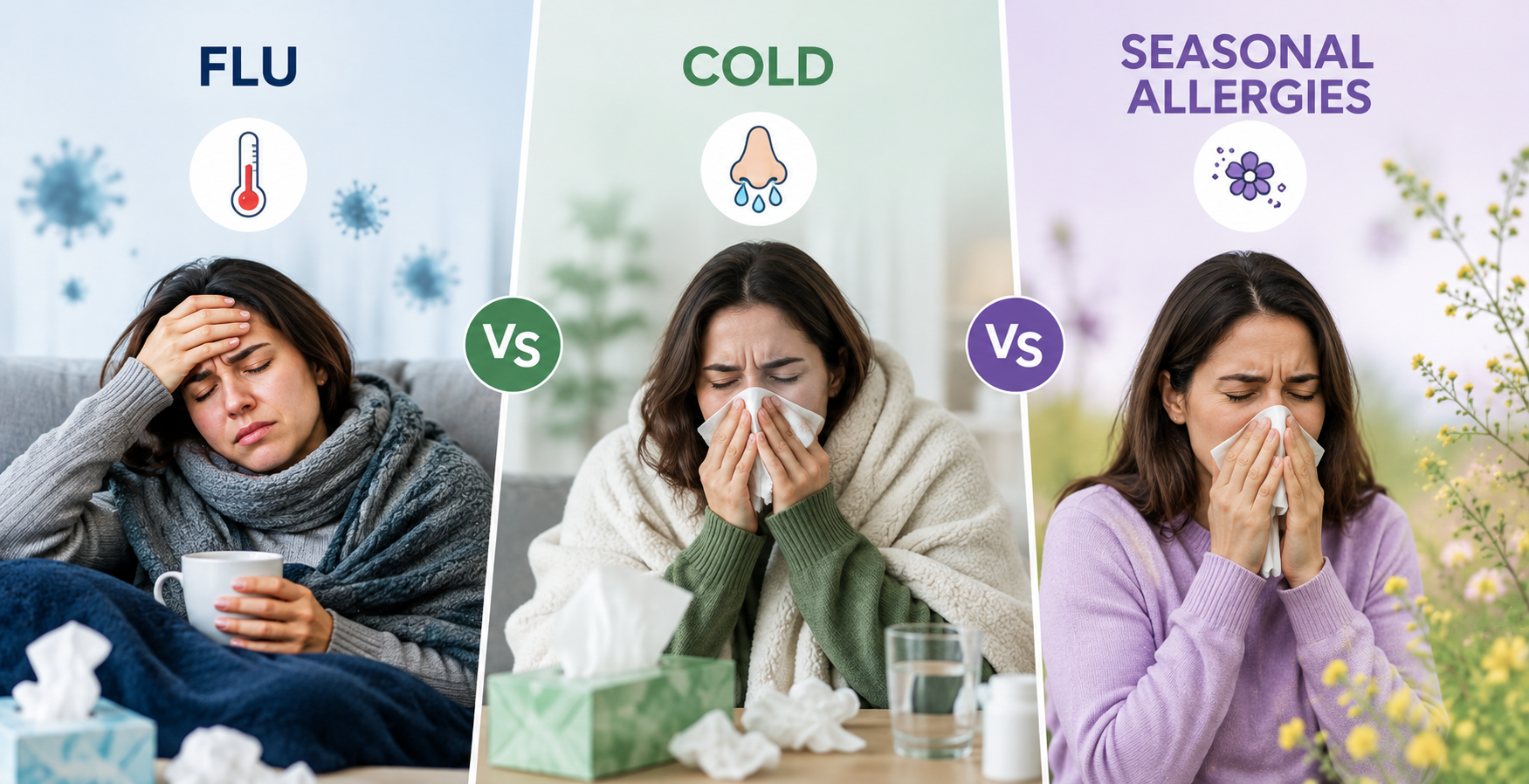
Sneezing, a runny nose, coughing, congestion, and fatigue are symptoms that almost everyone experiences at some point during the year. Because these symptoms overlap, it can be difficult to know whether you have the flu, a common cold, or seasonal allergies. Although these conditions share several similarities, they have different causes, treatments, and potential complications.
Recognizing the difference is important. Viral illnesses such as influenza may require antiviral medications for people at high risk of complications, while allergies are managed by reducing exposure to allergens and using medications that calm the immune system. Mistaking one condition for another can delay appropriate treatment and prolong symptoms.
This guide explains how influenza, the common cold, and seasonal allergies differ, how to recognize their characteristic symptoms, when to seek medical care, and the best ways to manage each condition.
Understanding the Three Conditions
Although they may produce similar symptoms, influenza, the common cold, and seasonal allergies develop for completely different reasons.
Influenza is a contagious viral infection caused by influenza viruses. It usually appears suddenly and often causes fever, muscle aches, chills, fatigue, and significant respiratory symptoms. Seasonal outbreaks occur every year, particularly during the colder months.
The common cold is also caused by viruses, but many different viruses can be responsible, including rhinoviruses, coronaviruses (non-COVID), adenoviruses, and respiratory syncytial virus (RSV). Cold symptoms are generally milder than influenza and tend to develop gradually.
Seasonal allergies, also called allergic rhinitis or hay fever, are not caused by infections at all. Instead, they occur when the immune system overreacts to harmless substances such as pollen, grass, weeds, mold spores, or dust mites. Unlike viral infections, allergies are not contagious.
Causes
Influenza spreads from person to person through respiratory droplets released during coughing, sneezing, talking, or close contact. The virus can also spread by touching contaminated surfaces and then touching the eyes, nose, or mouth.
The common cold spreads in much the same way. Because numerous viruses cause colds, people can experience several colds each year.
Seasonal allergies occur when susceptible individuals inhale allergens that trigger an immune response. The body releases histamine and other inflammatory chemicals, leading to allergy symptoms. Exposure to pollen often varies depending on the season, while indoor allergens such as dust mites and pet dander may cause symptoms year-round.
How Symptoms Begin
One of the easiest ways to distinguish these conditions is by how quickly symptoms appear.
Influenza usually develops suddenly. Many people can identify the exact hour they began feeling sick. Someone may feel completely well in the morning and develop fever, chills, body aches, and profound fatigue later the same day.
A common cold usually develops more slowly. Mild throat irritation may appear first, followed by congestion, sneezing, and a runny nose over the next day or two.
Seasonal allergies often begin shortly after exposure to allergens. Symptoms may appear within minutes or hours and often continue as long as exposure persists.
Fever
Fever is one of the strongest clues when distinguishing influenza from allergies.
Influenza commonly causes moderate to high fever, particularly in children. Fever is often accompanied by chills and sweating.
Adults with the common cold rarely develop a significant fever, although children sometimes experience mild elevations in temperature.
Seasonal allergies do not cause fever. If fever is present, another illness is likely responsible.
Body Aches and Fatigue
Muscle aches are characteristic of influenza. Many people describe feeling as though they have been “hit by a truck,” with widespread body pain and overwhelming exhaustion that may last for days.
The common cold can cause tiredness, but severe muscle aches are uncommon.
Seasonal allergies occasionally cause mild fatigue because poor sleep and nasal congestion interfere with rest. However, they do not usually produce the severe exhaustion seen with influenza.
Cough
Both influenza and the common cold frequently cause coughing.
Influenza often produces a persistent dry cough that may continue for several weeks after other symptoms improve.
Colds may begin with a dry cough that later becomes productive as mucus increases.
Allergies can also trigger coughing, but it is usually caused by postnasal drip rather than infection. The cough often improves once allergy symptoms are controlled.
Runny Nose and Nasal Congestion
Runny nose and nasal congestion are common in all three conditions, but the nature of the nasal discharge differs.
Colds often begin with clear mucus that gradually becomes thicker. The color of mucus may change during recovery without necessarily indicating a bacterial infection.
Influenza may cause congestion but usually not as prominently as a cold.
Seasonal allergies typically produce a persistent clear, watery nasal discharge accompanied by repeated sneezing.
Sneezing
Frequent sneezing is one of the hallmark features of allergies.
Sneezing commonly occurs with the common cold but usually becomes less frequent after the first few days.
Influenza causes sneezing less often than either colds or allergies.
Itchy Eyes, Nose, and Throat
Itching is one of the clearest signs that allergies are responsible.
People with seasonal allergies often experience itchy eyes, itchy nose, itchy throat, or itchy ears due to histamine release.
Neither influenza nor the common cold typically causes significant itching.
Sore Throat
A sore throat is often among the earliest symptoms of a cold.
Influenza can also cause throat discomfort, although muscle aches and fever usually dominate the illness.
Allergies may produce throat irritation because of postnasal drip, but severe sore throat is uncommon.
Duration
Most uncomplicated colds improve within seven to ten days.
Influenza generally lasts between one and two weeks, although fatigue may continue longer.
Seasonal allergies can persist for weeks or even months if allergen exposure continues throughout the pollen season.
Diagnosis
Most cases can be diagnosed based on symptoms and medical history.
Healthcare providers may perform rapid influenza tests or PCR testing during flu season when confirming influenza will influence treatment decisions.
COVID-19 testing may also be recommended because symptoms overlap considerably with influenza and the common cold.
Allergy testing, including skin prick testing or blood tests for specific IgE antibodies, may help identify the triggers responsible for seasonal allergies.
Treatment
Treatment depends entirely on the underlying cause.
Influenza treatment focuses on rest, hydration, fever control, and symptom relief. High-risk individuals—including older adults, pregnant women, and people with chronic medical conditions—may benefit from antiviral medications if treatment begins early.
The common cold has no cure. Management focuses on relieving symptoms while the body’s immune system clears the infection. Rest, fluids, saline nasal sprays, throat lozenges, and over-the-counter medications may help reduce discomfort.
Seasonal allergies are treated by reducing allergen exposure and controlling the immune response. Antihistamines, nasal corticosteroid sprays, saline rinses, and allergy eye drops often provide significant relief. Some patients benefit from allergen immunotherapy, commonly known as allergy shots.
Because influenza and the common cold are viral illnesses, antibiotics are not effective unless a secondary bacterial infection develops.
Preventing Illness
Preventing influenza begins with annual vaccination, which remains the most effective way to reduce severe illness and hospitalization. Frequent handwashing, covering coughs and sneezes, cleaning frequently touched surfaces, and staying home when sick also help reduce transmission.
Preventing the common cold involves many of the same hygiene practices, although no vaccine protects against the numerous viruses that cause colds.
Seasonal allergy prevention focuses on limiting exposure to allergens. Monitoring pollen forecasts, keeping windows closed during high pollen days, showering after spending time outdoors, and using high-efficiency air filters may reduce symptoms.
When to See a Doctor
Most colds and mild allergy symptoms can be managed at home. However, medical evaluation is recommended if symptoms become severe, breathing becomes difficult, fever persists for several days, chest pain develops, or symptoms worsen after initially improving.
Individuals at higher risk of influenza complications—including older adults, pregnant women, young children, and people with chronic illnesses—should seek medical advice promptly if influenza is suspected.
Persistent allergy symptoms that interfere with sleep, work, or daily activities also warrant medical evaluation because prescription treatments or allergy testing may significantly improve quality of life.
Frequently Asked Questions
Influenza usually begins suddenly with fever, chills, muscle aches, and severe fatigue, while the common cold develops gradually and mainly causes congestion, sneezing, and a sore throat.
No. Seasonal allergies do not cause fever. If you have a fever, you are more likely to have a viral or bacterial infection.
Although allergies do not directly cause the severe fatigue associated with influenza, nasal congestion, poor sleep, and the body’s ongoing inflammatory response can leave you feeling tired.
No. Both influenza and the common cold are caused by viruses. Antibiotics only treat bacterial infections and should not be used unless prescribed for a confirmed bacterial illness.
Yes. Having seasonal allergies does not prevent you from catching viral infections. In some cases, symptoms from both conditions can occur simultaneously, making diagnosis more challenging.
The Bottom Line
Influenza, the common cold, and seasonal allergies often produce similar symptoms, but they differ significantly in their causes, severity, treatment, and prevention. Influenza usually causes sudden fever, body aches, and profound fatigue, while colds develop gradually with milder respiratory symptoms. Seasonal allergies, on the other hand, are characterized by itchy eyes, sneezing, and clear nasal drainage without fever.
Understanding these differences can help you choose appropriate treatment, avoid unnecessary antibiotics, and recognize when medical evaluation is needed. When symptoms are severe, prolonged, or difficult to distinguish, consulting a healthcare professional is the safest way to receive an accurate diagnosis and appropriate care.


