






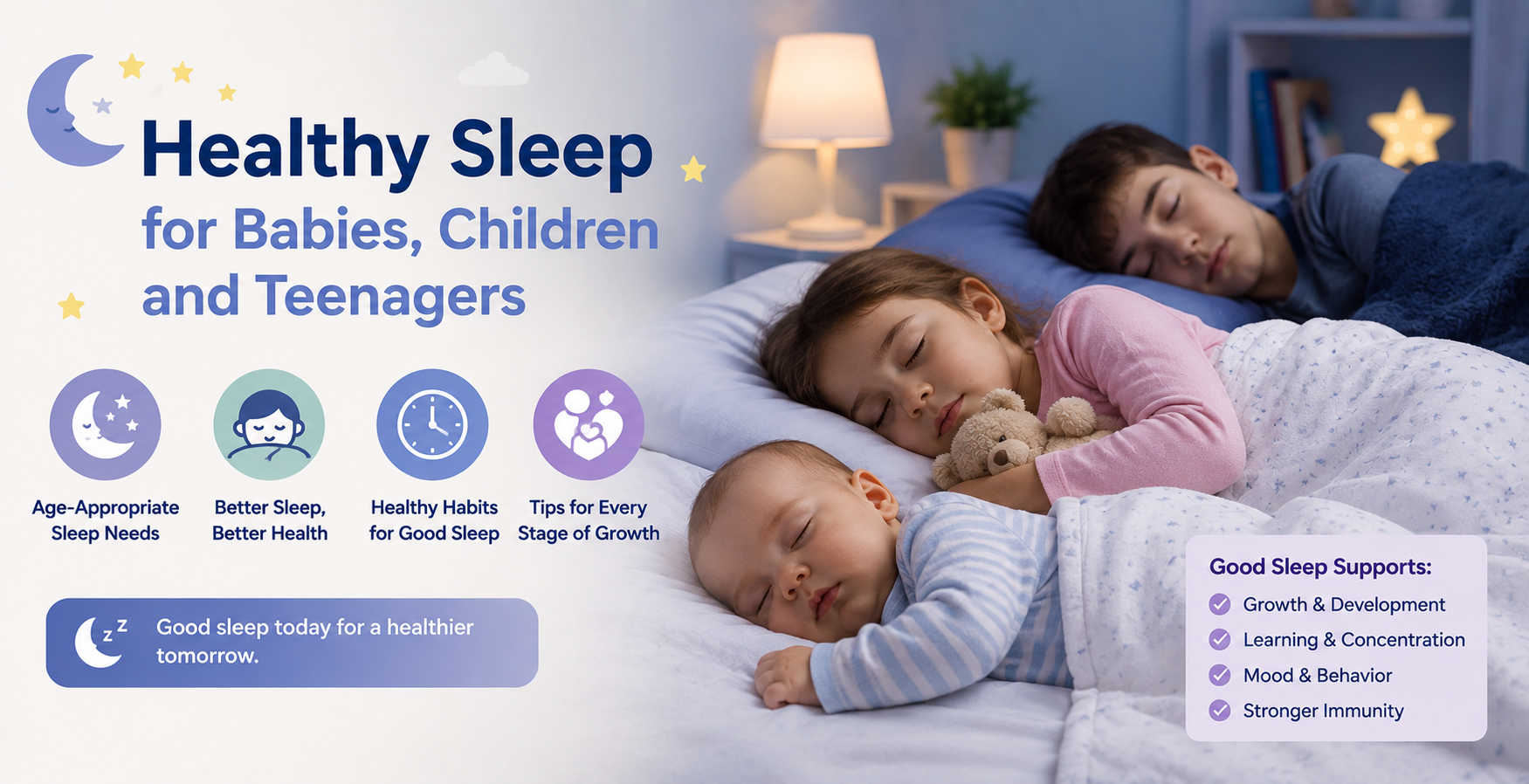
Sleep is one of the most important pillars of children’s health, yet it is often overlooked. Just as growing bodies need nutritious food and regular physical activity, developing brains require sufficient, high-quality sleep every day. During sleep, children’s bodies repair tissues, strengthen the immune system, release growth hormone, process new memories, and prepare for another day of learning and exploration.
Modern lifestyles, increasing screen time, busy family schedules, and academic pressures have made healthy sleep more challenging than ever. Many children go to bed too late, wake frequently during the night, or simply do not get enough sleep for their age. Over time, poor sleep can affect mood, concentration, school performance, behavior, physical growth, and even long-term health.
Fortunately, most childhood sleep problems can be improved by understanding normal sleep patterns and establishing healthy bedtime routines. This guide explains why sleep matters, how much sleep children need at different ages, common sleep challenges, and practical strategies that help babies, children, and teenagers develop lifelong healthy sleep habits.
Why Sleep Is Essential for Growing Children
Sleep is far more than simply resting. While children sleep, their brains remain remarkably active. Important memories are organized and stored, new learning is reinforced, hormones regulating growth are released, and the immune system strengthens its defenses against illness.
Adequate sleep supports nearly every aspect of child development. Well-rested children generally have better attention spans, stronger emotional regulation, improved problem-solving skills, healthier immune systems, and greater physical endurance.
Poor sleep, on the other hand, may contribute to irritability, hyperactivity, learning difficulties, reduced concentration, increased accidents, weakened immunity, and behavioral challenges. Long-term sleep deprivation has also been linked to obesity, anxiety, depression, high blood pressure, and metabolic disorders later in life.
Because healthy sleep affects both immediate wellbeing and future health, establishing good sleep habits during childhood is one of the best investments parents can make.
How Sleep Changes as Children Grow
Sleep patterns change dramatically throughout childhood.
Newborn babies spend much of the day asleep because their brains and bodies are developing at an extraordinary pace. Their sleep is divided into short periods around the clock since they need frequent feeding.
As infants mature, nighttime sleep gradually becomes longer while daytime naps decrease.
Toddlers and preschoolers typically continue taking one daytime nap before eventually sleeping almost entirely at night.
School-age children generally require uninterrupted nighttime sleep, while teenagers experience natural biological changes that shift their internal body clocks later into the evening. This explains why many adolescents naturally feel sleepy later at night and prefer waking up later in the morning.
Understanding these normal developmental changes helps parents set realistic expectations.
How Much Sleep Do Children Need?
Although every child is unique, experts recommend general sleep ranges based on age.
Newborns often sleep between 14 and 17 hours each day, although this occurs in multiple short periods rather than one long stretch.
Infants between four and twelve months typically need 12 to 16 hours of total sleep, including naps.
Toddlers generally require 11 to 14 hours, while preschool children usually need 10 to 13 hours, including any daytime naps.
School-age children benefit from 9 to 12 hours of sleep each night.
Teenagers typically need 8 to 10 hours, although many get significantly less because of school schedules, homework, extracurricular activities, social commitments, and increased screen use.
Rather than focusing only on the number of hours slept, parents should also consider whether their child wakes feeling refreshed, functions well during the day, and rarely falls asleep unintentionally.
Healthy Sleep in Babies
The first year of life brings rapid changes in sleep.
Newborns wake frequently because of hunger and have not yet developed regular circadian rhythms. As babies grow, exposure to natural daylight, consistent bedtime routines, and responsive caregiving help establish healthier sleep patterns.
Parents often worry about babies waking during the night. Occasional nighttime waking remains normal throughout infancy.
Creating a calm bedtime routine that includes feeding, bathing, gentle rocking, reading, or singing can help babies recognize when it is time to sleep.
Safe sleep practices are equally important. Babies should always be placed on their backs to sleep on a firm mattress without loose blankets, pillows, stuffed toys, or bumpers to reduce the risk of sudden infant death syndrome (SIDS).
Sleep During the Toddler Years
Toddlers are naturally curious and increasingly independent, making bedtime more challenging for many families.
At this age, children commonly resist bedtime because they prefer playing, exploring, or spending more time with parents.
Separation anxiety may also contribute to bedtime struggles.
Maintaining predictable routines becomes especially important. Consistent bedtimes, quiet bedtime activities, and a calm sleep environment help toddlers feel secure while encouraging healthy sleep habits.
Parents should avoid using bedtime as punishment or allowing bedtime routines to become prolonged negotiations.
Healthy Sleep for Preschool and School-Age Children
As children enter preschool and elementary school, adequate sleep becomes increasingly important for learning, memory, behavior, and emotional regulation.
Children who sleep well often perform better academically because sleep strengthens attention, concentration, language development, and problem-solving abilities.
Bedtime routines should remain consistent even as children grow older. Reading together, dimming lights, avoiding stimulating games, and limiting electronic devices before bed help signal that sleep is approaching.
Children who regularly go to bed and wake up at similar times—even on weekends—usually develop healthier sleep patterns than those with constantly changing schedules.
Sleep During Adolescence
Teenagers experience unique sleep challenges.
During puberty, natural hormonal changes shift the body’s internal clock, making teenagers feel sleepy later in the evening. Unfortunately, early school start times often require waking before they have completed sufficient sleep.
Academic pressures, sports, social media, part-time jobs, and smartphones further reduce sleep duration.
Chronic sleep deprivation among teenagers has become increasingly common and is associated with depression, anxiety, obesity, poor school performance, reduced athletic ability, increased accident risk, and impaired decision-making.
Parents can support healthy adolescent sleep by encouraging consistent routines, limiting nighttime screen use, and emphasizing that sleep is essential rather than optional.
Common Childhood Sleep Problems
Most children experience occasional sleep difficulties, but some develop persistent problems that interfere with family life and daytime functioning.
Difficulty falling asleep is one of the most common concerns. This may result from inconsistent routines, excessive screen exposure, anxiety, caffeine consumption, or an overstimulating bedtime environment.
Night wakings remain common during infancy and may occasionally continue into early childhood.
Nightmares typically occur during the second half of the night and often become more frequent between three and six years of age. Children usually remember the frightening dream afterward and benefit from reassurance.
Night terrors differ from nightmares. During a night terror, children may scream, cry, sit upright, or appear terrified while remaining asleep. They usually have no memory of the event the next morning.
Sleepwalking and sleep talking are also relatively common during childhood and are usually harmless.
Persistent snoring, pauses in breathing, gasping during sleep, or excessive daytime sleepiness may indicate obstructive sleep apnea and deserve medical evaluation.
The Impact of Screen Time on Sleep
Electronic devices have become one of the greatest modern challenges to healthy sleep.
The blue light emitted by phones, tablets, computers, and televisions suppresses melatonin, the hormone that helps regulate sleep.
Exciting games, videos, social media, and online conversations also stimulate the brain when it should be preparing for rest.
Experts generally recommend avoiding screens for at least one hour before bedtime.
Removing electronic devices from bedrooms often improves both sleep quality and sleep duration.
Building a Healthy Bedtime Routine
Children thrive on predictable routines.
A calming bedtime routine helps the brain recognize that sleep is approaching.
Many families find success with simple activities such as bathing, brushing teeth, changing into pajamas, reading together, dimming lights, and quietly talking about the day.
The exact routine matters less than maintaining consistency.
Children should ideally go to bed and wake at approximately the same time every day, including weekends whenever possible.
Consistency strengthens the body’s natural sleep-wake rhythm.
Creating a Sleep-Friendly Bedroom
The sleep environment plays an important role in sleep quality.
Bedrooms should be quiet, dark, comfortably cool, and free from unnecessary distractions.
Comfortable mattresses and pillows appropriate for the child’s age support restful sleep.
Bright lights, loud noises, televisions, computers, and smartphones should be minimized.
Some children sleep better with white noise or a dim nightlight, while others prefer complete darkness.
Parents should observe what environment best helps their individual child relax.
Nutrition, Exercise, and Sleep
Healthy lifestyle habits strongly influence sleep quality.
Regular physical activity helps children fall asleep more easily and sleep more deeply.
Balanced nutrition supports healthy sleep, while large meals immediately before bedtime may interfere with comfort.
Caffeine should be avoided in children whenever possible. Soft drinks, energy drinks, coffee, tea, and some chocolate products contain caffeine that can delay sleep onset.
Hydration remains important, but excessive fluids immediately before bedtime may increase nighttime bathroom trips in older children.
When Should Parents Seek Medical Advice?
Parents should discuss sleep concerns with their healthcare provider if a child consistently struggles to fall asleep, snores loudly, stops breathing during sleep, experiences excessive daytime sleepiness, has persistent nightmares, sleepwalks frequently with safety concerns, or develops sudden changes in sleep behavior.
Medical evaluation is also appropriate if poor sleep begins affecting school performance, behavior, growth, or emotional wellbeing.
Many sleep disorders are treatable once properly diagnosed.
Frequently Asked Questions
Occasionally sleeping longer after illness or increased activity is normal. However, persistent excessive sleepiness should be discussed with a healthcare provider.
Yes. Infants, toddlers, and many preschool children benefit from daytime naps. Most school-age children no longer require regular naps.
Yes. Puberty naturally shifts the body’s sleep schedule later. However, teenagers still require approximately eight to ten hours of sleep each night.
Absolutely. Poor sleep reduces concentration, memory, attention, problem-solving ability, and emotional regulation, making learning much more difficult.
A consistent bedtime routine is one of the most effective ways to promote healthy sleep. Children who follow predictable evening routines generally fall asleep faster and experience better-quality sleep.
Key Takeaways
Healthy sleep is essential for children’s physical growth, brain development, emotional wellbeing, immune function, and academic success. From infancy through adolescence, sleep requirements change as children mature, but adequate, high-quality sleep remains one of the most important contributors to lifelong health. Establishing consistent routines, limiting screen time before bed, encouraging regular physical activity, and creating a calm sleep environment help children develop healthy sleep habits that often continue into adulthood.
Parents should remember that occasional sleep difficulties are normal, but persistent problems deserve medical attention. By making sleep a family priority, caregivers can support healthier growth, better learning, stronger emotional resilience, and improved overall wellbeing for children of every age.
For more trusted guidance on child nutrition, growth, vaccinations, common childhood illnesses, preventive healthcare, and healthy development, explore our comprehensive Children’s Health: Common Childhood Illnesses, Growth & Development guide on MedPress.


