






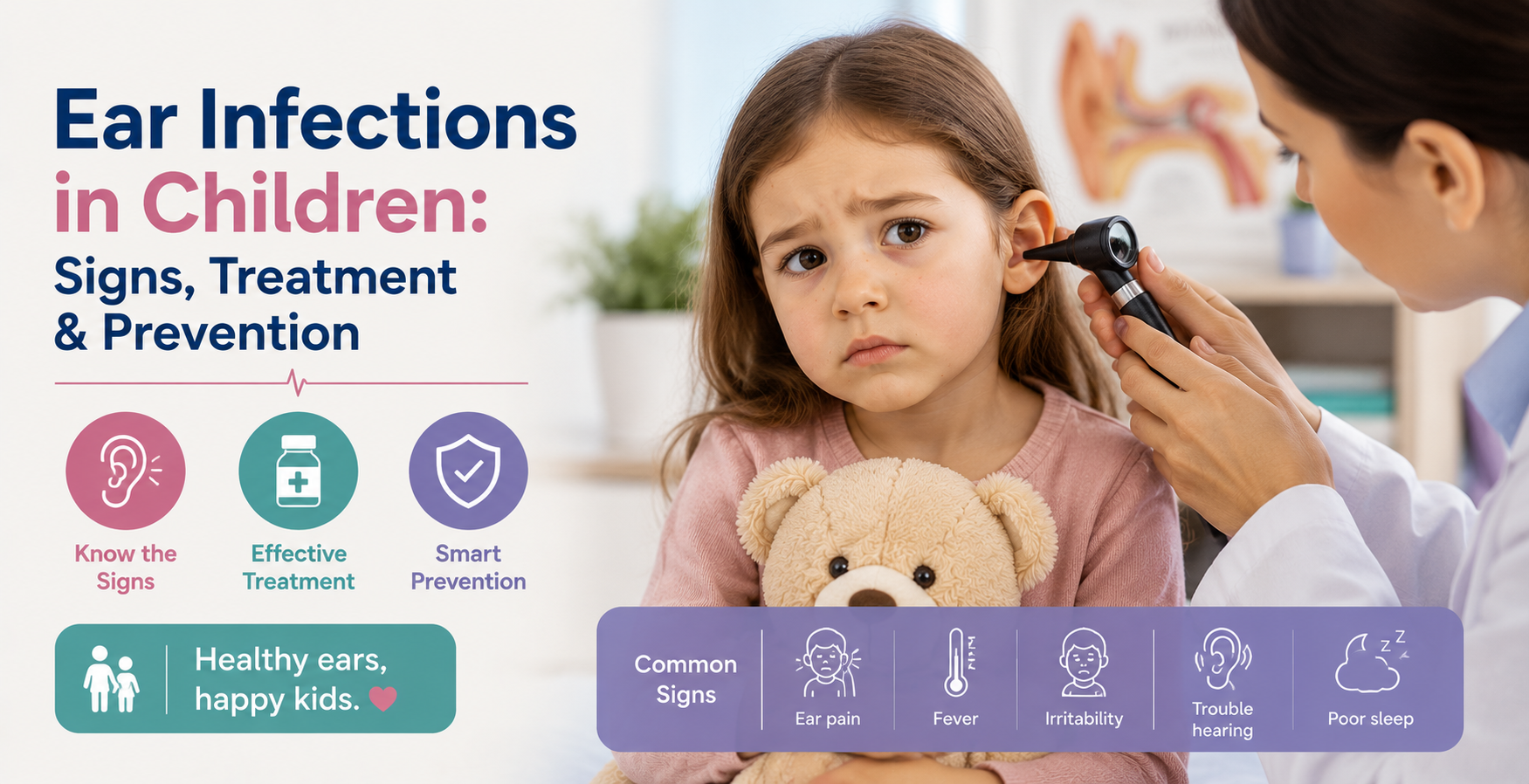
Few childhood illnesses worry parents as much as an ear infection. A child who was playful during the day may suddenly wake up crying in the middle of the night, pulling at one ear and refusing to sleep. Ear infections are among the most common reasons children visit healthcare providers and receive antibiotics. Fortunately, while they can be painful, most ear infections improve with appropriate care and rarely cause lasting problems.
Understanding why ear infections occur, recognizing their symptoms, and knowing when medical attention is necessary can help parents respond confidently. Not every earache is caused by an infection, and not every ear infection requires antibiotics. In many cases, careful monitoring and supportive treatment are enough while the body’s immune system clears the infection.
This guide explains the different types of ear infections in children, their causes, symptoms, treatment options, prevention strategies, and the warning signs that require prompt medical evaluation.
What Is an Ear Infection?
An ear infection occurs when bacteria or viruses infect part of the ear, causing inflammation, swelling, and the buildup of fluid. Although infections can affect different areas of the ear, the most common type in children is a middle ear infection, medically known as acute otitis media.
The middle ear is the small, air-filled space located behind the eardrum. It contains tiny bones that transmit sound to the inner ear, allowing children to hear clearly. When this space becomes inflamed and fills with fluid, pressure builds behind the eardrum, leading to pain and temporary hearing difficulties.
Middle ear infections are especially common in infants and young children because the tube connecting the middle ear to the back of the throat—called the Eustachian tube—is shorter, narrower, and more horizontal than it is in adults. This makes it easier for germs and fluid to become trapped.
Types of Ear Infections
Although many parents use the term “ear infection” to describe any ear pain, there are several different conditions that can affect the ear.
The most common is acute otitis media, a sudden infection of the middle ear that causes pain, fever, and inflammation.
Another condition, known as otitis media with effusion, occurs when fluid remains trapped behind the eardrum after an infection has resolved. This fluid is not necessarily infected, but it can temporarily reduce hearing.
The third type is otitis externa, often called swimmer’s ear, which affects the outer ear canal rather than the middle ear. It usually develops after moisture becomes trapped in the ear canal, allowing bacteria to grow.
Because these conditions require different treatments, proper diagnosis by a healthcare provider is important.
What Causes Ear Infections?
Most middle ear infections begin after a viral upper respiratory infection such as the common cold or influenza. During these illnesses, swelling develops in the nose and throat, including around the Eustachian tube.
When the tube becomes blocked, fluid cannot drain normally from the middle ear. This trapped fluid creates an ideal environment for viruses or bacteria to multiply, leading to infection.
The bacteria most commonly responsible include Streptococcus pneumoniae, Haemophilus influenzae, and Moraxella catarrhalis, although viruses alone can also cause ear infections.
Because colds are extremely common in young children, ear infections often follow respiratory illnesses by several days.
Why Are Children More Likely to Get Ear Infections?
Children experience ear infections far more frequently than adults for several reasons.
Their developing immune systems are still learning to recognize and fight infections. Their Eustachian tubes drain less efficiently, making fluid buildup more likely. Young children also spend time in daycare centers and schools where respiratory viruses spread easily.
Other factors may increase the risk, including exposure to cigarette smoke, bottle-feeding while lying flat, frequent pacifier use beyond infancy, allergies that cause nasal congestion, and having siblings who bring home infections from school.
Most children experience at least one ear infection before reaching three years of age.
Signs and Symptoms of Ear Infections
Symptoms vary depending on a child’s age.
Older children often complain of ear pain, fullness in the ear, or reduced hearing. They may describe popping sensations or discomfort that becomes worse when lying down.
Infants and toddlers cannot explain what they feel, so parents often notice changes in behavior instead. A child with an ear infection may become unusually irritable, cry more than usual, wake frequently during the night, or pull repeatedly at one ear. While ear pulling alone does not confirm an infection, it becomes more meaningful when accompanied by fever or signs of illness.
Other common symptoms include fever, reduced appetite, difficulty sleeping, temporary hearing problems, poor balance, or fluid draining from the ear if the eardrum ruptures.
Because middle ear infections often develop after a cold, many children first experience several days of nasal congestion and coughing before ear pain begins.
How Ear Infections Are Diagnosed
Healthcare providers usually diagnose an ear infection during a physical examination.
Using an instrument called an otoscope, the provider looks inside the ear to examine the eardrum. A healthy eardrum appears thin, slightly transparent, and moves normally with changes in air pressure.
An infected eardrum often appears red, swollen, bulging, and may contain visible fluid behind it. Some clinics use pneumatic otoscopy or tympanometry, which help determine whether fluid is trapped in the middle ear.
Most children do not require blood tests or imaging studies.
Treatment for Ear Infections
Treatment depends on the child’s age, the severity of symptoms, and whether the infection is likely caused by bacteria or a virus.
Many mild ear infections improve without antibiotics, especially in older children with only one affected ear. In these cases, healthcare providers may recommend careful observation for 48 to 72 hours while treating pain.
Pain relief is often the most important part of treatment. Acetaminophen or ibuprofen can help reduce both fever and ear pain when given according to the child’s age and weight.
If symptoms are severe, both ears are infected, the child is very young, or symptoms fail to improve, antibiotics may be prescribed. Amoxicillin remains the first-choice antibiotic for many uncomplicated bacterial ear infections, although other antibiotics may be recommended in certain situations.
Parents should always complete the full course of antibiotics, even if symptoms improve after a few days.
Home Care During Recovery
Children recovering from an ear infection usually benefit from plenty of rest and fluids.
Encouraging regular hydration helps support recovery, while adequate sleep allows the immune system to work effectively.
Warm compresses applied gently over the affected ear may provide temporary comfort for some children.
Parents should avoid placing oils, herbal remedies, or cotton swabs inside the ear unless specifically instructed by a healthcare provider.
If a child’s hearing seems temporarily reduced during recovery, this is often caused by fluid remaining behind the eardrum and usually improves gradually over several weeks.
Can Ear Infections Resolve Without Antibiotics?
Yes. Many ear infections, especially those caused by viruses, improve on their own.
Research has shown that many healthy children recover fully with observation and good pain control. This approach helps reduce unnecessary antibiotic use and slows the development of antibiotic resistance.
However, healthcare providers carefully consider factors such as age, severity of symptoms, fever, and whether one or both ears are affected before deciding whether antibiotics are appropriate.
Parents should never stop prescribed antibiotics early or use leftover antibiotics from previous illnesses.
Possible Complications
Most children recover without any lasting problems.
Occasionally, fluid remains behind the eardrum for several weeks or months after the infection resolves. While this usually disappears naturally, prolonged fluid buildup may temporarily affect hearing.
Repeated ear infections can occasionally lead to more persistent hearing difficulties, which may interfere with speech and language development in younger children.
Rare complications include rupture of the eardrum, infection spreading to nearby bone (mastoiditis), or more serious infections affecting structures around the ear.
Fortunately, these complications have become much less common with modern medical care.
Recurrent Ear Infections
Some children develop repeated ear infections throughout early childhood.
Doctors may describe this as recurrent acute otitis media when several infections occur within a relatively short period.
Children with frequent infections may be referred to an ear, nose, and throat (ENT) specialist. In some cases, tiny ventilation tubes, commonly called ear tubes or grommets, may be inserted into the eardrum during a short surgical procedure. These tubes help ventilate the middle ear and reduce repeated fluid buildup.
Many children naturally outgrow recurrent ear infections as the Eustachian tubes mature.
When Should Parents Seek Medical Care?
Parents should contact a healthcare provider if a child develops severe ear pain, fever lasting more than two days, drainage from the ear, hearing difficulties, symptoms affecting both ears, or pain that continues despite appropriate treatment.
Medical evaluation is also recommended for infants younger than six months with suspected ear infections.
Emergency medical attention should be sought if a child develops swelling behind the ear, facial weakness, severe headache, persistent vomiting, confusion, stiff neck, or appears unusually sleepy or difficult to wake.
These symptoms are uncommon but may indicate more serious complications requiring immediate treatment.
Preventing Ear Infections
Although not every ear infection can be prevented, several healthy habits reduce the risk.
Routine childhood vaccinations—including influenza and pneumococcal vaccines—help protect against infections that commonly lead to middle ear disease.
Breastfeeding during infancy has been associated with a lower risk of ear infections because it provides immune protection during early life.
Parents should avoid exposing children to secondhand cigarette smoke, which irritates the respiratory tract and increases infection risk.
Frequent handwashing, reducing exposure to respiratory viruses, and keeping children home when they are ill also help reduce transmission.
Children should be fed in an upright position rather than while lying flat with a bottle, as this may decrease the likelihood of fluid entering the Eustachian tubes.
Frequently Asked Questions
The ear infection itself is not contagious. However, the cold or respiratory virus that caused it often spreads easily between children.
No. Swimming is more commonly associated with swimmer’s ear, which affects the outer ear canal. Middle ear infections usually develop after respiratory infections.
Temporary hearing reduction is common during an ear infection because fluid blocks sound transmission. Permanent hearing loss is uncommon when infections are treated appropriately.
No. Many mild ear infections improve naturally. Healthcare providers decide whether antibiotics are necessary based on the child’s age, symptoms, and examination findings.
Yes. As children grow, the structure of the Eustachian tubes changes and the immune system matures, making ear infections much less common after early childhood.
Key Takeaways
Ear infections are one of the most common childhood illnesses, particularly during the first few years of life. While they can cause significant discomfort, most children recover completely with appropriate care and experience no long-term problems. Understanding the signs of an ear infection, providing effective pain relief, and knowing when medical evaluation is needed can help parents support their child’s recovery.
Routine vaccinations, good hygiene, avoiding tobacco smoke, and managing respiratory infections promptly all contribute to reducing the risk of future ear infections. If a child develops repeated infections or persistent hearing problems, early assessment by a healthcare provider can help prevent complications and support healthy growth and development.
For more guidance on childhood illnesses, healthy development, vaccinations, nutrition, sleep, and preventive healthcare, explore our comprehensive Children’s Health: Common Childhood Illnesses, Growth & Development guide on MedPress.


