




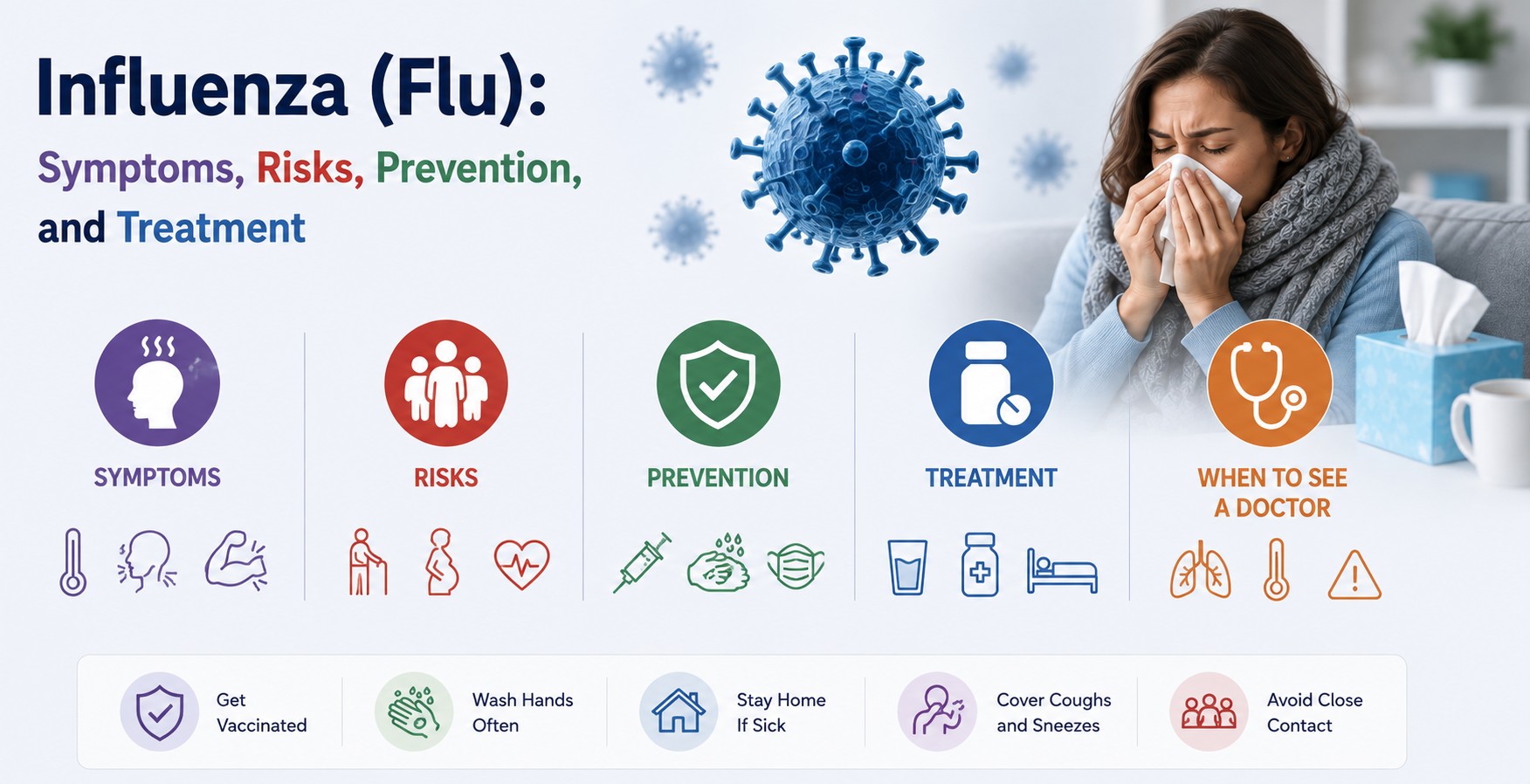
Influenza, more commonly known as the flu, is a highly contagious respiratory illness caused by influenza viruses. Unlike the “stomach flu,” which refers to gastroenteritis, true influenza attacks the respiratory system—the nose, throat, and lungs. While many people recover within a week or two, the flu can sometimes lead to severe complications, especially in vulnerable groups. Understanding what the flu is, how it spreads, and how to prevent it can make a big difference during flu season.
What Is Influenza?
The flu is caused primarily by influenza A and B viruses. These viruses tend to circulate most heavily during flu season, which in the Northern Hemisphere typically runs from October through May. The infection spreads through tiny droplets released when an infected person coughs, sneezes, or talks. You can breathe in these droplets directly or pick up the virus from contaminated surfaces before touching your eyes, nose, or mouth.
The flu comes on suddenly and feels much worse than the common cold. While a cold may leave you run-down, the flu often causes high fever, body aches, chills, and fatigue that can keep you bedridden.
Cold vs. Flu: How to Tell the Difference
It’s easy to confuse a bad cold with the flu, but there are some key differences. Colds tend to start slowly with congestion, sneezing, and sore throat. The flu, on the other hand, comes on abruptly—often within two or three days of exposure—and brings more severe symptoms such as:
- High fever
- Severe body and muscle aches
- Fatigue and weakness
- Headache and chest discomfort
Colds rarely cause serious complications, but the flu can lead to pneumonia or other life-threatening conditions, particularly in at-risk groups.
Symptoms of the Flu
Flu symptoms can vary in intensity but often include:
- Fever and chills
- Cough and sore throat
- Runny or stuffy nose
- Muscle aches and headaches
- Extreme tiredness
- Sweating
Children may also experience nausea, vomiting, diarrhea, ear pain, or unusual fussiness. In some cases, people may notice eye pain, watery eyes, or sensitivity to light.
Most people can manage flu at home, but it’s important to seek medical care if symptoms are severe or if you are in a high-risk group.
Who Is Most at Risk?
Anyone can catch the flu, but certain groups face a higher risk of complications:
- Infants and young children (especially under age 2)
- Adults over 65
- Pregnant women
- People with chronic illnesses such as asthma, diabetes, heart disease, or kidney disease
- Those with weakened immune systems
- People living in close quarters like nursing homes, dorms, or military housing
Other factors like obesity (BMI over 40), long-term aspirin therapy in children, and certain racial or ethnic backgrounds (including Native American, Black, and Latino populations in the U.S.) can also raise the risk of hospitalization or complications.
Potential Complications
Most healthy individuals recover from the flu without long-term problems. However, the flu can sometimes lead to:
- Pneumonia
- Bronchitis
- Ear and sinus infections
- Exacerbation of chronic conditions like asthma or heart disease
- Rare but serious complications such as myocarditis (heart inflammation), encephalitis (brain inflammation), rhabdomyolysis (muscle damage), or toxic shock syndrome
In children and teens, taking aspirin during a viral infection increases the risk of Reye’s syndrome, a potentially fatal complication. For this reason, aspirin should be avoided in young people with flu-like symptoms.
Types of Flu Viruses
There are three main types of influenza viruses:
- Type A – The most common and severe, responsible for seasonal epidemics and occasional pandemics. It mutates frequently, creating new strains.
- Type B – Generally causes milder illness but can still lead to outbreaks every few years.
- Type C – Causes mild respiratory infections and is not linked to seasonal epidemics.
Both Type A and B can cause serious illness and are the main targets of seasonal flu vaccines.
Prevention: Protecting Yourself and Others
The most effective way to prevent the flu is through annual vaccination. The CDC recommends flu shots for everyone aged 6 months and older, unless a medical condition prevents it. Each year, vaccines are updated to protect against the strains most likely to circulate. Options include:
- Flu shot (standard injection)
- Nasal spray vaccine (for certain age groups)
- High-dose or adjuvanted vaccines (for older adults or those with weakened immune systems)
In addition to vaccination, everyday habits can help reduce your risk:
- Wash your hands frequently with soap and water (or use alcohol-based sanitizer).
- Avoid touching your face, especially eyes, nose, and mouth.
- Cover coughs and sneezes with a tissue or elbow.
- Disinfect commonly touched surfaces.
- Stay home when you’re sick to avoid spreading the virus.
- Avoid crowded places during peak flu season if possible.
Treatment Options
For most people, rest, fluids, and over-the-counter remedies are enough to manage flu symptoms. However, antiviral medications such as oseltamivir (Tamiflu) or zanamivir (Relenza) may be prescribed, especially for high-risk individuals. These work best when started within the first 48 hours of symptoms and can reduce the severity and duration of illness.
Antibiotics do not work against the flu since it’s caused by a virus. They are only useful if a secondary bacterial infection develops.
When to Seek Medical Help
While many flu cases can be treated at home, seek medical attention immediately if you or your child experience:
- Difficulty breathing or chest pain
- Persistent dizziness, confusion, or seizures
- Severe weakness or muscle pain
- Dehydration (no urination, dry mouth, no tears when crying)
- Symptoms that improve and then suddenly worsen
Prompt treatment can help prevent severe complications and save lives.
Final Thoughts
Influenza is more than just a seasonal nuisance—it can be a serious illness. With annual vaccination, good hygiene, and timely treatment, the risks of severe flu can be greatly reduced. Protecting yourself also helps protect the people around you, especially the most vulnerable.
