




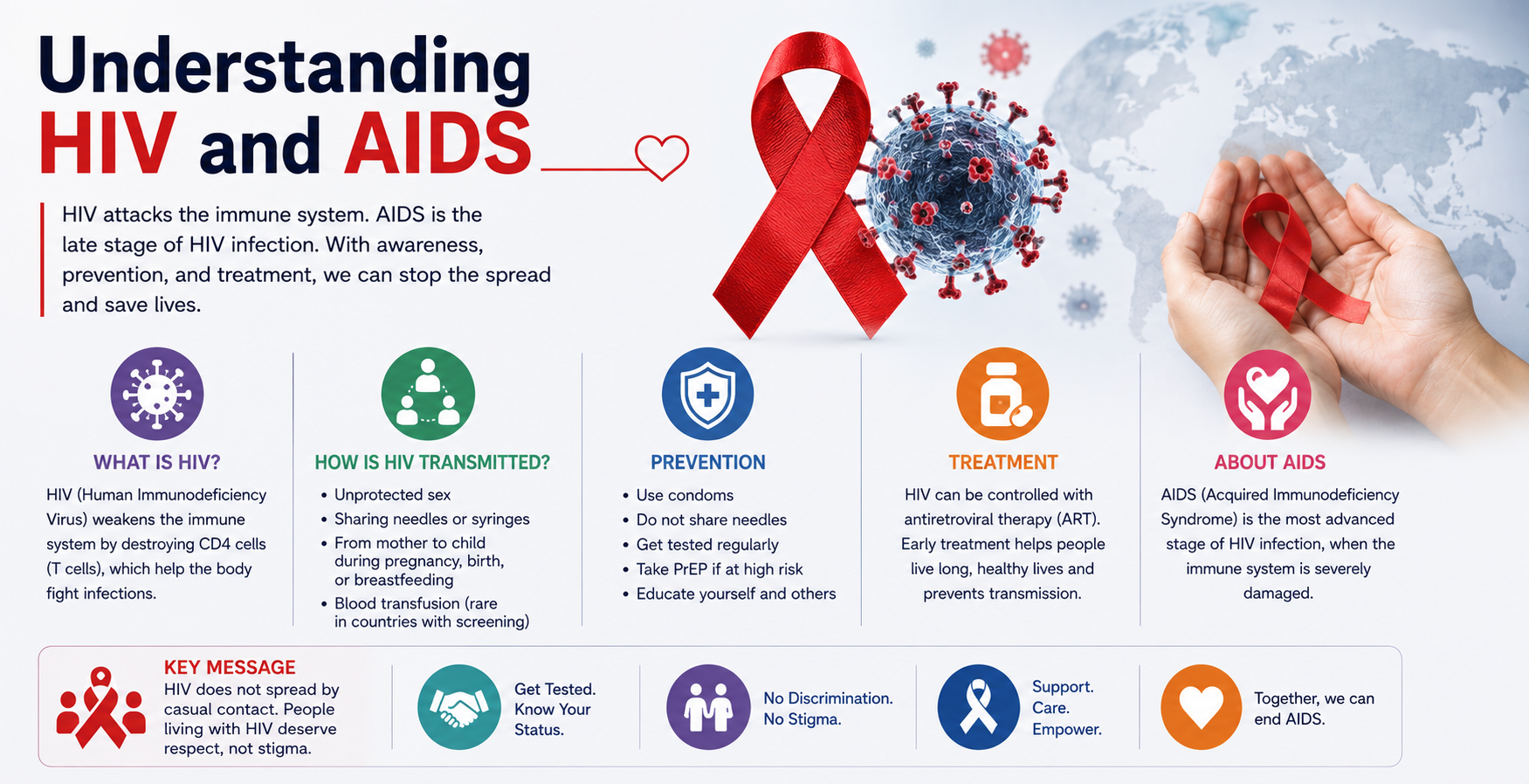
HIV and AIDS are often mentioned together, but they’re not the same thing. HIV stands for human immunodeficiency virus, a virus that attacks the body’s immune system. If left untreated, it can lead to AIDS, which is the most advanced stage of HIV infection. With modern treatment, however, HIV is now considered a manageable condition, and people can live long, healthy lives.
What Is HIV?
HIV is a virus that weakens the immune system by attacking white blood cells known as CD4 or helper T cells. These cells are essential for fighting infections. As HIV multiplies in the body, it destroys CD4 cells, leaving a person more vulnerable to illnesses that wouldn’t normally cause serious problems.
Unlike common infections, HIV doesn’t spread through casual contact. It lives in blood, semen, vaginal fluids, rectal fluids, and breast milk. The main ways HIV is transmitted include:
- Unprotected vaginal or anal sex
- Sharing needles or syringes for drug use
- From mother to child during pregnancy, childbirth, or breastfeeding
HIV does not spread through saliva, sweat, tears, or casual contact like hugging, sharing utensils, or touching door handles.
What Is AIDS?
AIDS stands for acquired immunodeficiency syndrome. It isn’t a virus but the advanced stage of HIV infection. When HIV has destroyed so many CD4 cells that the immune system can no longer fight off infections, a person is considered to have AIDS.
At this stage, people may develop “opportunistic infections” such as pneumonia, tuberculosis, or rare cancers like Kaposi’s sarcoma. Without treatment, life expectancy after an AIDS diagnosis is only a few years, but with modern medicine, many people can avoid reaching this stage altogether.
Symptoms of HIV and AIDS
Not everyone with HIV experiences symptoms right away. In the first few weeks after infection, some people develop flu-like symptoms such as fever, fatigue, swollen lymph nodes, sore throat, or rash. This phase is called acute HIV infection. After that, the virus can stay in the body for years without obvious signs.
When HIV progresses, symptoms may include:
- Ongoing fatigue
- Unexplained weight loss
- Frequent fevers or night sweats
- Persistent diarrhea
- Skin problems
AIDS symptoms vary because they depend on the type of infection or illness a weakened immune system can’t fight off. These can include severe weight loss, long-lasting diarrhea, sores in the mouth or genitals, pneumonia, skin blotches, and memory problems.
How Is HIV Diagnosed?
The only way to know if you have HIV is through testing. Doctors check blood or saliva for HIV antibodies or viral load. Today, at-home self-test kits are also available and can give results in about 20 minutes.
If someone is HIV-positive, doctors monitor two key things:
- CD4 count – the number of healthy immune cells
- Viral load – the amount of HIV in the blood
A CD4 count below 200 or the presence of certain infections indicates AIDS.
Treatment: Managing HIV With ART
There is no cure for HIV yet, but treatment is highly effective. Antiretroviral therapy (ART) is the standard treatment. It combines different medications that stop HIV from multiplying, protect immune cells, and reduce the viral load.
With ART, many people achieve an “undetectable” viral load, meaning the virus is so low in the blood that it can’t be passed on through sex. Starting treatment early greatly improves long-term health. Today, people with HIV who take ART as prescribed can expect a near-normal life span.
For those at high risk of infection but not HIV-positive, a preventive treatment called PrEP (pre-exposure prophylaxis) can significantly lower the chances of contracting the virus.
Living With HIV
When HIV was first identified in the 1980s, it was often fatal. But advances in treatment have transformed it into a manageable condition. Around 41 million people worldwide are currently living with HIV, and the majority are receiving lifesaving treatment.
Living with HIV involves:
- Taking ART consistently
- Attending regular checkups and monitoring CD4 count and viral load
- Practicing safe sex and harm-reduction strategies
- Maintaining a healthy lifestyle to support the immune system
With proper care, people with HIV can work, have families, and live long lives.
Prevention
The best way to stop HIV is through prevention. This includes:
- Using condoms consistently and correctly
- Avoiding shared needles
- Getting tested regularly if you’re at risk
- Taking ART as prescribed if you are HIV-positive
- Considering PrEP if you are HIV-negative but at high risk
For mothers living with HIV, treatment during pregnancy and delivery can significantly reduce the risk of passing the virus to their baby.
Key Takeaway
HIV is a virus that weakens the immune system, and AIDS is the advanced stage of untreated HIV. While there is still no cure, treatment with ART allows people to live long, fulfilling lives and prevents the spread of the virus. Early testing, safe practices, and adherence to medication remain the best tools in the fight against HIV/AIDS.
