




What Is Hepatitis?
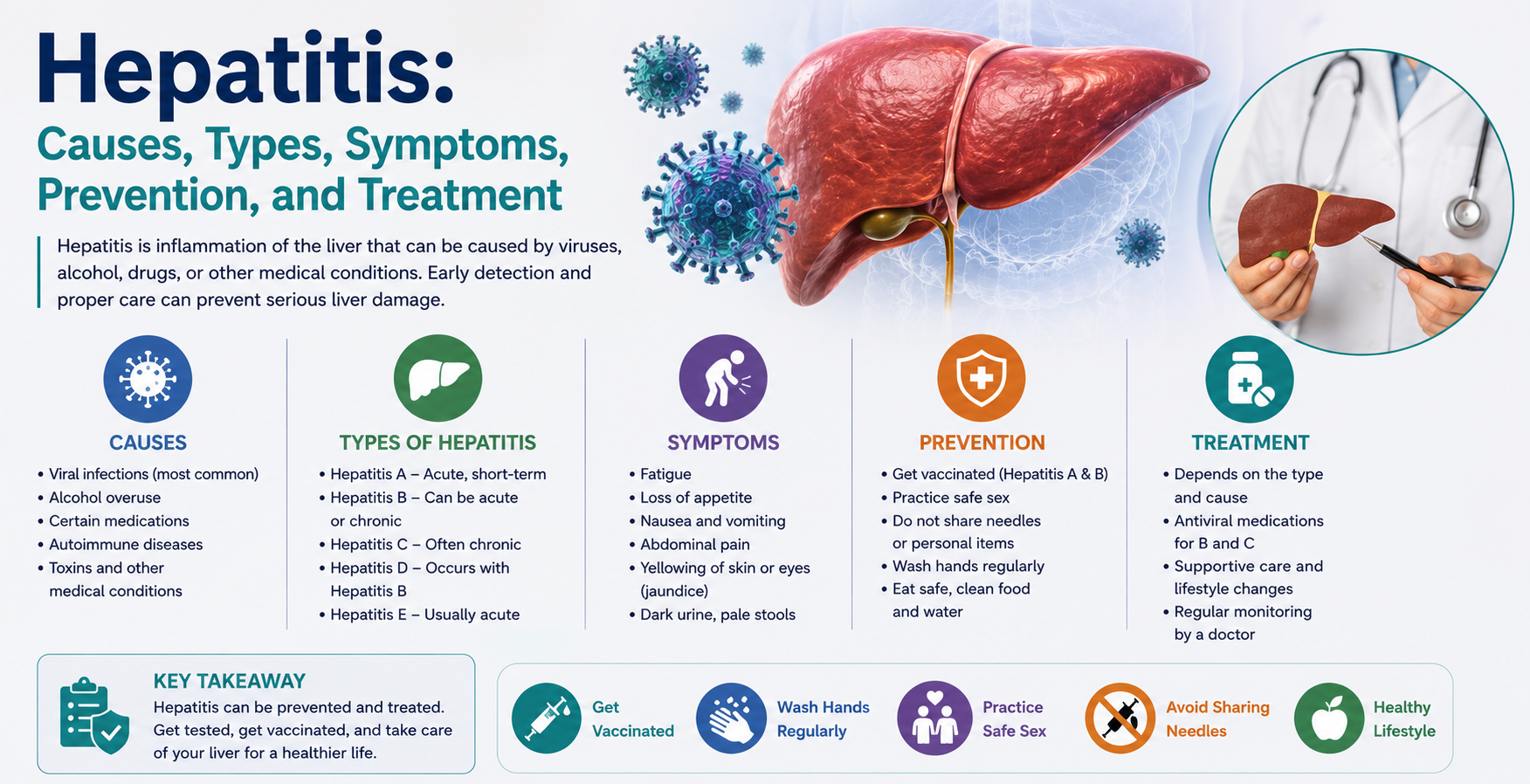
Hepatitis is the term for inflammation of the liver. Since the liver is essential for digesting food, filtering toxins, and storing energy, inflammation can affect the entire body. Hepatitis may be short-term, known as acute hepatitis, or it can last for years, which is called chronic hepatitis. Both forms can have serious consequences if not treated.
The most common cause of hepatitis is a viral infection, but it can also be triggered by alcohol use, certain medications, toxins, or even autoimmune conditions where the immune system mistakenly attacks the liver.
Types of Hepatitis
There are five main viral types, each with its own characteristics.
Hepatitis A is usually contracted by consuming food or water contaminated with the virus. It doesn’t cause long-term liver damage and often clears on its own, though some people become sick enough to require hospital care. A vaccine offers strong protection against it.
Hepatitis B spreads through contact with infected blood, semen, or other bodily fluids. It can be transmitted through sex, sharing needles, or from mother to child during childbirth. Most adults recover fully, but a small number develop chronic infection that can silently damage the liver for years. There is a safe and effective vaccine.
Hepatitis C is most often passed through contaminated blood, particularly when people share needles or receive unsafe tattoos. Many people don’t realize they’re infected because symptoms may not appear for years. In some cases, it can progress to cirrhosis and liver cancer. Unlike hepatitis A and B, there is no vaccine, but modern medications can cure it in most patients.
Hepatitis D occurs only in people who already have hepatitis B, and it tends to make that illness more severe.
Hepatitis E is more common in parts of Asia, Africa, Mexico, and India. Like hepatitis A, it spreads through contaminated water or food and usually clears without long-term effects.
In addition to viral hepatitis, some people develop toxic hepatitis from alcohol, drugs, or chemicals, and others have autoimmune hepatitis, a chronic form caused by the immune system itself.
Symptoms to Watch For
Not everyone with hepatitis has symptoms, especially in the early stages. When symptoms do appear, they may feel similar to the flu: tiredness, fever, nausea, vomiting, loss of appetite, or abdominal discomfort.
As the condition progresses, more specific signs may develop. These include jaundice (yellowing of the skin and eyes), dark urine, pale stools, itching, or unexplained weight loss. In advanced cases, confusion, drowsiness, or internal bleeding can occur. Chronic hepatitis often goes unnoticed until significant liver damage has already happened.
Possible Complications
If hepatitis isn’t managed properly, it can lead to lasting health problems. Cirrhosis, or scarring of the liver, is a common outcome of chronic infections. This scarring can raise blood pressure in the liver’s main vein, called portal hypertension, and eventually cause liver failure. Hepatitis B and C also increase the risk of liver cancer.
How Hepatitis Is Diagnosed
Doctors usually begin with blood tests to check liver function and look for viral markers. Imaging studies such as ultrasounds or CT scans can reveal damage, and in some cases, a liver biopsy may be needed to confirm the extent of inflammation or scarring.
Treatment Options
Treatment depends on the type of hepatitis. Hepatitis A and E generally clear up on their own with rest and supportive care. Hepatitis B can’t be cured, but antiviral medications help control the infection and prevent complications. Hepatitis C is now highly treatable with direct-acting antivirals that can cure most patients.
For other forms, like autoimmune hepatitis, doctors may prescribe medicines to suppress the immune system. In severe cases where the liver is badly damaged, a transplant may be the only option.
Lifestyle changes also play a role. People with hepatitis should avoid alcohol completely, eat a healthy diet, and take medications exactly as prescribed to give the liver the best chance to recover.
Preventing Hepatitis
Prevention strategies vary depending on the type. For hepatitis A, vaccination is the best defence, along with careful hygiene and safe food and water practices when traveling. For hepatitis B, vaccination is also key, combined with safe sex practices, not sharing needles, and only getting tattoos or piercings in reputable places with proper sterilization.
Since there is no vaccine for hepatitis C, prevention relies on avoiding risky blood contact, such as sharing needles or unsterile tattoo equipment, and using condoms with new or high-risk partners. Good hygiene, handwashing, and avoiding contact with infected body fluids further reduce risks across all types.
Living With Hepatitis
Being diagnosed with hepatitis can feel overwhelming, but with proper care, many people live full, healthy lives. Following medical advice, keeping up with regular checkups, and making small lifestyle adjustments can make a big difference. A balanced diet, exercise, and mental health support all help ease the burden on the liver and improve overall well-being.
When to See a doctor
Anyone who notices jaundice, persistent fatigue, abdominal pain, or dark urine should seek medical advice promptly. It’s especially important to talk to a doctor after traveling to countries where hepatitis is common, or if you believe you’ve been exposed to infected blood or body fluids. Early testing and treatment can prevent long-term damage.
