




Overview
Dengue fever is a mosquito-borne illness that affects millions of people each year, mainly in tropical and subtropical regions. It is caused by one of four dengue viruses (DENV-1, DENV-2, DENV-3, DENV-4), which are spread through the bite of infected Aedes mosquitoes, especially Aedes aegypti. Mild cases often resemble the flu, but in some individuals the illness can progress to severe dengue, also known as dengue hemorrhagic fever or dengue shock syndrome. Severe dengue can lead to internal bleeding, dangerously low blood pressure, organ failure, and even death.
While most cases occur in Southeast Asia, Latin America, Africa, and the Pacific Islands, dengue has been spreading to new areas, including Europe and southern parts of the United States. The World Health Organization estimates that nearly 400 million people are infected with dengue virus annually, with around 100 million developing symptoms.
Currently, the best protection against dengue is avoiding mosquito bites and reducing mosquito populations. Vaccines exist, but they are limited to certain regions and groups.
Symptoms of Dengue Fever
Not everyone who is infected develops symptoms. When they do appear, they typically begin four to ten days after the bite of an infected mosquito and may last about a week.
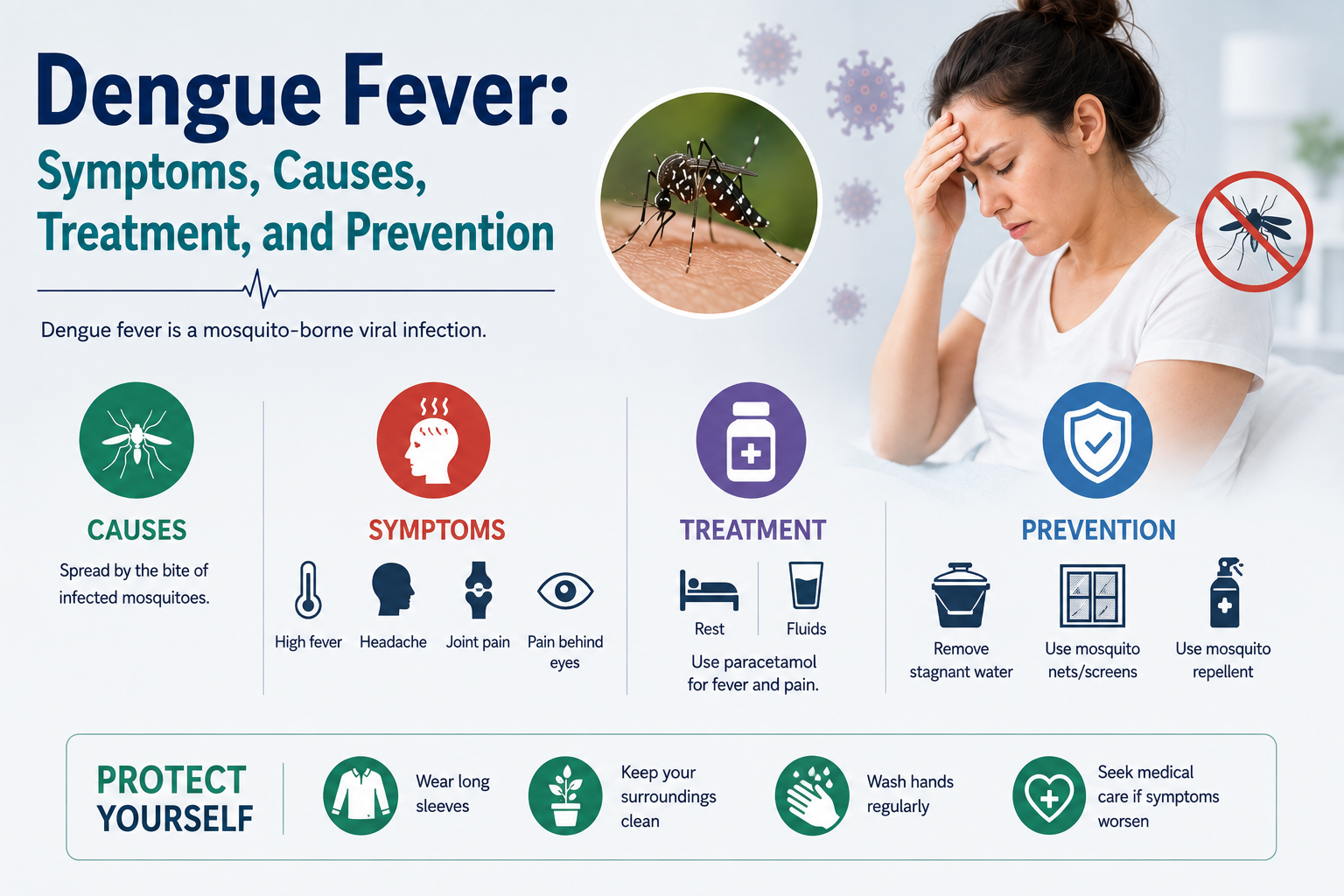
The most common symptoms include:
- High fever, often reaching 104°F (40°C)
- Severe headache and pain behind the eyes
- Muscle, bone, and joint pain (sometimes called “breakbone fever”)
- Nausea and vomiting
- Rash that may appear a few days after the fever starts
- Swollen glands and fatigue
In many cases, symptoms are mild and may be mistaken for influenza or another viral illness. However, a small percentage of infections develop into severe dengue. Warning signs of severe dengue usually appear within 24 to 48 hours after the fever subsides. These may include intense stomach pain, persistent vomiting, bleeding from the gums or nose, blood in vomit or stool, rapid breathing, extreme tiredness, irritability, or restlessness.
Severe dengue is a medical emergency that requires immediate hospital care. Without treatment, it can be life-threatening.
Causes and Transmission
Dengue fever is caused by infection with any one of four dengue viruses. These viruses are transmitted primarily by the bite of infected Aedes mosquitoes. The cycle begins when a mosquito bites a person who already has dengue; the virus then multiplies inside the mosquito, and when it bites another person, the virus enters that person’s bloodstream.
Dengue cannot spread directly from one person to another, except in rare cases when a pregnant woman passes the virus to her baby during pregnancy or childbirth. Very rarely, dengue may also spread through blood transfusions, organ transplants, or contaminated needles.
A person who recovers from dengue gains long-term immunity against the specific strain they were infected with, but not against the other strains. Unfortunately, subsequent infections with different strains increase the risk of developing severe dengue due to a phenomenon called antibody-dependent enhancement.
Who Is at Risk?
Anyone living in or traveling to tropical and subtropical regions is at risk of dengue. More than half of the world’s population lives in areas where dengue viruses circulate. Outbreaks are most common in Southeast Asia, the western Pacific islands, Latin America, and Africa, but cases are now appearing in Europe and the southern U.S.
Children, older adults, and people who have had dengue before are at higher risk for severe illness. Pregnant women are also at risk, since dengue during pregnancy can lead to miscarriage, premature birth, or low birth weight.
Diagnosis
Dengue is diagnosed through blood tests that look for the virus itself or the antibodies the body produces to fight it. Doctors may also order a complete blood count (CBC) to check platelet levels, since dengue often causes a drop in platelets, increasing the risk of bleeding.
Because dengue symptoms resemble those of malaria, influenza, and other viral illnesses, lab confirmation is essential, especially if you’ve recently traveled to an area where dengue is common.
Treatment and Management
There is no specific antiviral medication that cures dengue fever. Treatment focuses on managing symptoms and preventing complications. Rest, hydration, and acetaminophen (Tylenol) for pain and fever are the main approaches. Importantly, patients should avoid aspirin and nonsteroidal anti-inflammatory drugs (NSAIDs) such as ibuprofen, as these can worsen bleeding.
Most cases improve within a week, but severe dengue requires hospital care. Patients may need intravenous fluids, blood transfusions, or close monitoring for organ complications. With timely medical care, the survival rate for severe dengue is very high, exceeding 99%.
Complications
While most people recover fully, dengue can sometimes cause serious complications. These include internal bleeding, shock, organ failure, seizures, and inflammation of the brain. Severe dengue can also complicate pregnancy, leading to risks for both mother and baby.
Globally, around 40,000 people die from dengue each year. The risk of death increases if severe dengue is not treated promptly.
Prevention
The most effective way to prevent dengue fever is by avoiding mosquito bites and controlling mosquito breeding sites. Practical steps include wearing long-sleeved shirts and pants, applying insect repellent, using mosquito nets, and ensuring that doors and windows are well-screened. Standing water, where mosquitoes breed, should be eliminated from places like flowerpots, bird baths, and old tires.
Vaccination is another preventive tool, though its use is limited. The FDA has approved the vaccine Dengvaxia for children and teens aged 9–16 who have had a confirmed dengue infection and live in U.S. territories where dengue is common, such as Puerto Rico. Another vaccine, Qdenga, is licensed in some countries but not in the U.S. Vaccines alone are not sufficient; they must be combined with mosquito control measures.
Outlook
Most people with dengue recover completely within one to two weeks, though fatigue can linger longer. Having dengue once does not protect you from other strains, and subsequent infections are more likely to be severe. That’s why preventing mosquito bites and seeking medical care early if symptoms develop is so important.
Dengue fever remains a global health challenge, but awareness, preventive steps, and timely treatment can greatly reduce the risks.
