




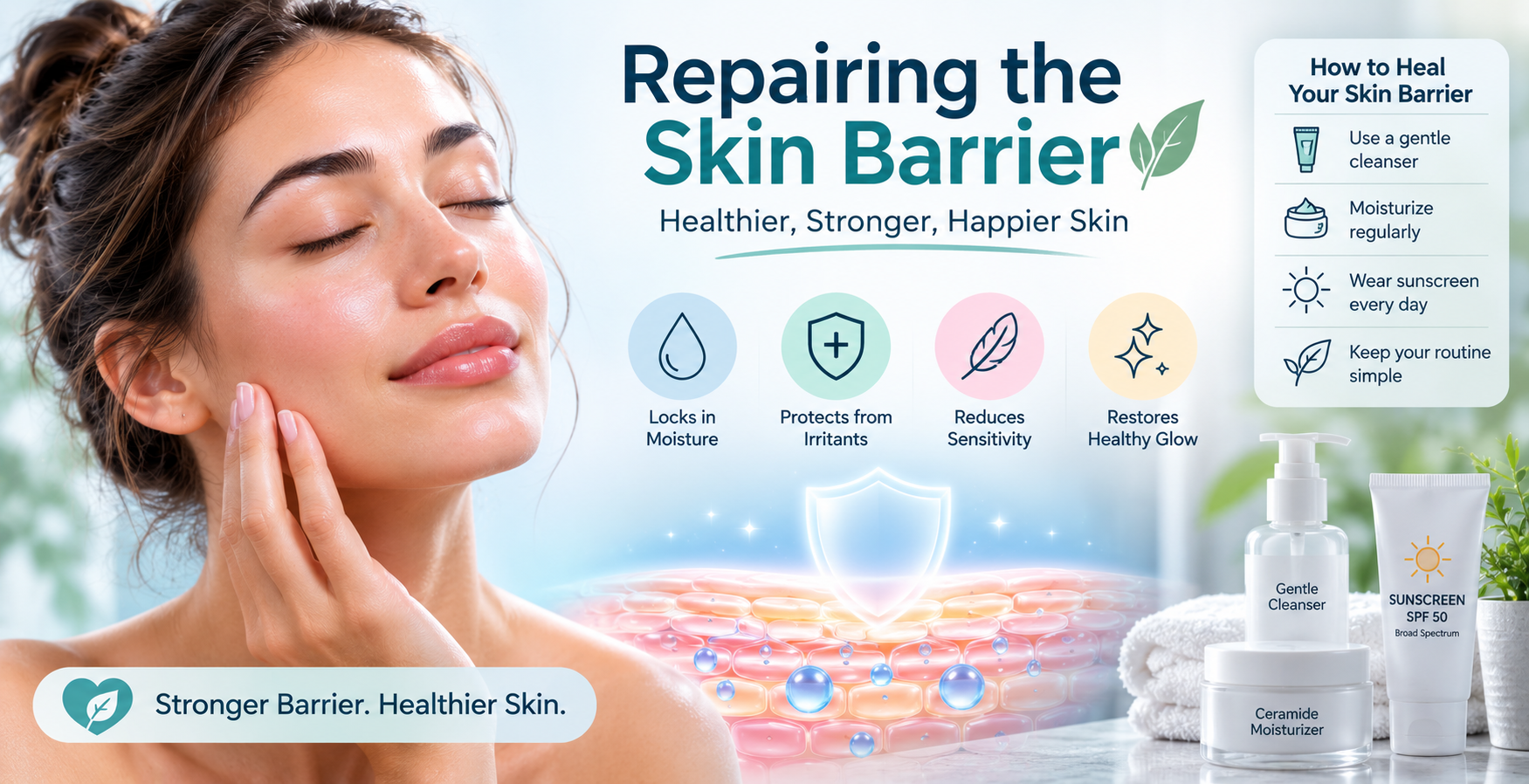
Repairing the Skin Barrier: How to Restore Healthy, Resilient Skin
Healthy skin is more than just an attractive appearance—it is the body’s largest organ and one of its most important protective barriers. The outermost layer of the skin acts as a shield against bacteria, viruses, allergens, pollution, and harmful chemicals while helping to prevent excessive water loss. When this protective barrier becomes damaged, the skin may become dry, irritated, sensitive, and more vulnerable to environmental stress.
In recent years, the phrase “skin barrier repair” has become increasingly popular on social media, but not all advice shared online is supported by scientific evidence. Dermatologists emphasize that repairing the skin barrier usually involves simplifying skincare routines rather than adding more products. With proper care, most mild barrier damage improves over time.
This article explains what the skin barrier is, why it becomes damaged, how to recognize the symptoms, and the evidence-based steps that help restore healthy skin.
What Is the Skin Barrier?
The skin barrier refers primarily to the outermost layer of the epidermis, known as the stratum corneum. It is often compared to a brick wall. The skin cells act as the bricks, while natural lipids—including ceramides, cholesterol, and fatty acids—form the mortar that holds everything together.
This structure performs several essential functions. It keeps moisture inside the skin, prevents harmful microorganisms from entering the body, reduces exposure to irritants, and protects against environmental damage.
When the barrier is functioning properly, the skin feels comfortable, hydrated, and resilient.
What Causes Skin Barrier Damage?
Many everyday habits can weaken the skin barrier.
Overwashing the face, using harsh cleansers, frequent exfoliation, excessive use of scrubs, alcohol-based skincare products, and combining multiple active ingredients may all strip away protective lipids.
Environmental factors such as cold weather, low humidity, wind, excessive sun exposure, and air pollution can also contribute to barrier dysfunction.
Certain skin conditions, including eczema, rosacea, psoriasis, and acne, may naturally weaken the barrier. Aging also reduces the skin’s ability to produce protective lipids, making older adults more prone to dryness and irritation.
Signs of a Damaged Skin Barrier
A compromised skin barrier often produces symptoms that many people mistake for simple dry skin.
Common signs include persistent dryness, tightness after cleansing, rough texture, flaking, redness, itching, burning, stinging when applying skincare products, increased sensitivity, and a feeling that the skin is “reactive” to products that were previously well tolerated.
Some people also notice that their acne becomes more difficult to control because irritated skin may trigger additional inflammation.
Why the Skin Barrier Matters
A damaged barrier increases what dermatologists call transepidermal water loss (TEWL), meaning water escapes from the skin more easily.
As hydration decreases, the skin becomes increasingly dry and sensitive, creating a cycle in which irritation leads to further barrier damage.
A weakened barrier also allows environmental irritants to penetrate more easily, potentially worsening inflammatory skin conditions.
Repairing the barrier helps restore hydration while improving the skin’s natural defense mechanisms.
Simplify Your Skincare Routine
One of the first recommendations dermatologists make is surprisingly simple: use fewer products.
People experiencing barrier damage often attempt to fix the problem by purchasing additional serums, acids, exfoliants, and treatments. Unfortunately, introducing multiple active ingredients may increase irritation.
Instead, a simplified routine consisting of a gentle cleanser, moisturizer, and broad-spectrum sunscreen is often the most effective starting point.
Once the skin has recovered, additional treatment products can be introduced gradually if needed.
Moisturizers Play a Central Role
Moisturizers are among the most effective tools for repairing the skin barrier.
Products containing ceramides help replenish natural skin lipids, while ingredients such as glycerin and hyaluronic acid attract water into the skin.
Occlusive ingredients including petrolatum and dimethicone reduce water loss by forming a protective layer over the skin.
Many dermatologists recommend fragrance-free moisturizers because fragrances may irritate already compromised skin.
Applying moisturizer immediately after cleansing helps lock in moisture while supporting barrier recovery.
Avoid Over-Exfoliation
Chemical exfoliants containing glycolic acid, salicylic acid, lactic acid, and other acids can provide excellent results when used appropriately.
However, excessive exfoliation is one of the most common causes of skin barrier damage.
People experiencing redness, burning, or peeling should temporarily reduce or stop exfoliating products until the skin has healed.
Similarly, retinoids, vitamin C serums, and benzoyl peroxide may need to be introduced more slowly during recovery.
Protect Your Skin from the Sun
Ultraviolet radiation weakens the skin barrier while accelerating collagen breakdown and increasing inflammation.
Daily use of a broad-spectrum sunscreen with SPF 30 or higher helps protect recovering skin from additional damage.
Individuals with sensitive skin often tolerate mineral sunscreens containing zinc oxide or titanium dioxide better than some chemical sunscreen formulations.
Sun protection remains one of the most important long-term investments in skin health.
Lifestyle Habits Also Influence Skin Health
Healthy skin depends on more than topical products.
Adequate sleep allows the skin to repair itself overnight. A balanced diet rich in fruits, vegetables, healthy fats, and protein provides nutrients necessary for maintaining healthy skin structure.
Avoiding smoking, managing stress, staying hydrated, and limiting excessive alcohol consumption may also support normal skin function.
Although drinking extra water alone will not repair a damaged barrier, overall hydration contributes to general health and skin function.
When to See a Dermatologist
Most mild cases of skin barrier damage improve within several weeks after simplifying skincare and using appropriate moisturizers.
However, persistent redness, severe itching, painful cracks, blistering, recurrent infections, or symptoms that continue despite proper skincare should be evaluated by a dermatologist.
Underlying conditions such as eczema, allergic contact dermatitis, rosacea, fungal infections, or psoriasis may require prescription treatment.
Early diagnosis can prevent ongoing irritation and improve long-term skin health.
Frequently Asked Questions
How long does it take to repair the skin barrier?
Mild barrier damage often improves within two to four weeks, although more severe cases or underlying skin conditions may require longer treatment.
What ingredients help repair the skin barrier?
Ceramides, glycerin, hyaluronic acid, petrolatum, cholesterol, fatty acids, squalane, and colloidal oatmeal are among the ingredients commonly recommended by dermatologists for supporting barrier recovery.
Should I stop using retinol if my skin barrier is damaged?
Temporarily reducing or pausing retinol may be appropriate if significant irritation develops. Once the skin has recovered, retinol can often be reintroduced gradually according to your dermatologist’s advice.
Can a damaged skin barrier cause acne?
A damaged barrier does not directly cause acne, but irritation and inflammation may worsen existing acne and make the skin more sensitive to acne treatments.
Is repairing the skin barrier possible?
Yes. In most cases, the skin barrier can recover with gentle skincare, regular moisturizing, sun protection, and avoiding unnecessary irritation.
The Bottom Line
The skin barrier is essential for maintaining hydration, protecting against environmental damage, and supporting overall skin health. When it becomes compromised, the skin often develops dryness, redness, irritation, and increased sensitivity. Fortunately, repairing the barrier usually requires a simple, consistent approach rather than a complicated skincare routine.
Gentle cleansing, regular use of moisturizers containing barrier-supporting ingredients, daily sunscreen, and avoiding excessive exfoliation provide the strongest evidence for restoring healthy skin. If symptoms persist or become severe, consulting a dermatologist can help identify underlying skin conditions and ensure appropriate treatment.
