




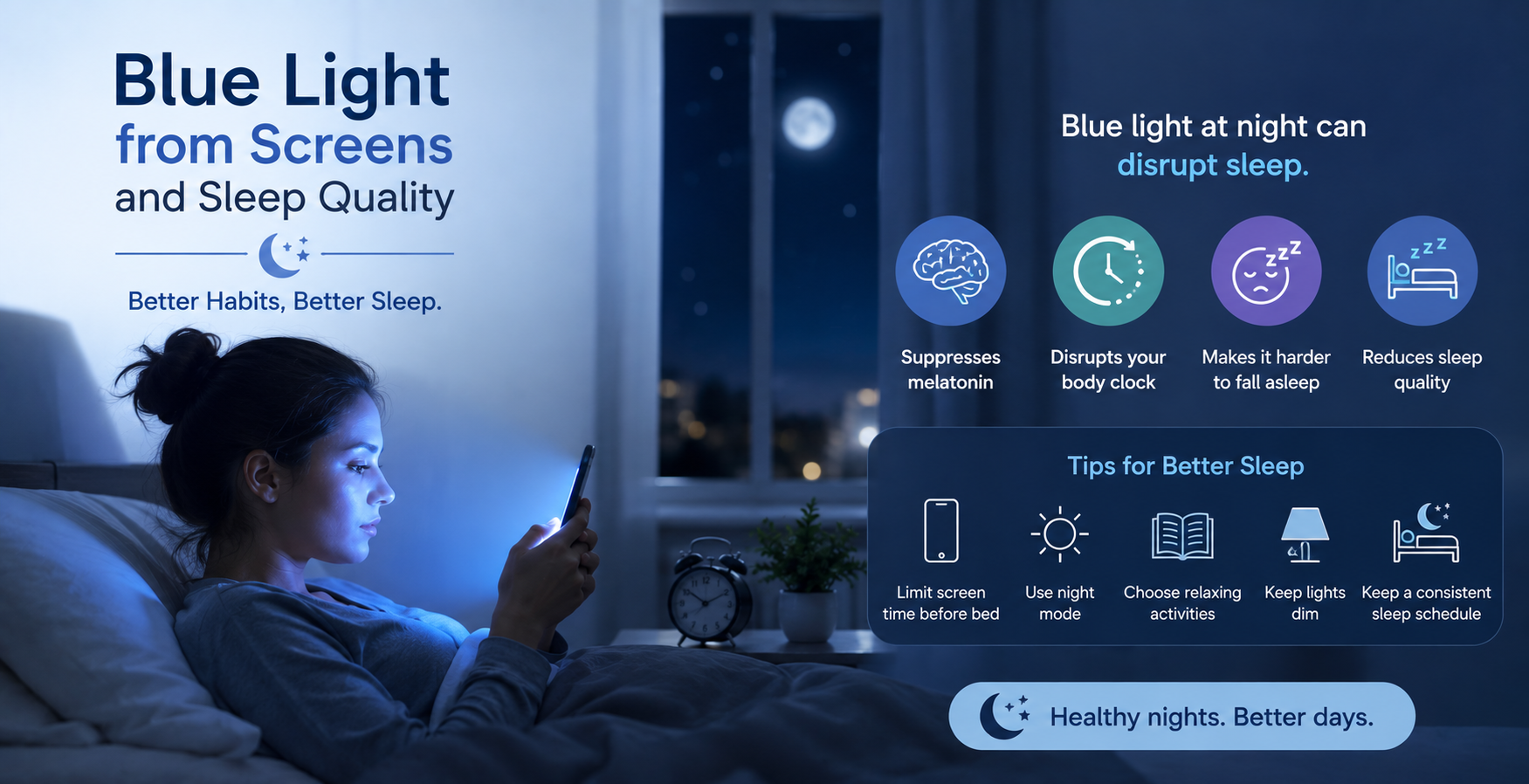
Smartphones, tablets, laptops, televisions, and other digital devices have become an essential part of daily life. Whether for work, education, entertainment, or social communication, many people now spend several hours each day looking at screens. While technology offers numerous benefits, growing research has shown that excessive screen use—particularly in the evening—can negatively affect sleep quality.
One of the main concerns is blue light, a high-energy visible light naturally present in sunlight but also emitted by LED screens and modern lighting. Scientists have found that exposure to blue light at night can interfere with the body’s internal biological clock, making it more difficult to fall asleep and reducing overall sleep quality.
Although blue light is only one factor contributing to poor sleep, understanding its effects can help people develop healthier digital habits and improve long-term well-being.
What Is Blue Light?
Visible light consists of different wavelengths that produce various colors. Blue light has one of the shortest wavelengths and one of the highest energy levels within the visible spectrum.
Natural sunlight contains large amounts of blue light, which plays an important role during the daytime. Exposure to morning sunlight helps regulate the body’s circadian rhythm, increases alertness, improves mood, and supports healthy sleep-wake cycles.
Artificial sources of blue light include smartphones, tablets, computers, televisions, LED light bulbs, gaming devices, and electronic displays.
The problem is not blue light itself, but rather when people are exposed to it.
How Sleep Is Regulated
The body follows a natural 24-hour internal clock known as the circadian rhythm.
This biological clock regulates sleep, body temperature, hormone production, metabolism, and many other physiological functions. One of the most important hormones involved in sleep is melatonin, which is produced by the pineal gland as evening approaches.
As natural light decreases after sunset, melatonin levels gradually rise, signaling to the brain that it is time to prepare for sleep.
Bright light exposure at night—especially blue light—can suppress melatonin production and delay this natural process.
How Blue Light Affects Sleep
Numerous laboratory studies have shown that evening exposure to blue light delays the release of melatonin.
As melatonin production decreases, people often experience greater alertness, find it harder to fall asleep, and may go to bed later than intended.
Even after falling asleep, blue light exposure before bedtime may reduce sleep duration and alter normal sleep architecture, including deep sleep and rapid eye movement (REM) sleep.
Many people also report waking up feeling less refreshed after spending prolonged periods using digital devices immediately before bedtime.
Is Blue Light the Only Problem?
Blue light is not the sole reason screens interfere with sleep.
The content viewed on electronic devices also plays an important role.
Watching emotionally engaging videos, reading stressful news, scrolling through social media, playing competitive video games, or responding to work emails can stimulate the brain and increase mental alertness.
Notifications, messages, and constant digital interaction may further activate stress pathways, making relaxation before bedtime more difficult.
Therefore, both light exposure and psychological stimulation contribute to sleep disruption.
What Does Research Show?
A growing body of research supports the relationship between evening screen use and poorer sleep quality.
Studies have found that individuals who spend longer periods using smartphones or tablets before bed often report shorter sleep duration, longer time to fall asleep, poorer sleep quality, and greater daytime fatigue.
Adolescents and young adults appear particularly vulnerable because they frequently use mobile devices late into the evening.
Researchers also note that inadequate sleep is associated with numerous health problems, including obesity, type 2 diabetes, cardiovascular disease, depression, anxiety, impaired immune function, and reduced cognitive performance.
Although blue light contributes to these effects, scientists emphasize that total screen time and bedtime habits are equally important.
Children and Teenagers
Children and teenagers may be especially sensitive to nighttime blue light exposure.
Their eyes allow more blue light to reach the retina than older adults, potentially producing stronger effects on melatonin secretion.
Late-night smartphone use has been associated with reduced sleep duration, difficulty concentrating at school, poorer academic performance, mood changes, and increased daytime sleepiness.
Pediatric sleep experts generally recommend limiting screen exposure before bedtime and removing electronic devices from children’s bedrooms whenever possible.
Can Blue Light Glasses Help?
Blue light-blocking glasses have become increasingly popular, but scientific evidence remains mixed.
Some studies suggest that they may slightly reduce melatonin suppression and improve sleep in certain individuals when worn during evening screen use.
However, other studies have found little or no significant benefit.
Most sleep specialists agree that reducing screen use before bedtime is likely to have a greater impact than relying solely on blue light-filtering eyewear.
Night Mode and Blue Light Filters
Many smartphones, tablets, and computers now include built-in blue light reduction settings, often called Night Shift, Night Mode, Night Light, or Eye Comfort Mode.
These features reduce the amount of blue light emitted by the display by shifting colors toward warmer tones.
While these settings may decrease blue light exposure, they do not eliminate all light from the screen and cannot fully prevent the stimulating effects of digital content.
Using these settings may be helpful but should be combined with healthy bedtime habits.
Improving Sleep in the Digital Age
Good sleep hygiene remains the most effective strategy for improving sleep quality.
Experts generally recommend limiting screen use for at least one hour before bedtime whenever possible. Replacing digital activities with reading a printed book, meditation, gentle stretching, or other relaxing routines allows the brain to transition toward sleep more naturally.
Maintaining a consistent sleep schedule, keeping the bedroom cool and dark, avoiding excessive caffeine late in the day, exercising regularly, and obtaining morning sunlight all help strengthen healthy circadian rhythms.
Individuals who must use screens during evening work hours may benefit from lowering screen brightness, activating blue light filters, increasing room lighting to reduce visual contrast, and taking regular breaks from prolonged screen exposure.
Frequently Asked Questions
Does blue light permanently damage sleep?
No. Blue light does not permanently damage sleep, but frequent nighttime exposure may repeatedly delay melatonin production and contribute to chronic sleep disruption if healthy sleep habits are not maintained.
Is blue light harmful during the day?
No. Daytime exposure to blue light from natural sunlight is beneficial. It helps regulate circadian rhythm, improves alertness, supports mood, and promotes healthy nighttime sleep.
Should I stop using my phone before bed?
Reducing screen use at least one hour before bedtime is recommended for many people. If screen use is unavoidable, lowering brightness and enabling night mode may help reduce some effects.
Are televisions as disruptive as smartphones?
Smartphones and tablets are often held much closer to the eyes and tend to involve more interactive activities, which may make them more disruptive than watching television from a greater distance.
What is the best way to improve sleep quality?
Maintaining a regular sleep schedule, reducing evening screen exposure, getting morning sunlight, exercising regularly, limiting caffeine late in the day, and creating a relaxing bedtime routine provide the strongest evidence for improving sleep quality.
The Bottom Line
Blue light from digital screens can interfere with the body’s natural sleep-wake cycle by delaying melatonin production, especially when exposure occurs during the hours before bedtime. While blue light plays an important role in maintaining alertness during the day, excessive nighttime exposure—combined with stimulating digital activities—may contribute to difficulty falling asleep, reduced sleep quality, and daytime fatigue.
Healthy technology habits remain the most effective solution. Limiting evening screen time, using built-in blue light reduction features, maintaining a consistent bedtime routine, and prioritizing good sleep hygiene can help support better sleep and overall health in an increasingly digital world.
