




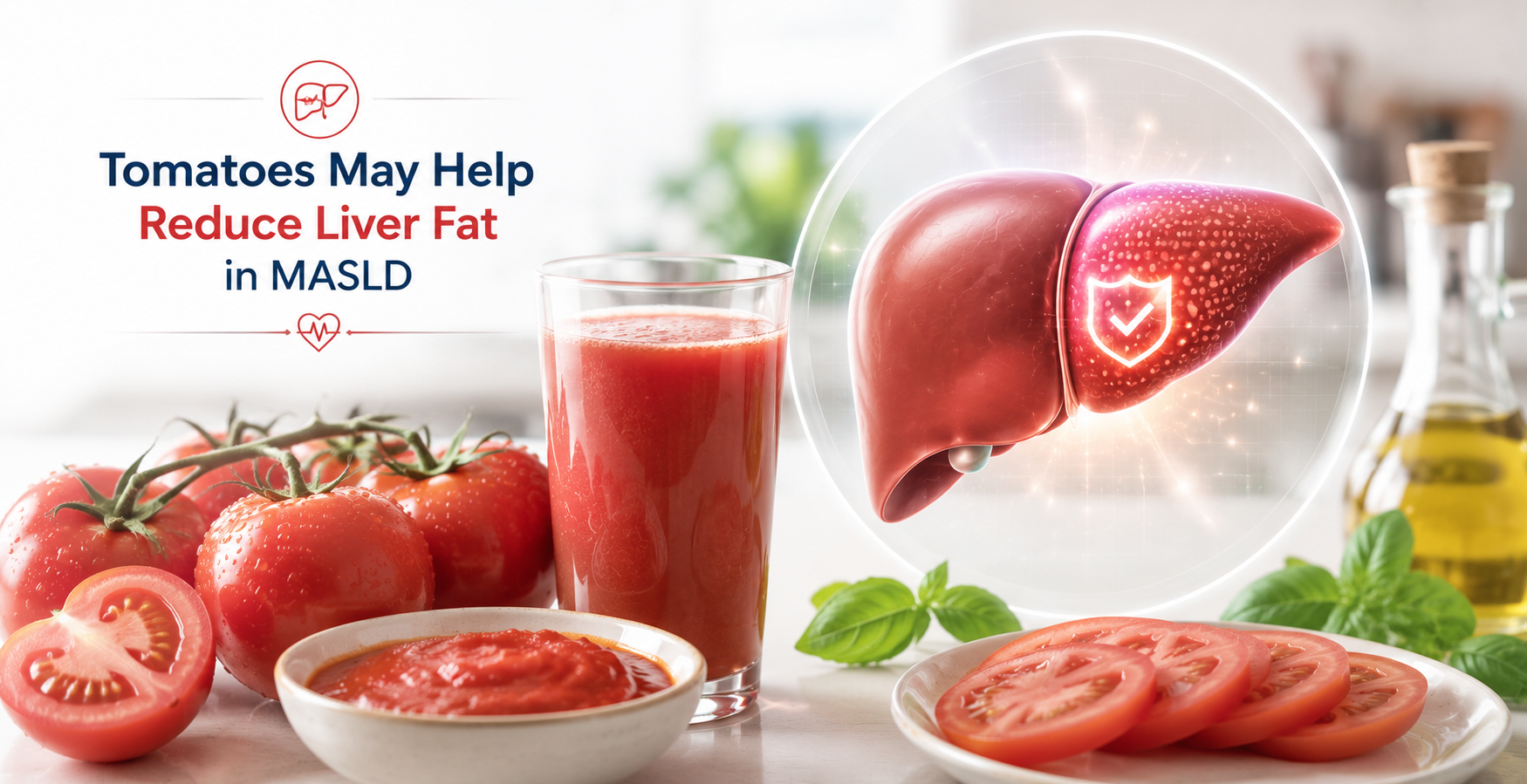
A new clinical study has found that eating tomatoes every day may help reduce fat accumulation in the liver among people with metabolic dysfunction-associated steatotic liver disease (MASLD). The findings add to growing evidence that dietary choices can influence liver health, although researchers emphasize that much larger and longer studies are still needed before tomatoes can be recommended as a specific treatment.
The study, recently published in the journal Nutrients, investigated whether adding fresh tomatoes and tomato sauce to the daily diet could improve liver fat in adults diagnosed with MASLD. While participants who consumed tomatoes experienced greater improvements than those following a tomato-free diet, experts caution that the results should be viewed as preliminary rather than definitive.
What Is MASLD?
Metabolic dysfunction-associated steatotic liver disease, formerly known as non-alcoholic fatty liver disease (NAFLD), is one of the most common chronic liver conditions worldwide. It occurs when excess fat accumulates within the liver in people who have metabolic risk factors such as obesity, type 2 diabetes, high blood pressure, abnormal cholesterol levels, or insulin resistance.
Many individuals with MASLD experience no symptoms during the early stages. However, if left untreated, the condition may progress to liver inflammation, fibrosis, cirrhosis, and, in some cases, liver failure or liver cancer.
Lifestyle changes remain the cornerstone of treatment, with weight loss, regular exercise, and healthy dietary habits offering the strongest evidence for improving liver health.
The Study at a Glance
Researchers recruited 79 adults diagnosed with MASLD. Participants were randomly assigned to one of two groups for six weeks.
One group followed a tomato-free control diet, while the intervention group consumed approximately 200 grams of raw tomatoes along with 50 grams of tomato sauce every day. Aside from the tomato intervention, participants were instructed to continue their usual eating habits and daily activities.
Throughout the study, investigators measured several health indicators, including liver fat, liver stiffness, body composition, cholesterol levels, and liver enzyme concentrations.
Tomatoes Reduced Liver Fat More Than the Control Diet
At the end of the six-week study, liver fat decreased in both groups. However, participants who consumed tomatoes experienced a significantly greater reduction in hepatic steatosis than those following the control diet.
Interestingly, researchers did not observe meaningful differences between the two groups in several other important measurements. Liver stiffness, cholesterol levels, liver enzymes, body weight, abdominal fat, and body mass index remained largely unchanged during the relatively short intervention period.
These findings suggest that tomato consumption may reduce fat accumulation in the liver independently of major weight loss or changes in body composition.
Why Might Tomatoes Benefit the Liver?
Tomatoes are a key component of the Mediterranean diet, which has consistently been associated with improved cardiovascular and metabolic health.
They are naturally rich in lycopene, a powerful antioxidant responsible for their bright red color. Lycopene has attracted considerable scientific interest because of its anti-inflammatory and antioxidant properties, both of which may help protect liver cells from damage.
Tomatoes also provide vitamin C, potassium, folate, and numerous plant compounds that may contribute to improved metabolic health.
Although researchers suspect these nutrients may play a role in reducing liver fat, the current study did not measure blood levels of lycopene or other carotenoids, making it impossible to determine exactly which compounds produced the observed effects.
Important Limitations
Despite the encouraging findings, researchers and independent experts stress that the study has several important limitations.
The intervention lasted only six weeks, making it impossible to determine whether the benefits would continue over months or years.
The study population was relatively small, including just 79 participants. Most participants were men under the age of 65, limiting how broadly the findings can be applied to women and older adults.
Researchers also excluded individuals with obesity above a body mass index (BMI) of 30, even though obesity is one of the strongest risk factors for MASLD. As a result, the study population may not fully represent patients commonly seen in clinical practice.
In addition, because participants consumed both raw tomatoes and tomato sauce, researchers could not identify whether one form provided greater benefits than the other.
Experts Urge Caution
Medical experts not involved in the research welcomed the findings but advised against drawing strong clinical conclusions.
Although liver fat improved, the study found no significant improvements in several measures that physicians use to evaluate disease severity, including liver stiffness, fibrosis markers, insulin resistance, inflammatory markers, cholesterol levels, or body composition.
Experts note that reducing liver fat alone does not necessarily mean the underlying disease has been reversed or that long-term complications will decrease.
They also emphasize that lifestyle interventions with the strongest scientific evidence—particularly sustained weight loss of around 10% of body weight in people with overweight or obesity—remain the most effective strategy for improving MASLD and preventing disease progression.
Tomatoes Should Be Part of a Healthy Diet—Not a Standalone Treatment
The findings support the idea that tomatoes may become one useful component of a liver-friendly eating pattern, particularly within a Mediterranean-style diet rich in vegetables, fruits, whole grains, legumes, fish, nuts, and olive oil.
However, researchers caution against focusing excessively on a single “superfood.” Overall dietary quality, regular physical activity, weight management, adequate sleep, and control of diabetes or hypertension remain far more important than any individual food.
People with gastroesophageal reflux disease (GERD) should also remember that tomatoes can worsen acid reflux symptoms in some individuals. Likewise, many processed tomato products contain added sugar or sodium, which should be considered when choosing foods.
More Research Is Needed
The investigators describe their work as exploratory and hypothesis-generating. Larger randomized clinical trials involving more diverse populations and longer follow-up periods will be necessary before tomato consumption can be incorporated into formal clinical recommendations for MASLD.
Future studies may also help determine whether specific tomato compounds, such as lycopene, are responsible for the observed improvements or whether similar benefits can be achieved through other dietary patterns.
The Bottom Line
A new randomized clinical study suggests that eating fresh tomatoes and tomato sauce daily may help reduce liver fat in adults with metabolic dysfunction-associated steatotic liver disease. While the results are encouraging, the improvements were limited primarily to liver fat, with no significant changes observed in liver function tests, body weight, cholesterol, or markers of liver fibrosis. Experts agree that tomatoes can be part of a healthy Mediterranean-style diet, but they should not replace proven strategies such as maintaining a healthy weight, exercising regularly, controlling metabolic risk factors, and following medical advice. As research continues, tomatoes may become one small piece of a broader nutritional approach to supporting liver health rather than a standalone tr
