




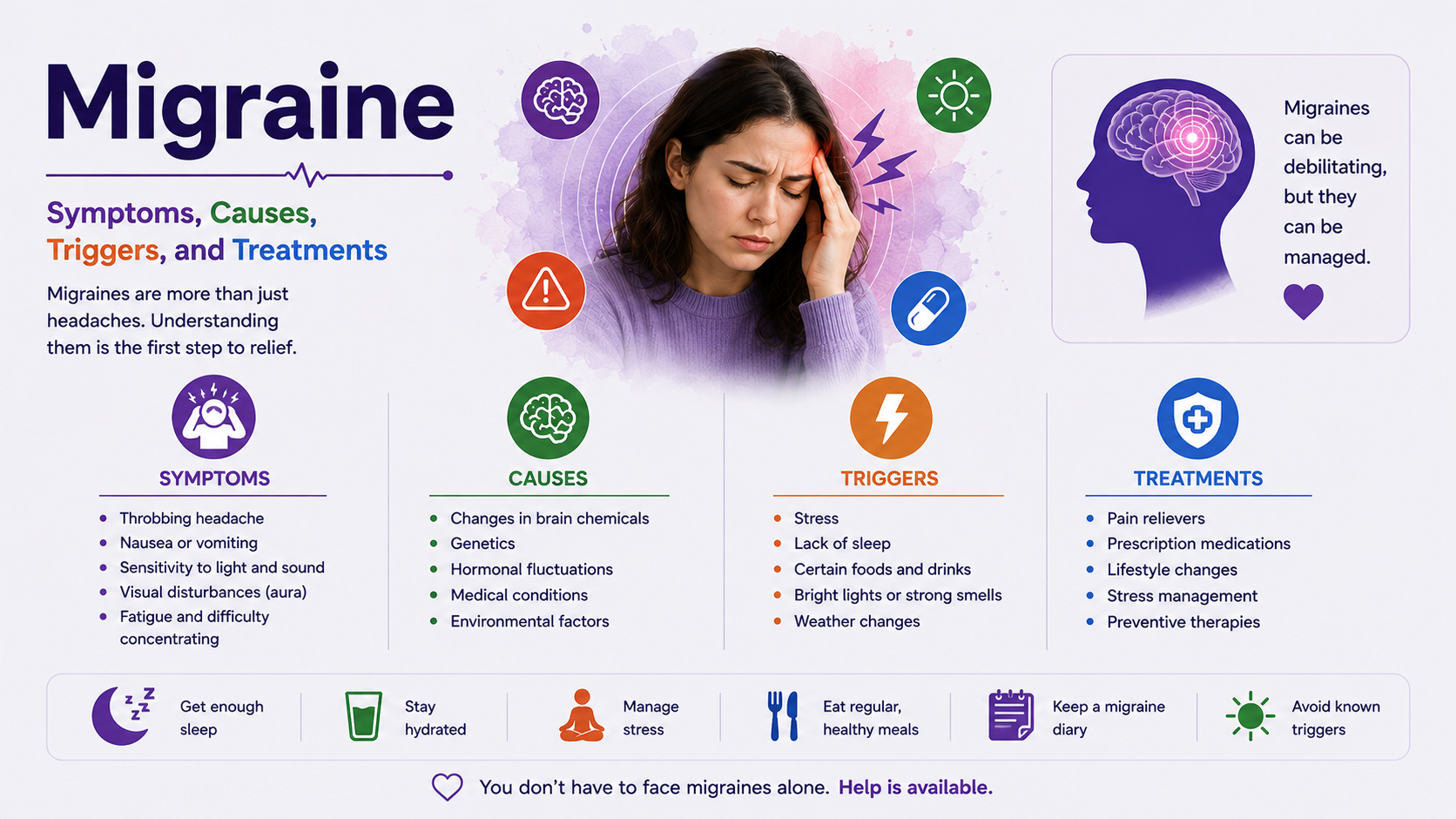
Migraines are more than just “bad headaches.” They’re a neurological condition that can cause intense, throbbing head pain, often accompanied by nausea, sensitivity to light or sound, and other disruptive symptoms. For many people, migraines come in repeated episodes that last anywhere from a few hours to several days, interfering with work, school, and daily life.
Understanding the phases, triggers, and treatments available can help those living with migraine find relief and regain control over their lives.
What Is a Migraine?
A migraine is a brain and nervous system disorder whose hallmark symptom is a severe headache, usually on one side of the head. Unlike typical tension headaches, migraines are often pulsating, worsen with movement, and include other neurological symptoms.
Migraines are common, affecting about 12% of the U.S. population, and they occur more frequently in women than men. Genetics, environment, and chemical changes in the brain all play a role in why they develop.
Migraine vs. Headache
Not all headaches are migraines. Here’s how migraines stand apart:
- Throbbing or pounding pain that worsens with physical activity.
- Pain that typically affects one side of the head (though it can shift).
- Accompanied by other symptoms, such as nausea, vomiting, light sensitivity, or sound sensitivity.
Other headache types, like tension headaches or cluster headaches, have different patterns. For example, tension headaches cause steady pain on both sides of the head, while cluster headaches bring sharp pain around one eye.
Stages of a Migraine
Migraines often unfold in four distinct stages, though not everyone experiences all of them:
1. Prodrome
Hours or even days before the headache, people may notice:
- Mood changes or irritability
- Food cravings or loss of appetite
- Fatigue and frequent yawning
- Digestive changes like constipation
- Sensitivity to light, sound, or odors
2. Aura (in some people)
About 25% of people experience auras — temporary neurological symptoms that may occur before or during a migraine. They may include:
- Visual disturbances (flashing lights, blind spots, tunnel vision)
- Tingling or numbness in the face or limbs
- Difficulty speaking clearly
- Ringing in the ears
- Weakness on one side of the body
3. Attack
The headache phase usually lasts 4 to 72 hours. Symptoms can include:
- Throbbing or pulsating head pain
- Nausea and vomiting
- Sensitivity to light, sound, and sometimes smell
- Neck pain or stiffness
- Dizziness or faintness
4. Postdrome
After the headache subsides, many feel drained for up to a day. Symptoms may include fatigue, muscle weakness, food cravings, or difficulty concentrating. Some people, however, feel unusually refreshed or euphoric.
Migraine Types
Migraines come in several forms. The most common are:
- Migraine without aura (common migraine): severe headache without warning symptoms.
- Migraine with aura (classic migraine): headache plus neurological symptoms.
Other types include:
- Menstrual migraine: linked to hormonal changes during the menstrual cycle.
- Silent migraine: aura symptoms occur without the headache.
- Vestibular migraine: causes vertigo and balance problems, with or without head pain.
- Abdominal migraine: more common in children, involving stomach pain, nausea, and vomiting.
- Hemiplegic migraine: rare, involves temporary paralysis or weakness on one side of the body.
- Retinal/ocular migraine: vision loss or disturbance in one eye.
- Status migrainosus: a severe, debilitating migraine lasting more than 72 hours.
Causes and Triggers
The exact cause of migraines isn’t fully understood, but researchers believe they involve overactive nerve cells, changes in brain chemicals like serotonin and CGRP, and inflammation around blood vessels.
Common Triggers
- Hormonal changes: Menstruation, pregnancy, or menopause.
- Stress: Emotional stress can release chemicals that alter brain activity.
- Sleep disruption: Too little or too much sleep.
- Diet: Aged cheeses, processed foods, alcohol, chocolate, and artificial sweeteners like aspartame.
- Caffeine: Too much or sudden withdrawal can trigger attacks.
- Sensory input: Bright lights, loud sounds, or strong odors.
- Weather changes: Shifts in barometric pressure or altitude.
- Medications: Vasodilators, oral contraceptives, and some blood pressure drugs.
Risk Factors
Certain factors make migraines more likely:
- Family history: Up to 80% of people with migraines have a close relative with the condition.
- Age: Migraines often begin in adolescence or early adulthood.
- Sex: Women are three times more likely to experience migraines than men.
- Other conditions: Anxiety, depression, epilepsy, and sleep disorders can increase risk.
Diagnosis
Migraines are usually diagnosed by a healthcare professional based on:
- Medical history and symptoms (such as headache patterns, duration, and triggers).
- Neurological exams to rule out other conditions.
- Occasionally, tests like MRI, CT scans, or EEG may be ordered to rule out more serious causes.
Treatments
While there’s no cure for migraines, treatments can reduce their frequency and severity. Options include:
Medications
- Abortive medications: Taken at the first sign of a migraine (e.g., triptans, gepants, ditans, ergotamines).
- Preventive medications: Taken regularly to reduce frequency (e.g., beta-blockers, anticonvulsants, antidepressants, CGRP inhibitors).
- OTC pain relievers: Ibuprofen, aspirin, acetaminophen, or caffeine-containing medicines (though overuse can cause rebound headaches).
Non-Medication Options
- Neuromodulation devices: FDA-approved devices that use magnetic or electrical stimulation to target nerve pathways.
- Botox injections: For chronic migraine, botulinum toxin injections every 12 weeks can help.
- Lifestyle changes: Consistent sleep, hydration, stress management, and balanced diet.
- Alternative therapies: Acupuncture, yoga, biofeedback, and supplements like magnesium, riboflavin, and coenzyme Q10.
Living With Migraine
Migraines can be disabling, but self-care and awareness play a powerful role in management. Tips include:
- Keeping a migraine diary to identify patterns and triggers.
- Eating and sleeping on a regular schedule.
- Managing stress through relaxation or mindfulness practices.
- Staying hydrated and exercising moderately.
When to See a Doctor
Seek immediate care if you experience:
- A sudden, severe “thunderclap” headache.
- Headache with fever, stiff neck, seizures, confusion, or vision problems.
- Headache after a head injury.
- A new type of headache after age 50.
Key Takeaway
Migraines are a neurological disorder, not just a bad headache. While they can be disruptive and painful, effective treatments and lifestyle strategies exist. If migraines interfere with your life, talk with your doctor about a personalized treatment plan.
