




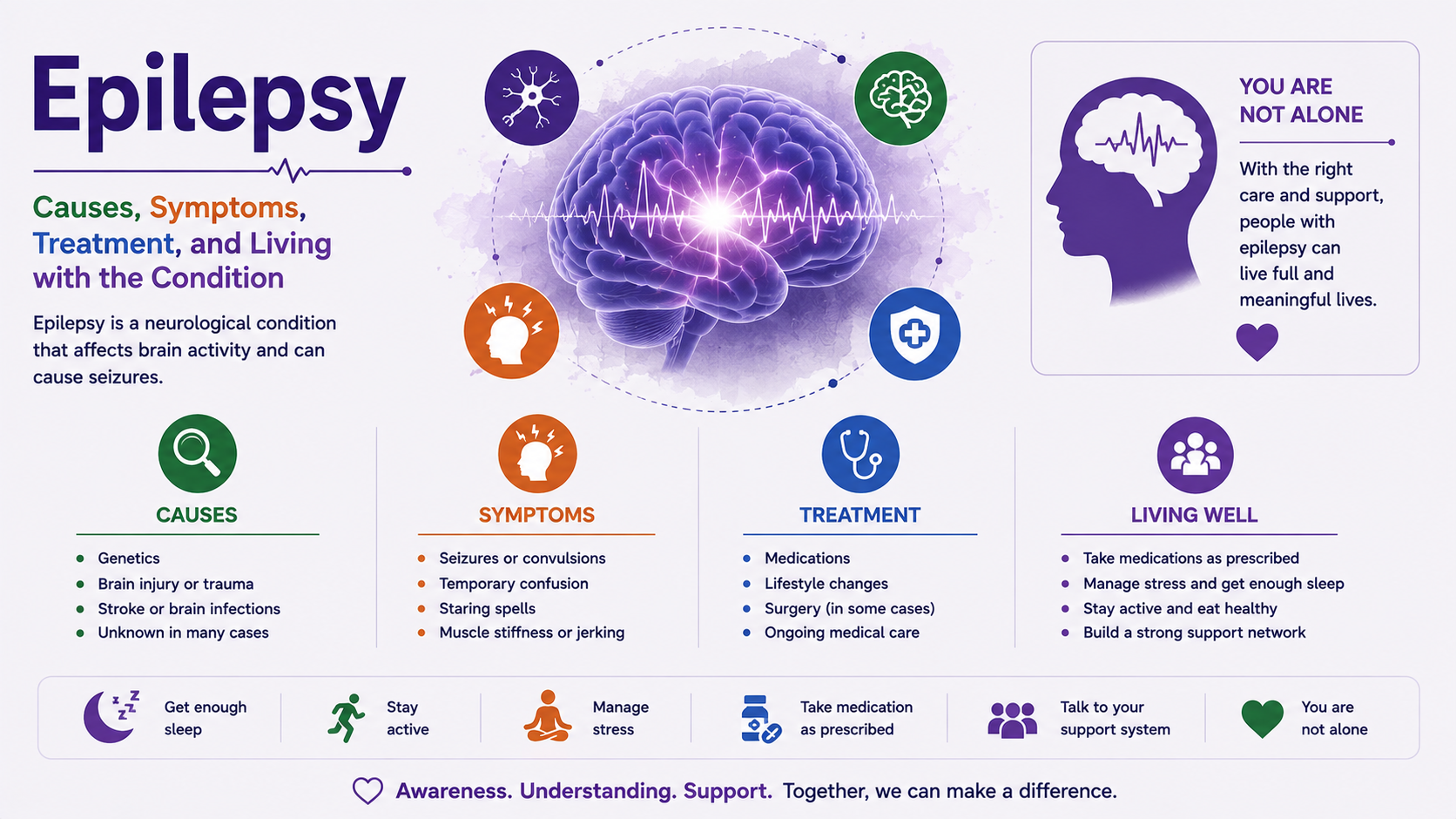
Epilepsy is one of the most common neurological conditions in the world, affecting around 50 million people globally. At its core, epilepsy is a brain disorder that causes repeated, unprovoked seizures — sudden bursts of abnormal electrical activity in the brain. These seizures can look very different from person to person, ranging from brief moments of staring to severe convulsions and loss of consciousness.
While epilepsy can begin at any age, it often first appears in young children and older adults. The good news is that with the right treatment and support, many people are able to manage their seizures and live full, independent lives.
What Exactly Is Epilepsy?
Doctors usually diagnose epilepsy when a person has two or more seizures without an obvious cause, such as illness or head injury. The seizures themselves are the hallmark symptom of epilepsy, but what they look like can vary widely. Some people may simply feel a strange taste, smell, or tingling, while others may experience sudden stiffness, twitching, or blacking out.
There are two main categories of seizures:
- Focal seizures, which start in one part of the brain and may affect awareness, senses, or movement.
- Generalized seizures, which involve the whole brain and can cause muscle jerks, falls, or loss of consciousness.
A mild seizure may pass almost unnoticed, while a more intense one may leave a person confused, exhausted, or with no memory of what just happened.
What Causes Epilepsy?
In about half of all cases, the cause of epilepsy remains unknown. For the other half, epilepsy can often be traced to a specific issue in the brain. Some common causes and risk factors include:
- Head injuries or trauma
- Stroke (a major cause of epilepsy in older adults)
- Brain infections such as meningitis or encephalitis
- Brain tumors or cysts
- Dementia, including Alzheimer’s disease
- Complications during birth, such as lack of oxygen
- Genetic factors and certain inherited neurological conditions
Interestingly, researchers have identified hundreds of genes that may play a role in epilepsy. Sometimes epilepsy runs in families, while in other cases, genetic mutations appear spontaneously.
Triggers That Can Set Off a Seizure
Not every seizure has a clear trigger, but many people with epilepsy notice patterns. Some common triggers include:
- Lack of sleep
- Stress or illness
- Alcohol or drug use
- Bright, flashing lights
- Skipping meals or sudden changes in blood sugar
Keeping a seizure diary can help track these triggers, making it easier for doctors and patients to adjust treatment and lifestyle choices.
Symptoms Beyond Seizures
Although seizures are the defining symptom, epilepsy can also affect life in other ways. Some people may experience memory issues, learning difficulties, or mood disorders such as anxiety and depression. For children, epilepsy can sometimes interfere with speech and development.
The impact often depends on how well seizures are controlled and how early treatment begins.
Diagnosing Epilepsy
If a seizure occurs, doctors will usually start with a detailed medical history and neurological exam. To confirm a diagnosis of epilepsy, they may order:
- Electroencephalogram (EEG): a test that measures electrical activity in the brain.
- Imaging scans like MRI or CT to look for structural changes.
- Blood tests to rule out infections or metabolic issues.
A diagnosis is made once other potential causes of seizures are excluded.
Treatment Options for Epilepsy
Although there is no universal cure for epilepsy, there are many effective treatments that can help control seizures. The right plan depends on the type of seizures, age, health, and how well someone responds to therapy.
1. Medications (Anti-Seizure Drugs)
These are usually the first line of treatment. Drugs such as levetiracetam, lamotrigine, and valproic acid can significantly reduce or even eliminate seizures when taken as prescribed.
2. Surgery
For people whose seizures don’t respond to medication, surgery may be an option. This can involve removing the area of the brain where seizures start, or cutting nerve pathways to prevent them from spreading.
3. Devices and Therapies
- Vagus nerve stimulation (VNS): a device implanted in the chest that sends electrical signals to the brain.
- Deep brain stimulation (DBS): electrodes implanted in the brain to reduce seizure activity.
- Ketogenic diet: a high-fat, low-carbohydrate diet shown to help some children with epilepsy.
First Aid for Seizures
Most seizures are not medical emergencies, but knowing how to respond can keep a person safe. If someone is having a seizure:
- Stay with them until it ends.
- Move harmful objects away.
- Place them gently on their side to help with breathing.
- Put something soft under their head.
- Call emergency services if the seizure lasts longer than five minutes or if it’s their first seizure.
Importantly, never hold someone down or put anything in their mouth during a seizure.
Living With Epilepsy
Epilepsy is more than just the seizures. It can affect independence, work, school, and even driving, depending on how well it’s controlled. But with the right support, many people lead active, fulfilling lives.
Some helpful strategies include:
- Wearing a medical alert bracelet.
- Teaching friends and family seizure first aid.
- Managing lifestyle factors like sleep, diet, and stress.
- Joining a support group for emotional and social encouragement.
Regular medical follow-ups are essential, since treatment may need to be adjusted over time.
Outlook and Hope for the Future
For many people, epilepsy is a manageable condition. With medication, lifestyle adjustments, and sometimes surgery, seizures can often be reduced or eliminated. In fact, some children eventually outgrow epilepsy and no longer need treatment.
Research into new therapies, including gene-based treatments and advanced brain stimulation, continues to bring hope for better outcomes in the future.
While epilepsy can be challenging, it does not have to define a person’s life. With awareness, treatment, and support, people with epilepsy can thrive.
