




What Is Depression?
Depression is more than just occasional sadness or a rough day. It is a common mental health condition that brings persistent feelings of emptiness, hopelessness, and a loss of interest in things that once brought joy. Unlike temporary mood swings, depression can last for weeks, months, or even years, and it often disrupts daily life, work, relationships, and physical health.
Doctors often call it major depressive disorder (MDD), but depression comes in different forms, each with unique features. While it may feel overwhelming, the good news is that depression is highly treatable with the right support.
Types of Depression
Depression doesn’t look the same for everyone. Some people experience severe, short-term episodes, while others live with milder but long-lasting symptoms. Common forms include:
- Major Depressive Disorder (MDD): The most recognized type, marked by intense sadness and lack of motivation lasting at least two weeks.
- Persistent Depressive Disorder: A milder but chronic form of depression that lingers for two years or more.
- Postpartum Depression: Occurs after childbirth and is more intense than the “baby blues.”
- Seasonal Depression: Often appears in the darker months of fall and winter, lifting when daylight returns.
- Atypical Depression: Symptoms include mood improvements in response to positive events, increased appetite, and oversensitivity to rejection.
Depression can also appear alongside other conditions such as bipolar disorder, anxiety, or chronic illnesses.
Symptoms to Look Out For
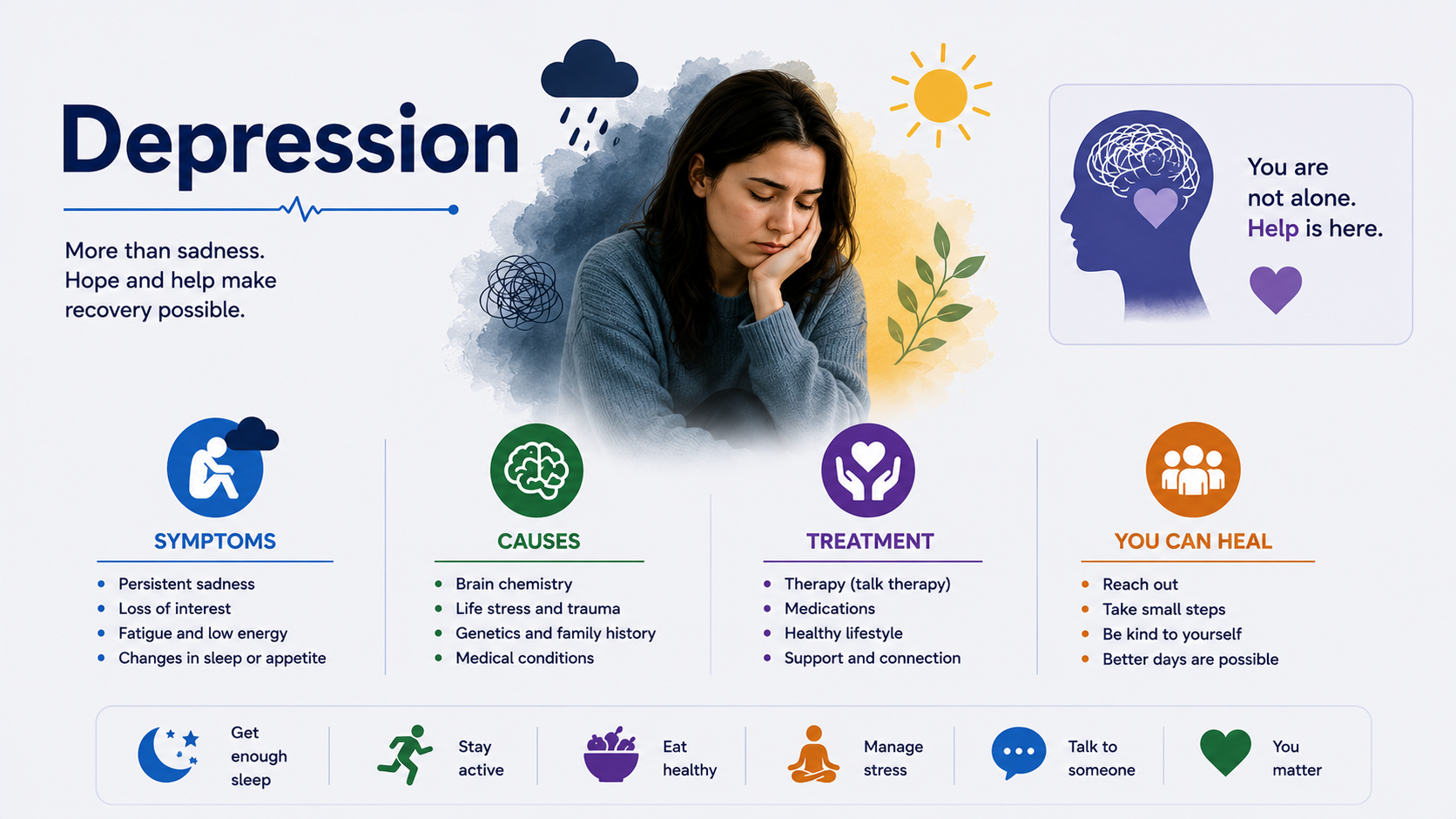
Depression affects both the mind and the body. While the signs can vary, most people experience ongoing sadness, fatigue, or loss of pleasure in everyday activities. You may notice changes in appetite, unexplained aches, trouble sleeping, difficulty concentrating, or even feelings of guilt and worthlessness.
For some, depression shows up as anger, irritability, or withdrawal from social connections. In children, it may appear as clinginess, crying, or behavioral outbursts, while in older adults it may look more like memory problems, fatigue, or avoiding activities.
If these feelings last for more than two weeks and interfere with daily life, it may be time to seek professional help.
What Causes Depression?
There isn’t a single cause of depression. Instead, it often develops from a combination of factors:
- Brain chemistry: Imbalances in neurotransmitters like serotonin and dopamine can impact mood.
- Genetics: A family history of depression increases the likelihood of developing it.
- Life events: Trauma, loss, relationship struggles, or financial stress can act as triggers.
- Medical conditions: Chronic pain, diabetes, heart disease, or neurological disorders may contribute.
- Hormonal changes: Events like pregnancy, menopause, or thyroid issues can play a role.
In many cases, depression doesn’t need a clear “reason” — it can appear unexpectedly, even during otherwise stable times in life.
Treatment Options
The encouraging truth is that depression is treatable, and most people improve with care. Treatment is tailored to each person and may include:
- Therapy: Talking with a professional helps identify harmful thought patterns and build healthier coping skills. Cognitive Behavioral Therapy (CBT) is especially effective.
- Medication: Antidepressants balance brain chemistry and can significantly reduce symptoms. It may take time to find the right one.
- Lifestyle support: Regular exercise, better sleep, and a nutritious diet can ease symptoms. Avoiding alcohol and staying connected with loved ones also helps.
- Advanced treatments: For severe cases, brain stimulation therapies such as Electroconvulsive Therapy (ECT) or Transcranial Magnetic Stimulation (TMS) may be considered.
Some people also explore complementary approaches like meditation, acupuncture, or certain herbal supplements, though these should always be discussed with a healthcare provider.
Living With Depression
Living with depression can feel isolating, but it’s important to remember you’re not alone. Millions of people experience it every year, and recovery is possible. Seeking help early gives you the best chance of regaining balance and preventing relapse.
If you ever experience thoughts of self-harm or suicide, please seek immediate support. In the U.S., you can call or text 988 to reach the Suicide & Crisis Lifeline. If you’re outside the U.S., look for a local crisis hotline in your country.
Final Thoughts
Depression is not a weakness or a personal failure — it is a medical condition that requires care, just like diabetes or heart disease. With therapy, medication, and support, many people go on to live full, meaningful lives.
Taking the first step to talk with a doctor or counselor may feel hard, but it’s the most important move toward healing. Remember: help is available, and recovery is possible.
