




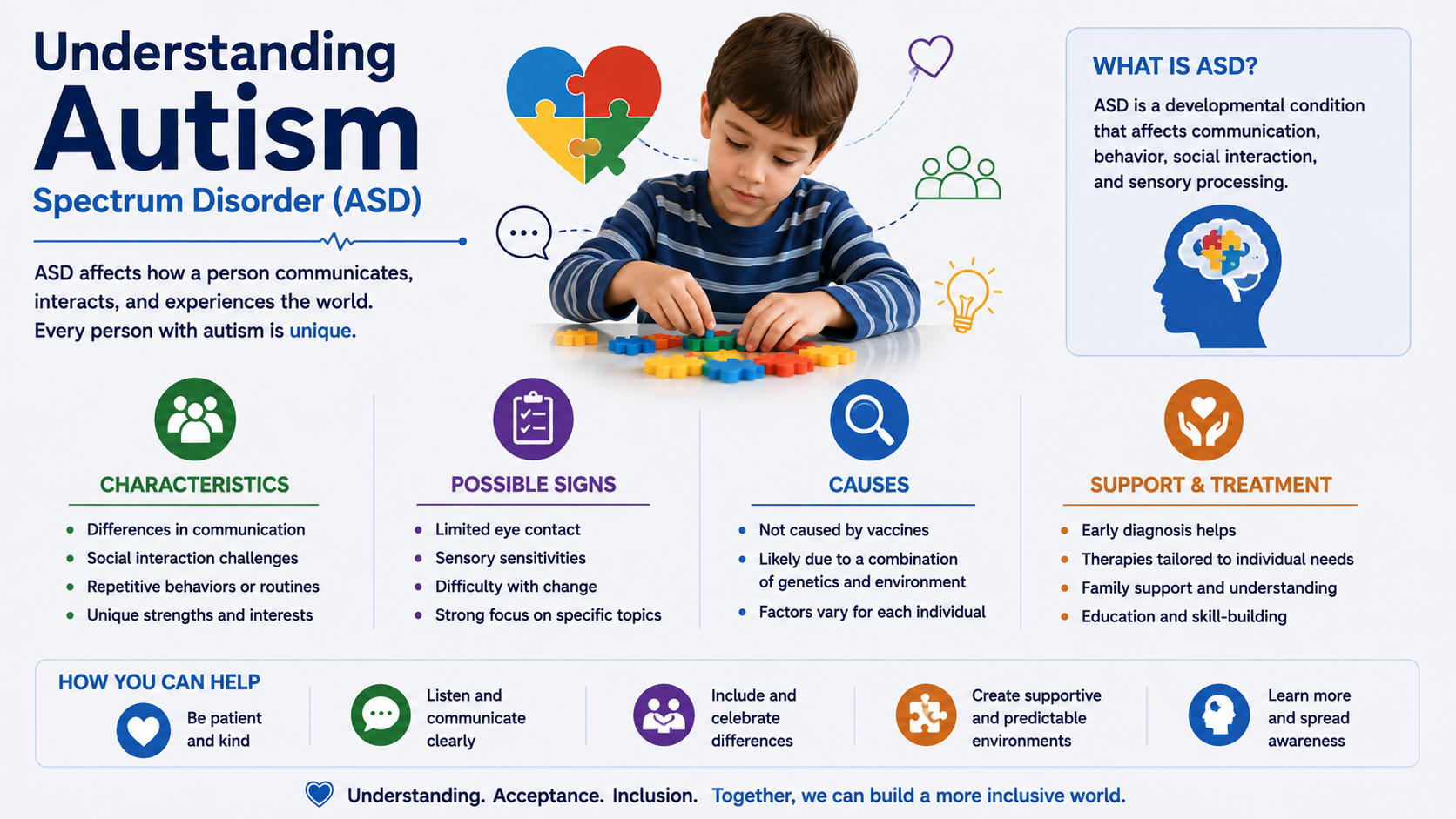
Autism Spectrum Disorder (ASD) is a developmental difference in how the brain works, shaping the way a person communicates, learns, and experiences the world. While autism is often noticed in early childhood, its impact can continue throughout life, influencing social interactions, learning styles, and behaviors in unique ways.
It’s important to understand that autism is not a disease. There is no “cure,” nor should there be an attempt to “fix” autistic people. Instead, the focus is on helping individuals build on their strengths while providing support where challenges exist. Many autistic people describe their brains as simply wired differently, and this difference can bring both difficulties and remarkable abilities.
What is Autism Spectrum Disorder?
Autism is considered a neurodevelopmental condition, meaning it affects how the brain grows and functions. People with ASD may process information, emotions, and social cues differently compared to what’s considered “neurotypical.”
The word “spectrum” is key. Autism doesn’t look the same in every person. Some people need significant support in daily life, while others are highly independent but still face social or sensory challenges. This wide range of experiences is why healthcare professionals now use the term Autism Spectrum Disorder instead of older labels like Asperger’s syndrome or PDD-NOS.
Signs and Characteristics
Autism usually shows up in the first years of life, although in some children it can be more subtle at first. Characteristics generally fall into two main areas: social communication differences, and patterns of behavior or interests.
Social communication
Some children may avoid eye contact, prefer to play alone, or not respond when their name is called. As they grow, they might have one-sided conversations, struggle with understanding feelings, or find it difficult to interpret tone of voice, sarcasm, or body language. Teenagers may appear withdrawn, have trouble forming peer relationships, or feel more comfortable with younger children or adults than with kids their own age.
Behavior and interests
Repetitive actions, such as hand-flapping, rocking, or repeating words, are common ways autistic children regulate emotions. They may be very focused on specific routines or topics, sometimes becoming distressed if things change unexpectedly. Certain textures, sounds, or lights may feel overwhelming, while unusual objects or interests—like fascination with fans, numbers, or train timetables—might capture their attention for long periods.
It’s important to remember that many of these behaviors can appear in all children at some stage. What makes them significant in autism is that they are persistent, affect daily functioning, and appear alongside social and communication differences.
Strengths of Autistic People
While the conversation around autism often focuses on challenges, it’s equally important to highlight strengths. Many autistic individuals are deeply honest, have strong moral values, and bring unique perspectives to problem-solving. Some can focus intensely on areas of interest, developing expertise far beyond their peers. Others excel in pattern recognition, logic, or creative expression.
These strengths show why support should never aim to “erase” autism but instead help each person thrive in their own way.
Causes and Risk Factors
The exact cause of autism is still not fully understood. Research suggests a mix of genetics and environmental influences during pregnancy and early development. Having a family history of autism or certain genetic variations may increase risk. Factors such as advanced parental age, certain complications during pregnancy, or very early birth have also been linked.
It’s important to note that autism is not caused by parenting style, vaccines, or diet—myths that have unfortunately fueled stigma in the past.
Types of Autism: Old and New Terms
Until recently, autism was divided into separate conditions:
- Asperger’s syndrome: Described people with average or above-average intelligence but social and communication challenges.
- PDD-NOS (Pervasive Developmental Disorder – Not Otherwise Specified): Used for individuals who didn’t fully fit other categories but still had noticeable differences.
- Autistic disorder: Referred to those with more significant symptoms.
- Childhood disintegrative disorder: A rare and severe condition where children developed typically before suddenly losing skills.
Today, these are all considered part of the broader autism spectrum. The focus is on identifying how much support someone needs rather than fitting them into a narrow category.
Rett syndrome, once thought to be part of autism, is now recognized as a separate genetic condition.
Diagnosis
Diagnosing autism typically begins in early childhood. Pediatricians often screen toddlers around 18–24 months, checking how they communicate, play, and respond to others. If concerns are raised, specialists such as developmental pediatricians, psychologists, or neurologists carry out further assessments.
There’s no blood test or scan that can confirm autism. Instead, diagnosis relies on observing behaviors, understanding developmental history, and comparing them with criteria in the DSM-5. In older children and teens, diagnosis can be more complex, especially when traits are subtle or overlap with conditions like ADHD or anxiety.
Treatment and Support
There is no one-size-fits-all treatment for autism, because every autistic person has a unique set of strengths and challenges. Early intervention—ideally before age 3—can make a big difference, but support at any age is valuable.
Common approaches include:
- Behavioral and educational therapies: These help children build communication, social, and daily living skills.
- Speech and occupational therapy: Useful for language development, sensory sensitivities, and motor skills.
- Cognitive behavioral therapy (CBT): Helps older children and teens cope with anxiety or frustration.
- Support in school: Individualized Education Plans (IEPs) ensure that learning environments meet a child’s needs.
- Medical care: In some cases, medications may help manage co-occurring conditions like ADHD, anxiety, or epilepsy.
What matters most is that treatment respects the individual, builds on their abilities, and supports them in living a fulfilling life.
Living with Autism
Being autistic means experiencing the world differently, not wrongly. Families, schools, and communities can play a powerful role in shaping acceptance. By recognizing strengths, accommodating challenges, and rejecting harmful myths, society can create a more inclusive environment where autistic people can flourish.
Parents often describe raising an autistic child as a journey of learning. Each child leads in their own way, and caregivers adapt, guided by both professional support and the child’s unique personality. With understanding and encouragement, autistic children and teens can thrive, develop meaningful relationships, and build on their natural talents.
Final Takeaway
Autism is not about “curing” differences but about embracing them. With compassion, early support, and recognition of strengths, autistic children and teens can grow into adults who thrive in their own unique ways.
